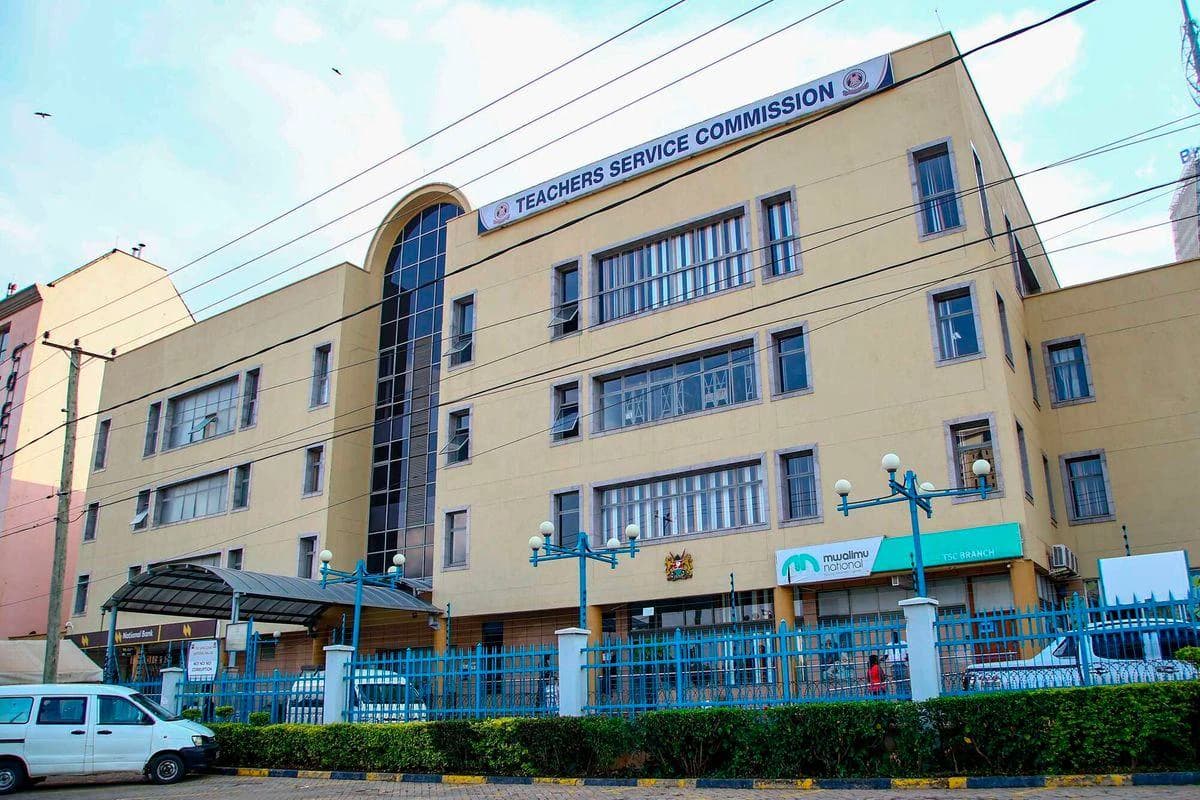
The Teachers Service Commission (TSC) should reconsider the practice of requiring Curriculum Support Officers (CSOs) seeking promotion to Grade C5 to travel to regional headquarters for interviews. While the Commission has a legitimate responsibility to ensure that promotions are based on merit, professionalism and fairness, it is equally important to ensure that the process does not impose unnecessary financial and logistical burdens on the very educators who dedicate their lives to improving the quality of education in Kenya.
The question that deserves serious consideration is simple: Why should teachers seeking promotion to Grade C5 be required to travel long distances to regional headquarters when the same interviews could potentially be conducted at county headquarters?
The challenges associated with regional interviews are not merely theoretical. Teachers seeking promotion to Curriculum Support Officer positions travelled all the way from Kibish in Turkana County and Loitoktok in Kajiado County to Nakuru for their interviews.
For some of these candidates, the journey and associated expenses consumed close to KSh6,000.
This is a significant amount of money for an employee who is simply seeking a professional promotion. The expenditure raises an important question about the practicality of requiring candidates to travel such long distances when a more accessible arrangement could be considered.
Kibish, located in the northernmost part of Turkana County, and Loitoktok, situated in Kajiado County near the Tanzania border, are far from Nakuru. Requiring teachers from these areas to travel to Nakuru for interviews places a considerable financial and logistical burden on them.
These teachers were not travelling for leisure or personal adventures. They were responding to an official process intended to assess their suitability for promotion.
Surely, a promotion exercise should not become an expensive undertaking when the same objective could potentially be achieved closer to the candidates' duty stations.
Why were C5 candidates required to travel to Nakuru?
An equally important concern is the apparent difference in the interview arrangements for candidates seeking different grades.
Teachers seeking promotion to Grade C5 as Curriculum Support Officers had to travel to Nakuru, including those coming from distant parts of the country. Yet candidates seeking promotion to Grade D1 were able to undertake their interviews at county level.
This raises a legitimate question: Why could the D1 interviews be conducted at county level while C5 candidates had to travel to regional headquarters?
If county-level interviews were considered practical for teachers seeking promotion to D1, TSC should explain why a similar arrangement could not be considered for C5 candidates.
The concern is not that candidates for different grades must necessarily undergo identical administrative procedures. Different positions may require different assessment arrangements. However, any difference should have a clear, reasonable and justifiable basis.
Where the same professional standards can be maintained at county level, requiring C5 candidates to travel much longer distances deserves reconsideration.
The financial burden on teachers
Travelling to regional headquarters for an interview is not a cost-free exercise. Candidates must pay for transport, meals and, in some cases, accommodation. For teachers serving in remote areas, the cost can be particularly high.
In the case of candidates travelling from Kibish and Loitoktok to Nakuru, expenditure approaching KSh6,000 illustrates how an interview can impose a substantial financial burden before a candidate even knows the outcome.
Teachers already have personal and family responsibilities. Asking them to spend considerable amounts of money to attend an interview should therefore be approached with sensitivity and a commitment to administrative efficiency.
Promotion interviews should assess a candidate's qualifications, experience, professional competence and suitability for the position. They should not impose avoidable financial demands on applicants.
Equal opportunities must be guaranteed
Fairness is a fundamental principle of any credible promotion exercise. Every eligible candidate should have a reasonable opportunity to participate, regardless of their geographical location or financial circumstances.
Teachers working near regional headquarters may have a logistical advantage over colleagues stationed far away. Those serving in remote and hardship areas may have to travel considerably longer distances and spend more money to attend the same interviews.
Although all candidates may be subject to the same interview requirements, the practical burden is not necessarily equal.
A teacher travelling from Kibish faces different logistical challenges from a colleague whose station is closer to Nakuru. Similarly, a teacher travelling from Loitoktok must consider the distance, transport costs and time required to attend the interview.
TSC should therefore consider whether regional interviews provide the most accessible and equitable arrangement for all eligible candidates.
Decentralising interviews is a practical solution
Conducting C5 promotional interviews at county headquarters could provide a practical alternative without compromising professional standards.
TSC could establish interview panels at county level while maintaining uniform assessment criteria, standardised questions, transparent scoring systems and appropriate oversight by regional officials.
Such an arrangement would reduce travel distances, lower candidates' expenses and make the process more convenient for teachers drawn from different parts of the country.
Alternatively, the Commission could establish several interview centres within each region to ensure that no candidate has to travel unnecessarily long distances.
The fact that D1 promotional interviews can be conducted at county level provides a reasonable basis for asking TSC to examine whether a similar approach would work for C5 candidates.
The objective should be to improve accessibility while preserving the credibility and integrity of the promotion process.
Respect the role of Curriculum Support Officers
Curriculum Support Officers play an important role in supporting teachers, monitoring curriculum implementation, promoting professional development and improving learning outcomes.
Their work contributes to the quality of education in schools and the professional growth of teachers.
It is therefore reasonable to expect their promotion process to reflect the same principles of efficiency, fairness and professionalism that they are expected to promote in the education system.
An accessible interview arrangement would demonstrate that the Commission recognises the practical challenges faced by its employees and is willing to consider reasonable measures to address them.
Teachers should not have to bear disproportionate financial costs simply because of the geographical location of their stations.
Promotion should be about merit, not geography
A promotion process should be designed to identify the most suitable candidates for available positions. Qualifications, experience, performance, professional conduct and demonstrated competence should remain central to the assessment.
The location of a candidate's workstation should not become an unnecessary logistical disadvantage.
Similarly, the ability to afford transport and accommodation should not determine how convenient it is for a qualified teacher to participate in a promotion exercise.
TSC can maintain rigorous selection standards while making reasonable adjustments to the location and organisation of interviews.
Fairness does not require lowering the standards of assessment. It requires ensuring that eligible candidates can participate under reasonable and accessible conditions.
A call to the Teachers Service Commission
The Teachers Service Commission should review the arrangements for C5 promotional interviews for Curriculum Support Officers and consider decentralising the exercise to county headquarters or other accessible centres.
Such a review would provide an opportunity to balance administrative efficiency, cost considerations, regional oversight and the welfare of candidates.
Where centralised interviews are genuinely necessary, the Commission should clearly explain the reasons for the arrangement and consider practical ways of minimising the burden on applicants.
The Commission should also examine the apparent difference between the county-level arrangements available to D1 candidates and the regional-level arrangements imposed on C5 candidates.
A transparent explanation would help candidates understand the rationale behind the different procedures and whether the arrangements serve a legitimate administrative purpose.
Teachers deserve a promotion process that is transparent, professional, accessible and responsive to their circumstances.
Conclusion: Why make promotion so expensive?
The experiences of teachers who travelled from Kibish in Turkana County and Loitoktok in Kajiado County to Nakuru highlight the need for TSC to reconsider how it organises C5 promotional interviews.
When a candidate has to spend close to KSh6,000 to attend an interview, the Commission should ask whether that expense is necessary, particularly when interviews for another promotional grade, D1, can be conducted at county level.
Why should a teacher travel hundreds of kilometres and spend thousands of shillings to attend a C5 promotion interview when a suitable interview centre could be established at the county level, just as it is for D1 candidates?
This is not a demand for preferential treatment. It is a call for fairness, consistency, accessibility and responsible administration.
TSC has an opportunity to review the arrangement and adopt an approach that protects the integrity of the selection process while reducing unnecessary costs for candidates.
Promotion should be an opportunity to advance professionally, not a financial burden determined by how far a teacher works from a regional headquarters.
READ ALSO:
The Commission should listen to these concerns and consider a more accessible, equitable and cost-conscious approach to C5 promotional interviews.
The writer is an education advocate.

Reader Discussion (0)
Sign in to comment