







There is a growing tendency to attribute the increasing aggressiveness of examination candidates to poor parenting. Whenever students threaten teachers, confront police officers, intimidate invigilators or openly defy examination authorities, the immediate reaction is to question how their parents raised them.
It is an attractive argument because it conveniently shifts responsibility away from institutions that have a direct obligation to maintain discipline and protect the integrity of examinations. However, blaming parents for every manifestation of student indiscipline is not only simplistic but also an attempt to evade a much bigger conversation about the examination culture we have created in our schools.
We must distinguish between general character formation and behaviour exhibited within an examination environment. Parents have an important role in raising responsible children, but they do not independently create the circumstances under which examination candidates behave. Schools, examination administrators, teachers, supervisors and policymakers also shape the attitudes, expectations and conduct of learners.
More importantly, examination malpractice has created a culture in which some candidates have come to regard examination results as more important than the principles governing how those results are obtained.
For years, we have cultivated an examination culture that celebrates grades without sufficiently interrogating the processes behind them. Schools are judged according to performance, principals are praised or condemned depending on mean scores, and teachers are subjected to enormous pressure to produce impressive results.
In some institutions, the entire academic identity of a school is reduced to the number of candidates attaining particular grades. Under such circumstances, examination integrity can easily become a secondary consideration.
When students are repeatedly exposed to an environment where examination irregularities are discussed, facilitated, tolerated or even celebrated, what moral lessons are we expecting them to learn? Can we honestly lecture candidates about respecting examination regulations when they have witnessed adults manipulating the same processes for years?
A student who believes that examination papers can be accessed through unofficial channels may begin to perceive examination rules as obstacles rather than legitimate standards.
The problem becomes more complicated when adults create expectations that examinations must somehow deliver impressive results, regardless of the candidates' preparedness.
Some students enter examination rooms carrying unrealistic expectations created by school promises, coaching arrangements and rumours of leaked examination papers. When the anticipated shortcuts fail to materialise, frustration may turn into hostility towards those charged with enforcing examination regulations.
This raises an important question: Is student aggression necessarily a product of poor parenting, or could it also be a consequence of an examination system whose credibility has been repeatedly undermined by cheating cultures?
Consider the candidate who has been assured that examination assistance will be available. Consider the school environment where candidates have been made to believe that everybody must somehow secure a particular grade.
Consider the adults who create anxiety by suggesting that examination success is impossible without external assistance. When such expectations collapse, the candidate may blame the invigilator, supervisor, centre manager or police officer who refuses to facilitate wrongdoing.
This does not excuse violence, threats or destruction of property. Every candidate must be held accountable for misconduct. However, understanding the institutional environment that produces such behaviour is just as important as condemning the behaviour itself.
Examination officials must demonstrate integrity
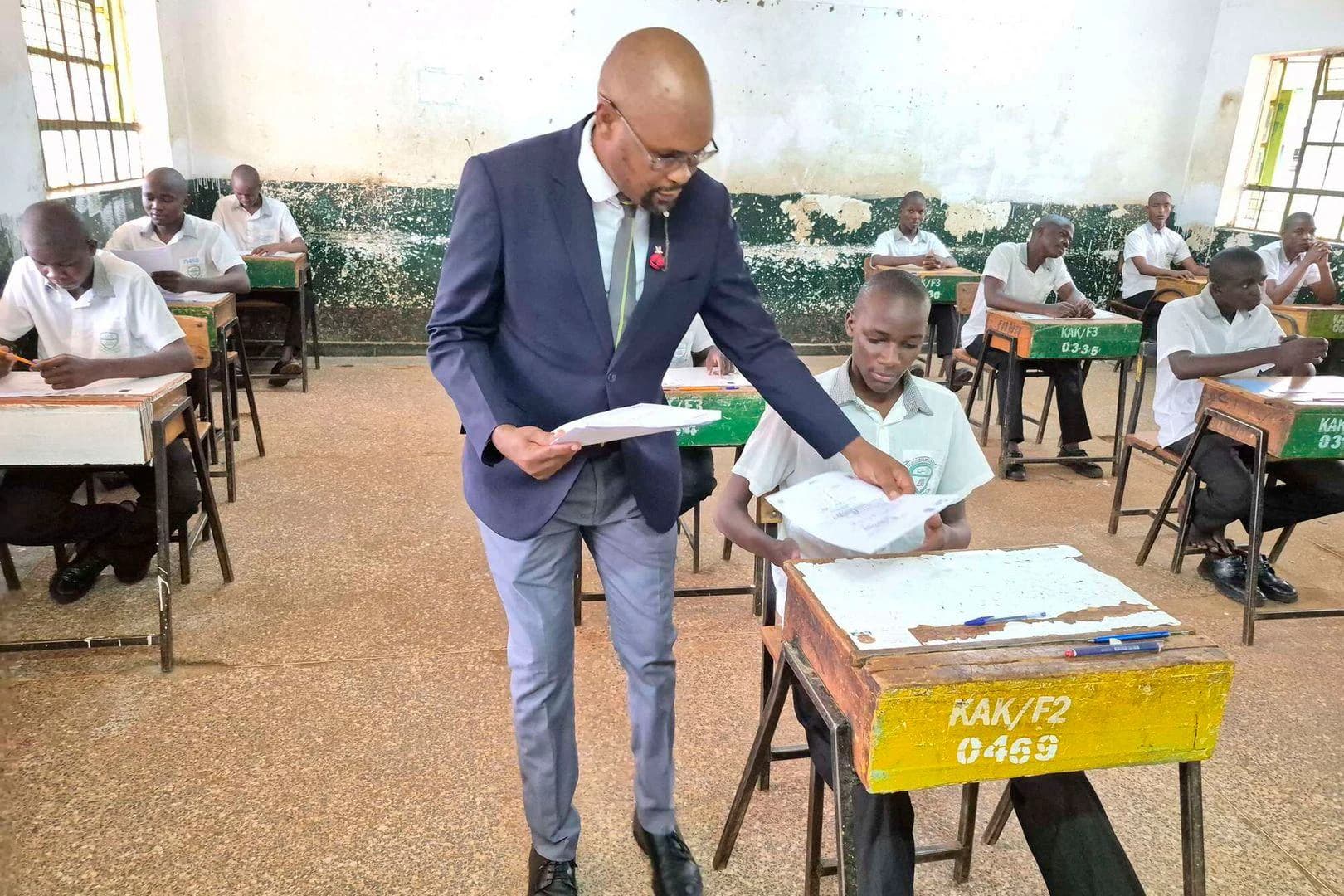
We should also interrogate the conduct of examination centre officials. Examination administration requires neutrality, consistency and professional courage.
Candidates must see supervisors and invigilators as independent custodians of an assessment process, not as enemies determined to frustrate their academic ambitions.
When examination regulations are selectively enforced, when some candidates appear to enjoy privileges denied to others, or when officials become entangled in malpractice networks, institutional credibility suffers.
The danger is that students begin to interpret examination regulations through the conduct of the adults enforcing them. An institution that demands honesty must demonstrate honesty. An authority that demands obedience must exercise authority fairly.
Examination security cannot be sustained through threats, police presence and surveillance alone when the culture surrounding examinations continues to reward dishonesty.
There is also the unfortunate practice of treating examination centres as battlegrounds between candidates and administrators. Examination officers are sometimes portrayed as people who have come to frustrate students rather than facilitate a fair assessment.
Such perceptions can be reinforced by irresponsible adults who publicly question legitimate examination procedures without establishing the facts. The result is an atmosphere of suspicion in which candidates become increasingly hostile towards those enforcing the rules.
The argument that parents are solely responsible also ignores the institutional responsibility of schools.
Schools are not merely examination preparation centres. They are places where discipline, integrity, accountability and respect for established procedures must be demonstrated and reinforced.
Teachers and school administrators cannot surrender this responsibility to parents and then expect candidates to behave responsibly during national examinations.
Equally, the Kenya National Examinations Council must continue strengthening examination security while addressing the attitudes that sustain malpractice.
It is not enough to confiscate unauthorised materials, deploy security personnel, restrict access to examination rooms and investigate irregularities.
The entire examination ecosystem must be examined, including the adults who facilitate cheating, the schools that tolerate it and the networks that profit from examination dishonesty.
Collective accountability is the solution
We must stop pretending that student indiscipline exists independently of the institutions surrounding learners. Children observe adults. They learn from what schools celebrate, what teachers tolerate, what administrators encourage and what society rewards.
If examination cheating becomes normalised, preaching integrity to candidates during the final weeks before national examinations may amount to locking the stable after the horse has bolted.
Parents should certainly raise responsible children, but they should not become convenient scapegoats whenever examination administrators fail to confront institutional weaknesses.
A parent who has consistently taught a child honesty cannot be expected to control every influence within a school examination environment.
The solution is collective accountability, not selective blame. Parents must nurture character, schools must enforce discipline, teachers must model integrity, examination officials must remain independent, and policymakers must eliminate the unhealthy obsession with grades at all costs.
Ultimately, the greatest threat to examination integrity is not necessarily a child who shouts at an invigilator. It is an examination culture that has allowed the child to believe that success can be negotiated, manipulated or obtained through dishonest means.
We cannot manufacture cheating cultures, tolerate the adults who sustain them and then blame parents when the candidates eventually rebel against the rules designed to stop them.
Perhaps the question we should be asking is not simply what parents have been teaching their children, but what our schools and examination systems have been teaching them about honesty, authority and success.
The writer is a teacher of English and Literature and writes on education and social affairs.



Reader Discussion (0)
Sign in to comment