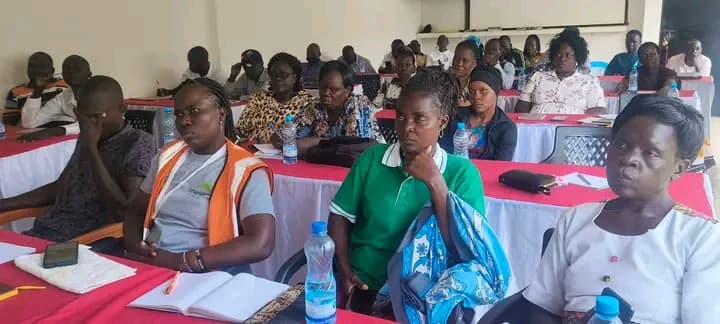

Civil society organisations (CSOs) and journalists in the Teso region have received training on child protection, case management and responsible reporting to strengthen efforts to safeguard children's rights and welfare.
The one-day training, held on Monday at Hotel Suddex in Amagoro, brought together grassroots organisations and media practitioners to improve collaboration in identifying, reporting and following up cases of child abuse. It also focused on ensuring that children affected by abuse receive appropriate support and justice without being exposed to further trauma through insensitive reporting.
Busia County Children's Officer Patrick Mukolwe said participants were taken through the 2019 Child Protection Guidelines, the Children Act, the Constitution of Kenya 2010 and the Media Council of Kenya's Code of Conduct for journalists.
He said the training was meant to equip journalists and community organisations with the knowledge to handle cases involving children professionally while protecting victims' privacy and dignity.
"Today, they have learnt how to report and follow up cases involving children when they occur in the community. Their reports must always uphold the best interests of the child and ensure that victims are not traumatised further during the reporting process," Mukolwe said.
Mukolwe stressed the importance of timely reporting and intervention, noting that children who experience abuse need immediate assistance and access to protection services.
He said the Children's Department, in partnership with the Free Pentecostal Fellowship in Kenya (FPFK) and other development partners, had intensified child protection awareness programmes targeting grassroots stakeholders, including chiefs, assistant chiefs, village elders, business operators, civil servants and parents.
He noted that journalists and CSOs play a critical role because they are often among the first to receive information about child abuse incidents. With information increasingly circulating on social media, he urged participants to ensure that cases are referred to the appropriate authorities rather than being handled through informal community arrangements.
He warned that perpetrators of child abuse would face legal action under the Children Act, the Constitution, the Sexual Offences Act and other laws protecting children.
Mukolwe also outlined seven alternative care arrangements for children requiring protection: kinship care, kinship adoption, foster care, guardianship, supported independent living, institutional placement and adoption.
Teso North Deputy County Commissioner Solomon Kitai, who closed the training, said child protection was a fundamental human rights obligation and a shared responsibility of government agencies, parents, communities and development partners. He called on organisations, particularly FPFK, to strengthen grassroots sensitisation programmes targeting local administrators and community leaders.
Kitai expressed concern over cases of child abuse and defilement that were reportedly being settled through informal community arrangements instead of being referred to the relevant authorities. He urged residents to report such incidents so that victims receive justice and protection.
He also cautioned parents against giving school-going children responsibilities that interfere with their learning, citing the practice of sending children to markets to buy goods during school hours.
Linda Mtoto Project Field Officer Annette Ipali Barasa said the training was part of efforts to build stronger partnerships between CSOs and journalists in promoting children's rights.
She said the project, launched in 2024 and expected to run until 2028, works with community groups, schools and churches to improve children's welfare. It operates in Teso North, Teso South, Teso Central and Matayos, where it has partnerships with 16 schools and has engaged more than 120 teachers.
Barasa said FPFK had also identified vulnerable households, with 80 families already benefiting from training programmes. She added that the project planned to provide start-up capital to vulnerable mothers to help them establish income-generating activities, improve household livelihoods and meet their children's educational needs.
Linda Mtoto Project Officer for Kenya and Uganda, Everlyne Achieng said the programme covered 22 locations in Teso North, two in Teso Central, six in Teso South and two in Township and Matayos. She said 82 young mothers and boys had undergone training, with plans to provide start-up kits to help them establish sustainable livelihoods. Another 60 beneficiaries began training last Monday under an apprenticeship-based skills development model.
The initiative is expected to strengthen household incomes and reduce children's vulnerability to abuse, neglect and exploitation.
A CSO representative, Harriet Opoma, welcomed the interventions by development partners but challenged organisations to uphold ethical standards when taking and publishing photographs of vulnerable children. She criticised the use of degrading images showing poorly dressed children or children living in extreme poverty, saying such practices undermine their dignity and privacy.
Opoma urged NGOs and other development organisations to obtain appropriate consent and ensure that children's best interests guide the documentation and publication of their activities.

Reader Discussion (0)
Sign in to comment