


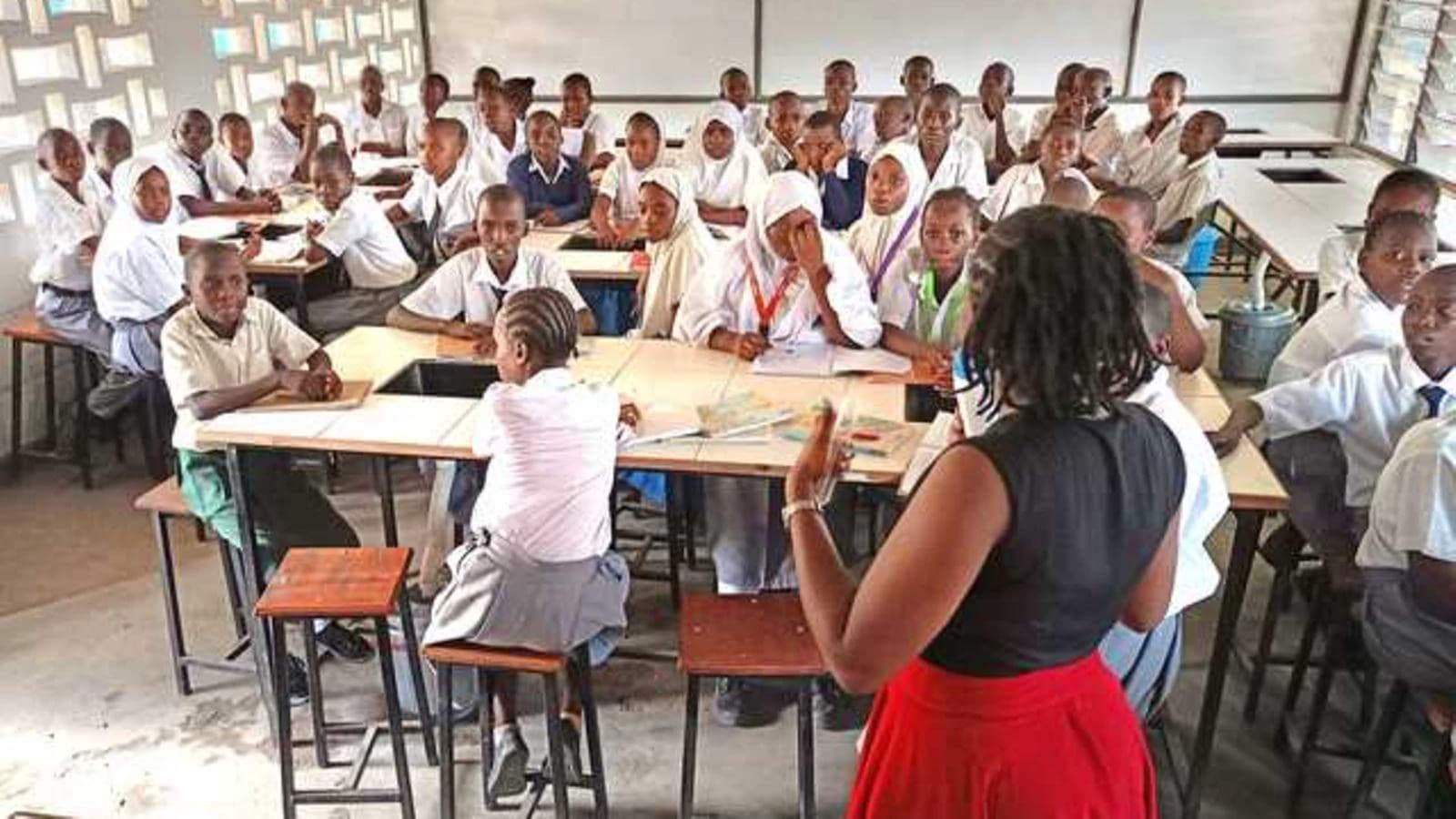






Kenya's school retention challenge is placing junior school teachers at the centre of efforts to keep learners in education, as poverty, peer pressure, family responsibilities and emotional distress threaten children's progression through the system.
Kenya's ambition to provide every child with access to quality basic education faces a critical test as enrolment figures reveal a substantial decline in learner numbers between successive grades.
According to figures published in the Kenya National Bureau of Statistics (KNBS) Economic Survey 2026, Grade 6 enrolment stood at 1,315,400 learners in 2022, before falling to 1,149,800 in Grade 9 in 2025. The difference of 165,600 learners raises serious questions about retention as children progress through junior school.
However, the figures do not establish that every learner missing from the successive enrolment totals permanently dropped out. Transfers, repetition, migration and other circumstances may contribute to the decline. Authorities must trace individual learners to establish how many left school, changed institutions or moved into alternative education pathways.
Beyond the statistics lies an urgent responsibility for schools: identifying children who are struggling and intervening before temporary absence, academic frustration or family hardship becomes permanent educational exclusion.
Junior school (JS) teachers are particularly well positioned to help address this challenge. Their responsibility extends beyond delivering lessons, administering assessments and completing the curriculum. They must also help learners navigate adolescence, withstand harmful social pressures and recognise the opportunities that education can provide.
Junior school is a critical stage for learner retention
The transition from primary to junior school coincides with significant physical, emotional and social changes. Learners encounter new academic expectations while becoming increasingly influenced by friends, family circumstances and their perceptions of the future.
Some begin to question the value of education when they struggle academically or see no immediate financial benefit from attending school. Others become discouraged by repeated failure, bullying, family conflict or the inability to meet basic school requirements.
For children from economically vulnerable households, the pressure can be especially severe. A learner who regularly attends school hungry, lacks essential learning materials or must help support the family may struggle to concentrate and maintain consistent attendance.
These difficulties can gradually weaken a child's connection to school. Repeated absence may lead to missed lessons, declining performance and embarrassment about falling behind classmates. Without timely support, the learner may eventually disengage from education altogether.
Teachers should therefore treat school attendance and learner participation as important indicators of well-being, not merely administrative requirements.
A child who suddenly becomes withdrawn, repeatedly misses lessons, stops completing assignments or shows a marked decline in performance may need support rather than punishment alone.
Peer influence can strengthen commitment to education, but it can also encourage behaviour that undermines school attendance and academic progress.
Some learners may be persuaded that education offers little value, particularly when they compare their circumstances with those of peers who appear to be earning money or enjoying greater freedom outside school.
Others may abandon academic effort because they fear being ridiculed for working hard, performing poorly or pursuing ambitions that differ from those of their friends.
Junior school teachers can help learners develop the confidence to make independent decisions and resist pressure that threatens their education.
Mentorship sessions, classroom discussions, clubs, sports and collaborative learning activities can provide opportunities for learners to discuss challenges, build friendships and develop a sense of belonging.
Teachers should also help children understand that their future should not be determined by the choices of their peers. Remaining in school does not guarantee automatic success, but completing education can widen access to further training, employment and other opportunities.
Equally important is avoiding labels that portray struggling learners as lazy, indisciplined or incapable. Public humiliation and harsh comparisons can deepen disengagement, particularly among children already experiencing difficulties at home or in class.
Firm discipline remains necessary, but it should be fair, constructive and sensitive to the circumstances affecting a learner's behaviour.
Poverty and regional inequalities threaten school participation
Although teachers cannot eliminate household poverty, they can help schools identify children whose education is threatened by financial hardship.
The cost of schooling may include uniforms, transport, meals, accommodation, learning materials and other essential requirements. Even where government funding supports basic education, some households struggle to meet these additional expenses.
When families face competing financial demands, children may miss lessons, undertake casual work or assume responsibilities that interfere with school attendance.
Teachers should report such concerns through appropriate school structures so that administrators can explore bursaries, school meals, community assistance and other available interventions.
Regular engagement with parents and guardians can also help schools understand why a learner is absent and identify practical solutions.
Such engagement must be respectful. Families experiencing financial hardship should not be shamed or treated as though they do not value education. Many parents are making difficult decisions with limited resources.
The goal should be to work with families to keep children learning, rather than wait until a learner has been absent for an extended period before taking action.
The factors that interrupt education vary by gender, age, household circumstances and location.
Girls may experience teenage pregnancy, early marriage, sexual harassment, domestic responsibilities and restrictions on their movement or participation in education. Boys may face pressure to undertake casual labour, support household income or conform to social expectations that discourage them from seeking help when they struggle.
Neither group should be assumed to face the same risks in every community.
The 2026 reporting on junior school enrolment showed that girls accounted for 18,300 of the 27,900 learners missing from the Grade 6-to-Grade 7 transition figures in 2023. However, the pattern differed across the longer junior school period, demonstrating why gender comparisons must specify the grades and years involved.
These figures are indicators of changes in enrolment, not proof of the circumstances of individual learners.
Teachers should provide safe opportunities for girls and boys to discuss their concerns and access guidance. Where abuse, exploitation, sexual violence or other threats to a child's safety are suspected, the matter must be referred through appropriate child-protection channels.
The school participation challenge is not evenly distributed across Kenya.
The 2025 Foundational Literacy and Numeracy Assessment (FLANA), reported in 2026, found that 5.8 per cent of children aged four to 17 were out of school nationally.
The assessment identified substantial county disparities. Garissa recorded 27.3 per cent of children in the relevant age group out of school, followed by Mandera at 20.9 per cent, Turkana at 18.2 per cent and Marsabit at 17.1 per cent.
Long distances to schools, insecurity, poverty, limited infrastructure and difficult living conditions can create additional barriers in some arid and semi-arid areas.
These challenges require more than general appeals for parents to send their children to school. Education authorities must identify the barriers specific to each community and direct resources towards areas with the greatest needs.
The national out-of-school estimate must also be distinguished from the decline in enrolment between Grade 6 and Grade 9. The former measures children outside school across a specified age group, while the latter compares enrolment totals for a particular cohort over time.
Both measures are useful, but neither alone establishes how many individual children permanently abandoned education.
Academic and emotional support essential to learner retention
Learners who repeatedly struggle with schoolwork may gradually lose confidence and begin to believe that education is beyond their abilities.
This is particularly important when children move into a more demanding learning environment without receiving adequate support in foundational skills.
The 2025 FLANA findings raised concerns about learning gaps, including difficulties among Grade 6 learners in comprehending English passages and solving numeracy problems set at Grade 3 level.
These findings do not prove that learning difficulties caused the reported decline in enrolment. They nevertheless demonstrate the importance of identifying gaps early and providing remedial assistance before learners fall further behind.
Junior school teachers should use classroom assessments to identify areas where individual learners need help. Constructive feedback, manageable learning goals and opportunities to improve can help children recognise progress instead of viewing every poor result as a final judgment on their abilities.
Teachers should also help learners discover their strengths and interests. Under Competency-Based Education (CBE), learners can pursue different interests and abilities through senior school pathways and subsequent education or training opportunities.
A learner who struggles in one subject may excel in sport, creative activities, practical tasks or another area of learning. Recognising such strengths can restore confidence and help children see that their future is not determined by a single examination result.
School dropout cannot be addressed effectively without recognising the emotional pressures learners may experience.
Bullying, family conflict, academic anxiety, social exclusion and fear of disappointing parents can affect concentration, attendance and motivation.
Teachers should create classroom environments where learners can seek help without fear of ridicule. They should also be alert to persistent withdrawal, hopelessness, extreme distress and other changes that may indicate a need for professional support.
Teachers are not expected to diagnose mental health conditions. Their role is to listen, recognise concerns, provide appropriate support within their competence and refer learners to qualified counsellors, health professionals or child-protection services when necessary.
Where a learner faces an immediate risk of harm, the school should follow appropriate safeguarding procedures rather than leave the child to manage the situation alone.
The responsibility for retaining learners cannot rest on individual teachers alone.
School leaders need effective systems for monitoring attendance, contacting families, identifying children at risk and coordinating interventions. Teachers also require reasonable workloads, access to guidance and counselling services, and support from relevant education and child-protection professionals.
Overcrowded classrooms, inadequate learning materials and teacher shortages can make it difficult to give vulnerable learners the attention they require.
The Ministry of Education should strengthen learner-tracking systems to establish what happens to children whose names disappear from school enrolment records.
Such systems should distinguish learners who transfer to other schools from those who repeat grades, temporarily withdraw, enter alternative education or permanently leave school.
Accurate data would help authorities target interventions and evaluate whether policies intended to improve retention are working.
Kenya's education reforms cannot achieve their full purpose if children enrol in school but fail to complete basic education.
The reported decline of 165,600 learners between Grade 6 in 2022 and Grade 9 in 2025 should prompt a concerted effort to establish where the learners went and what support they may need.
For junior school teachers, the response begins with everyday actions: noticing unexplained absence, listening to a struggling child, engaging parents, providing academic support and referring serious concerns to the appropriate professionals.
These interventions cannot solve every structural problem, but they can prevent some difficulties from escalating into permanent disengagement.
The government must address funding, staffing, infrastructure and regional inequalities, while school leaders build effective systems for learner protection and follow-up.
Ultimately, the success of Kenya's education system should not be measured by enrolment figures and assessment participation alone. It should also be measured by whether learners attend consistently, acquire essential skills, complete basic education and have a genuine opportunity to progress.
It is time for junior school teachers to help learners cope with the pressures to quit school. Every child who is struggling deserves to be heard, supported and given a realistic opportunity to continue learning.



Reader Discussion (0)
Sign in to comment