Narok County celebrated the World Day for Cultural Diversity, Dialogue, and Development at Ole Ntimama Stadium, with leaders warning that Kenya’s rich cultural heritage risks extinction if communities abandon traditional practices in favour of modern lifestyles.
The event, organized jointly by the UNESCO Kenya National Commission and the Narok County Government, brought together cultural practitioners, government officials, scholars, and members of the public from across the country to showcase Kenya’s diverse traditions through music, dance, attire, and storytelling.
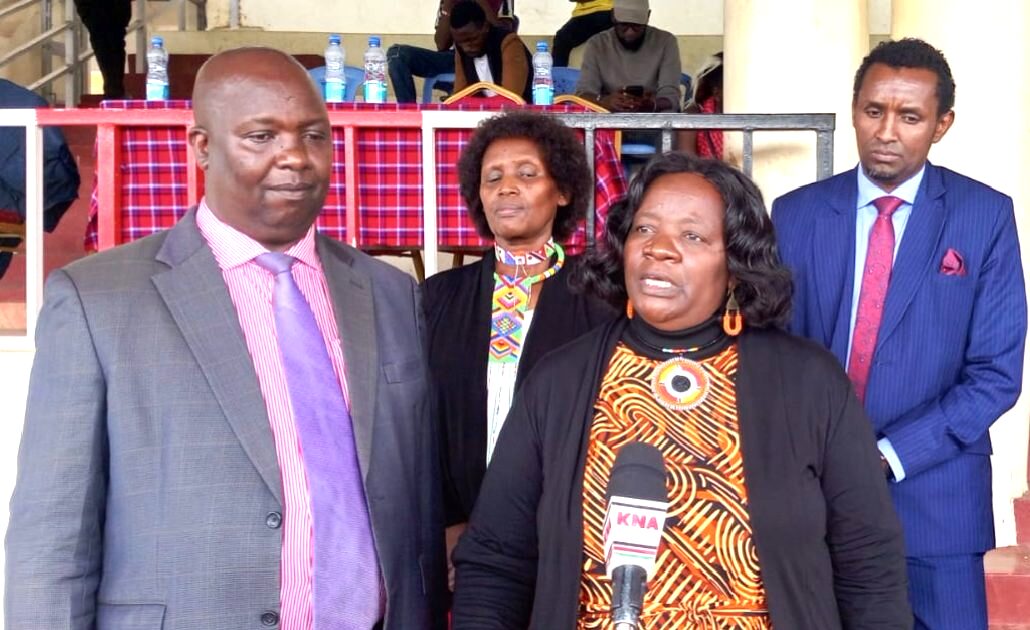
County Executive Committee Member in charge of Tourism, Wildlife and Culture Robert Simuoto emphasized the importance of preserving cultural identity, noting that no culture should be considered superior to another.
“Every culture is superior in its own way, and it must be appreciated; it must be nurtured,” said Simuoto.
Harmful cultural practices
At the same time, he cautioned that harmful practices such as female genital mutilation (FGM) must be eliminated, saying they continue to hinder girls’ access to education and overall development.
Speaking during the celebrations, Simuoto said Narok was selected to host the national event due to its strong cultural diversity and identity, noting that the county’s social fabric reflects Kenya’s broader multicultural character.
“We can harness the diversity within Kenya for development. Kenya belongs to all of us, and no culture is inferior to any other,” he said.
He called on leaders at all levels to promote unity and inclusivity, urging Kenyans to embrace cultural diversity as a source of strength rather than division.
Representing the National Cohesion and Integration Commission, Kilian Nyambu said Kenya’s diversity has often been misused to fuel division instead of being harnessed for unity and national development.
He warned that the erosion of cultural values poses a serious risk to identity and social cohesion.
Quoting a Swahili proverb, Nyambu said: “Mwacha mila ni mtumwa,” urging Kenyans to preserve their cultural heritage while also adapting it to modern economic opportunities.
He noted that culture should not only be seen as a symbol of identity but also as an economic asset capable of supporting artists, creatives, and local communities.
Cultural preservation
Emily Njeru, Director of Culture at the Kenya National Commission for UNESCO, praised Narok for its commitment to preserving and promoting cultural heritage, saying the county provided an ideal setting for the national celebrations.
“We look forward to a day when all Kenyans will be proud of our rich, diverse cultural heritage so that we can benefit from our music and from our indigenous resources,” said Njeru.
She emphasized the need for stronger policies and partnerships to ensure cultural heritage is protected and leveraged for sustainable development.
Bursuna Ejere, Coordinator of the Centre for Cultural Heritage Studies at Maasai Mara University, announced that the institution has established a dedicated centre to support research, preservation, and conservation of Kenya’s diverse cultural heritage.
He said academic institutions have a critical role to play in documenting traditions and ensuring cultural knowledge is passed on to future generations.
Peace and nationhood
The celebrations, held under the theme “Celebrating Kenya’s Cultural Diversity for Peace, Nationhood, and Development,” attracted communities from different parts of the country who showcased their traditional practices, crafts, and performances.
READ ALSO: PS Tanui: New outsourcing initiative positions Kenya as global IT hub, creates youth employment
Organisers noted that the free-entry event was aimed at encouraging public participation and fostering greater appreciation of Kenya’s cultural diversity as a driver of unity, peace, and development.
By Kimutai Lngat
You can also follow our social media pages on Twitter: Education News KE and Facebook: Education News Newspaper for timely updates.
>>> Click here to stay up-to-date with trending regional stories
>>> Click here to read more informed opinions on the country’s education landscape