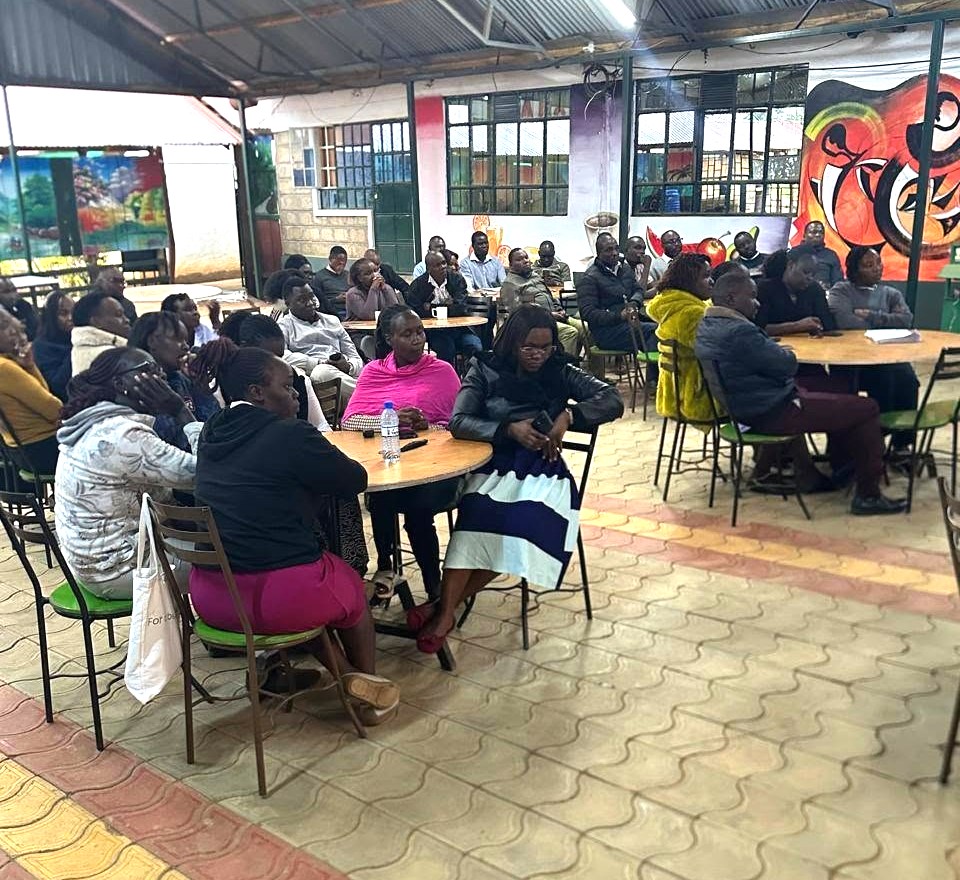
- Hillary Muhalya examines how GLOHA Family Welfare has supported more than 700 students facing financial barriers to tertiary education.
- The initiative provides financial assistance towards essential costs, including tuition and accommodation.
- Its community-based model highlights how collective support could strengthen Kenya’s education financing safety net.
For hundreds of young Kenyans, completing secondary school should mark the beginning of a new chapter. An admission letter to university or college should open the door to opportunity, reward years of hard work, and provide a pathway toward a better future.
However, for many families, that admission letter is also a source of financial anxiety.
A student may have achieved the required grades, secured admission, and aspired to become a graduate, yet still lack the financial means to begin the journey. Tuition fees may be unaffordable, accommodation out of reach, and additional costs such as food, transport, books, and learning materials may further strain already limited resources.
It is at this critical juncture—between academic qualification and financial capacity—that GLOHA Family Welfare is making a meaningful impact.
The initiative has supported more than 700 students with financial assistance aimed at easing the cost of tertiary education. This support covers essential expenses such as tuition and accommodation, enabling students who might otherwise have been unable to proceed with their studies to pursue their academic goals.
The origins of the GLOHA Family initiative date back to 2017, when members of the Glorious Church community began a small, trust-based savings and mutual support culture. What started as informal assistance among church members gradually evolved into a structured financial movement. As participation increased, the group formalised its operations into a SACCO, expanding membership beyond the original church-based bond while maintaining its core values of shared responsibility and collective upliftment.
Over time, this foundation developed into what is now known as GLOHA Family Welfare—a broader support system addressing not only education, but also healthcare, weddings, family welfare, community development, and engagement with clergy and ministerial activities.
But the story of GLOHA extends beyond education alone.
GLOHA SACCO has its roots in the church community. According to its official history, the SACCO was founded in 2017 by members working at Glorious Church before membership was later opened beyond that original common bond. Its wider Family Welfare programme has since evolved into a comprehensive community support model covering education, healthcare, weddings, family welfare, and community development, while also engaging in clergy and ministerial activities.
Bishop Boniface Mang’eti has also been associated with the broader church leadership ecosystem that shaped and supported these early foundations.
This church-rooted foundation gives the initiative a distinctive character: a financial and welfare model built on the principle of people supporting one another during some of life’s most significant moments.
Its ambition is increasingly national in scope, with GLOHA describing its programmes as part of broader nationwide campaigns and initiatives. The emerging model is therefore not limited to supporting a few families in one locality, but rather aims to build a wider network through which individuals can contribute to the welfare and advancement of others across Kenya.
At the centre of the GLOHA movement is Bonface Mang’eti, the Founder and President of GLOHA SACCO, whose leadership has been instrumental in the development of the SACCO and its broader family-support model.
The significance of the initiative extends beyond the number of beneficiaries. It raises a fundamental national question: What happens to a student who qualifies academically but cannot afford to take up the opportunity?
Kenya has made considerable progress in expanding access to education. Thousands of young people complete secondary school each year and qualify for university, TVET institutions, and colleges. However, qualification is only the first step.
The greater challenge lies in ensuring that students are able to report to their institutions, remain enrolled, and ultimately complete their studies.
For many struggling households, tertiary education remains costly. Tuition is only one component of the financial burden. Students also require accommodation, food, transport, books, registration fees, learning materials, and other essential necessities.
For those studying away from home, accommodation alone can become an immediate barrier.
As a result, a student may have the grades, the admission letter, and the ambition, yet still remain at home because the family cannot raise the funds required to begin the journey.
This is the gap that GLOHA Family Welfare seeks to address.
Building an education safety net
The GLOHA approach is particularly notable because it views education as part of a broader family welfare system, rather than an emergency intervention activated only during moments of crisis.
According to GLOHA’s published programme information, members contribute KSh1,000 per person per month, with a six-month maturity period before education benefits become accessible. The programme provides university support ranging from KSh100,000 to KSh200,000, in addition to assistance for high school beneficiaries.
The concept is simple yet powerful: preparation before need arises.
Instead of waiting until a child receives an admission letter and the family begins urgently seeking funds, regular contributions help build a financial safety net that becomes available when education-related expenses arise.
It represents a shift from financial desperation to structured preparation.
It also demonstrates the strength of collective responsibility. While KSh1,000 may appear modest at an individual level, consistent contributions from many members can generate a significant pool of resources capable of supporting families during critical educational transitions.
This model raises an important question about the future of education financing in Kenya.
Should the responsibility of financing education rest solely with government?
While government remains central to ensuring equitable access to education, the scale and complexity of the challenge require complementary support from other stakeholders.
Counties, NG-CDF programmes, HELB, SACCOs, private sector actors, alumni associations, churches, clergy, foundations, community groups, and individual philanthropists all have a role to play in strengthening the education ecosystem.
This is where GLOHA’s nationwide vision becomes particularly relevant.
By bringing together members from different communities and counties, such a model has the potential to transform small individual contributions into a broader social safety net.
The idea is especially significant in a country where families face similar challenges regardless of geography.
A student in Turkana may face the same accommodation challenges as a student in Kisii. A family in Bungoma may struggle with university fees just as a family in Mombasa does. A young person in West Pokot may have the same academic ambition as one in Nairobi.
While locations differ, the financial barriers remain largely consistent.
A truly nationwide welfare network therefore reinforces the idea that education is not solely an individual family responsibility, but also a shared societal commitment.
The GLOHA initiative also underscores an important distinction: education support should not be viewed merely as charity.
It is an investment in human capital.
When a young person is supported through university or college, the benefits extend far beyond the individual. Graduates can secure employment, start businesses, create jobs, support families, contribute taxes, and apply their skills to the broader economy.
Supporting one student can therefore generate a ripple effect across families and communities.
This positions education financing not only as a welfare concern, but also as a long-term economic investment.
From admission to graduation
However, the most critical issue highlighted by the GLOHA story is the gap between qualification and access.
Kenya often celebrates the number of students who qualify for university and college. Yet a more pressing question remains:
How many of those students actually report to their institutions?
And after reporting:
How many are able to remain until graduation?
A student who receives an admission letter but cannot report due to financial constraints is technically qualified but practically excluded.
Similarly, a student who enrols but drops out due to lack of accommodation, food, or other basic needs has not truly accessed tertiary education in a meaningful way.
This is why support for both tuition and accommodation is so critical.
The objective should not end at admission.
It should extend to ensuring that students reach campus, remain enrolled, and ultimately graduate.
The experience of more than 700 beneficiaries supported through GLOHA offers a broader lesson for Kenya.
Education financing must become more innovative, inclusive, and collaborative.
Families can plan ahead for education costs. Communities can establish support systems. SACCOs can design education-focused welfare products. Churches and clergy can mobilise support. Corporates can fund scholarships. Alumni networks can assist needy students. Counties and public institutions can strengthen bursary programmes, while government continues to enhance national student financing mechanisms.
No single actor should bear the burden alone.
The story also compels Kenya to confront a difficult question:
How many qualified students remain at home due to financial constraints?
How many admission letters go unutilised?
How many aspirations are delayed because families cannot afford tuition and accommodation?
And how many talented young people are lost—not due to lack of ability, but due to lack of financial support at a critical transition point?
These are the questions that should shape the national conversation.
The more than 700 students supported through GLOHA Family Welfare are not merely beneficiaries of financial assistance. They represent what becomes possible when financial barriers are intentionally addressed within the education pathway.
For some, the support has meant the difference between staying at home and joining university.
For others, it has meant the difference between dropping out and completing their studies.
For their families, it has meant witnessing a child’s educational aspirations move from possibility to reality.
For Kenya, it serves as a powerful reminder that education is too important to be left to chance.
The broader opportunity now is to extend this lesson beyond the 700-plus beneficiaries and explore whether a nationwide network rooted in community solidarity can help strengthen the education safety net across all 47 counties.
Government must continue to play its central role. However, society must also embrace innovative approaches to building financial pathways for students.
Ultimately, the true measure of an education system is not only how many students enter school or qualify for university, but whether ability, ambition, and hard work can overcome poverty as a barrier to opportunity.
For the more than 700 students supported by GLOHA, financial assistance has likely done more than cover education costs—it has reopened doors that poverty had temporarily closed.
READ ALSO: When good teachers stop caring: How poor leadership quietly weakens schools
And perhaps the most enduring message from their experience is simple: An admission letter should mark the beginning of a student’s journey—not the point at which financial hardship brings that journey to an end.
By Hillary Muhalya
You can also follow our social media pages on Twitter: Education News KE and Facebook: Education News Newspaper for timely updates.
>>> Click here to stay up-to-date with trending regional stories
>>> Click here to read more informed opinions on the country’s education landscape