A private secondary school built on public land is among dozens of properties demolished by the Machakos County Government in an ongoing exercise aimed at reclaiming grabbed land in Utawala, Muthwani Ward, to create space for public utilities.
A similar exercise targeting properties built on riparian land in an effort to avert flooding is also nearing completion in the same area.
Airways High School, which was built on a five-acre piece of land and has operated for about 10 years, was brought down by county government bulldozers as the owner watched.
Speaking to the press at the site on Thursday, Lands, Urban Development, Housing and Roads County Executive Committee Member Nathaniel Nganga said the county government was systematically demolishing all properties built on public land in Mavoko Sub-county.
“We do not have public utilities in this area because land that had been set aside for that purpose has been grabbed. We do not want wananchi to continue suffering because of a few greedy individuals,” said Nganga.
More than 50 buildings, including homes, business premises, and churches, have so far been demolished, with about 100 others earmarked for demolition.
Nganga was accompanied by Municipality Manager Justus Kiteng’u, who has been leading the demolitions, alongside county government surveyors, physical planners, and other officials.
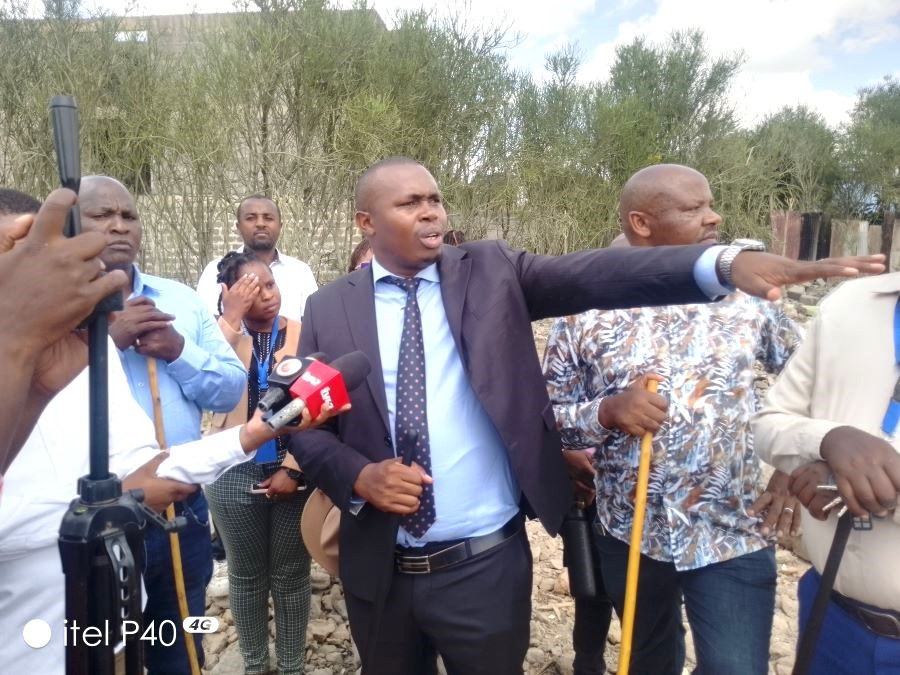
The CECM warned land-selling companies, buyers, and brokers against engaging in fraudulent land deals that could later prove costly.
Surveyor Fred Mutuku said investigations conducted by the county government confirmed that the school had been built on public land.
READ ALSO: Machakos County begins demolitions on Utawala river banks to curb flooding
Muthwani Member of County Assembly Dominic Maitha said the demolitions were carried out following complaints and concerns raised by residents.
Riparian land in Kenya: definition, laws, demolition and key guidelines
| Topic | Explanation |
|---|---|
| What is riparian land? | Riparian land refers to the area adjacent to rivers, streams, lakes, wetlands, dams, and other water bodies that is environmentally sensitive and protected from harmful human activities. It acts as a buffer zone that protects water resources, controls flooding, prevents soil erosion, filters pollutants, and conserves biodiversity. |
| Purpose of riparian land | Riparian zones help prevent flooding, protect riverbanks from erosion, conserve ecosystems, recharge groundwater, improve water quality, and support aquatic and terrestrial biodiversity. |
| Main law governing riparian land in Kenya | The Constitution of Kenya (2010), Environmental Management and Coordination Act (EMCA), Water Act 2016, Physical and Land Use Planning Act (PLUPA), Land Act 2012, and regulations by the Water Resources Authority (WRA) guide management and protection of riparian land. |
| Constitutional provisions | Article 42 of the Constitution guarantees every person the right to a clean and healthy environment. Article 62 classifies rivers, lakes, and water catchment areas as public land. |
| Water Act 2016 | The Water Act gives the Water Resources Authority powers to regulate and protect water resources, including riparian reserves. |
| EMCA provisions | EMCA prohibits activities that degrade rivers, wetlands, and environmentally sensitive ecosystems. NEMA oversees environmental compliance. |
| Riparian reserve width in Kenya | In many cases, riparian reserves range between 6 and 30 metres from the highest recorded water level, depending on the size and characteristics of the water body, though courts and agencies sometimes apply case-specific interpretation. |
| Activities prohibited on riparian land | Construction of houses, schools, businesses, perimeter walls, dumping of waste, farming too close to rivers, quarrying, and obstruction of natural water flow are generally prohibited without approval. |
| Agencies responsible | Water Resources Authority (WRA), National Environment Management Authority (NEMA), County Governments, Ministry of Lands, Survey Department, and National Land Commission (NLC). |
| Why demolitions occur | Demolitions are carried out to reclaim public land, restore natural water channels, reduce flooding risks, protect ecosystems, and enforce planning and environmental laws. |
| Common structures demolished | Houses, schools, churches, business premises, perimeter walls, rental apartments, petrol stations, kiosks, and factories built on riparian reserves or public land. |
| Legal basis for demolition | County governments and national agencies rely on environmental laws, court orders, physical planning regulations, public land laws, and WRA/NEMA recommendations when removing illegal structures. |
| Role of county governments | Counties enforce planning approvals, zoning regulations, development control, and environmental compliance within their jurisdictions. |
| Role of NEMA | NEMA ensures environmental impact assessments are conducted and environmental laws are complied with before developments occur. |
| Role of WRA | WRA identifies, protects, and regulates riparian reserves and water resource areas. |
| Consequences of building on riparian land | Structures may be demolished, owners may lose investments, approvals may be revoked, and developers may face legal penalties or environmental restoration costs. |
| Why schools and homes are affected | Some developers illegally acquire or sell public land, while some buyers fail to verify ownership, planning approvals, or environmental compliance before construction. |
| Flooding and riparian encroachment | Encroachment blocks natural water flow and drainage systems, increasing risks of floods during heavy rains. |
| Environmental impact of encroachment | Riparian encroachment destroys ecosystems, pollutes water, increases soil erosion, and threatens biodiversity. |
| Court position in Kenya | Kenyan courts have repeatedly upheld the protection of riparian reserves and allowed removal of illegal structures in environmentally sensitive areas. |
| What developers should do before construction? | Verify land ownership, conduct surveys, seek county approvals, confirm riparian boundaries with WRA, obtain NEMA approval where necessary, and conduct environmental impact assessments. |
| Advice to land buyers | Buyers should avoid purchasing land near rivers or wetlands without official verification from surveyors, county governments, and water authorities. |
| Importance of public utilities land | Land reserved for roads, schools, hospitals, drainage systems, and utilities is protected because it serves the wider public interest. |
| Long-term solution | Proper land planning, enforcement of environmental laws, public awareness, transparent land allocation systems, and strict development control are essential in protecting riparian land. |
He noted that although the exercise was unpopular among some beneficiaries, it was necessary for the greater good of society.
In 2024, at least 27 schools in Nairobi were identified as having been built on riparian land and faced possible demolition during a government crackdown on illegal structures along waterways. Authorities said the exercise aimed to restore drainage systems, reduce flooding, and reclaim public land.
In 2026, Johnson Sakaja announced fresh demolition plans targeting structures built on riverbanks and flood-prone areas after severe flooding hit parts of the city.
Over the years, demolitions in Nairobi have affected schools, homes, churches, and business premises built on riparian reserves, with agencies such as WRA, NEMA, and county governments insisting that illegal structures on protected land remain subject to removal.
By Stephen Muthini and Joseph Mambili
You can also follow our social media pages on Twitter: Education News KE and Facebook: Education News Newspaper for timely updates.
>>> Click here to stay up-to-date with trending regional stories
>>> Click here to read more informed opinions on the country’s education landscape