- A Sh52 million modernisation project is set to transform learning facilities at Nyaribo Primary School in Nyeri.
- The project will deliver permanent classrooms, science and computer laboratories and a new ECDE centre.
- Hillary Muhalya argues that modern infrastructure is essential if CBE is to deliver meaningful experiential learning.
For years, children at Nyaribo Primary School in Nyeri have been learning under conditions that have increasingly stood at odds with the ambitions of Kenya’s modern education system.
They have studied science without a proper laboratory, encountered technology largely through descriptions rather than direct experience and attended lessons in ageing structures that offered limited room for the kind of experiential learning demanded by today’s curriculum.
That reality is now beginning to change.
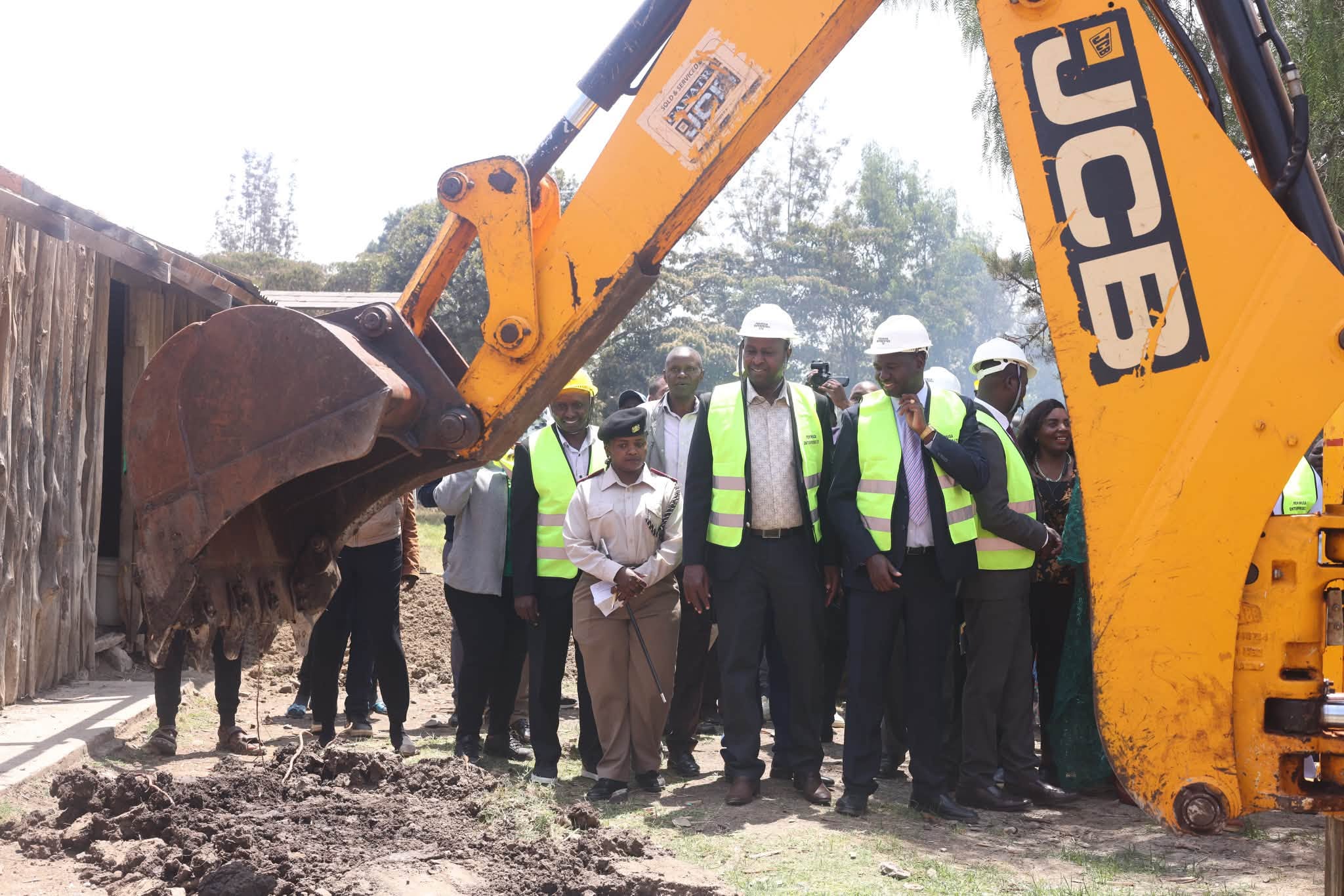
The groundbreaking of a Sh52 million modernisation project at Nyaribo Primary School is more than a construction ceremony. It represents a potentially transformative partnership between the M-Pesa Foundation and the Ministry of Education, and a powerful reminder that curriculum reform cannot succeed fully unless it is accompanied by investment in the physical environments where learning takes place.
The project is being financed through a Sh50 million grant from the M-Pesa Foundation, with an additional Sh2 million from the Ministry of Education. Together, the investment will replace old structures with four permanent classrooms, a science laboratory, a computer laboratory and an Early Childhood Development Education centre.
For the learners of Nyaribo, these are not simply buildings.
They are gateways to opportunity.
A laboratory can change the way a child understands science. A computer laboratory can turn digital technology from an abstract concept into a practical tool. A modern classroom can improve the learning environment, while a properly equipped ECDE centre can strengthen the foundation upon which a child’s entire educational journey is built.
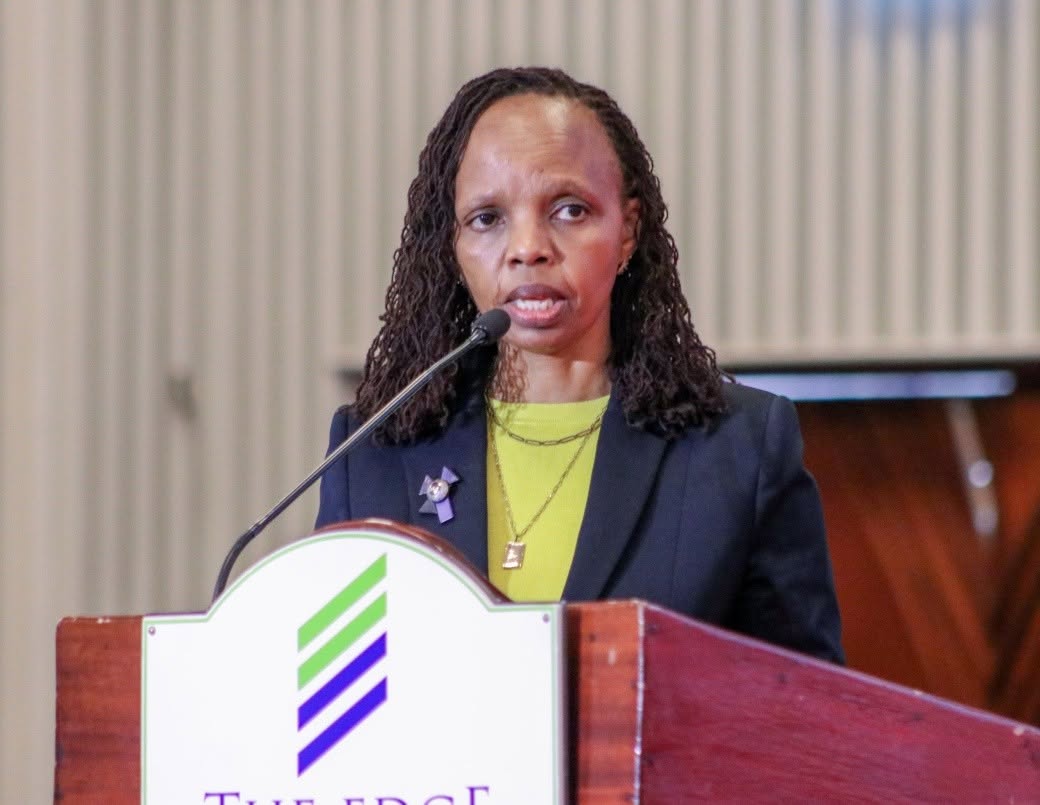
The significance of the project was captured powerfully during the groundbreaking ceremony by East African Community Principal Secretary Caroline Karugu, who noted that some learners had effectively been learning “imaginary science” because they lacked a laboratory.
That observation exposes a much deeper challenge confronting Kenya’s education sector.
CBE needs more than a curriculum
The country has increasingly embraced an education philosophy that places emphasis on competencies, practical skills, creativity, problem-solving, innovation and the ability to apply knowledge. Yet those aspirations can become difficult to realise when learners are expected to develop practical competencies without access to practical facilities.
A child cannot fully understand experimental science by reading about experiments alone.
A learner cannot meaningfully develop digital competence simply by hearing a teacher explain what a computer does.
And a curriculum that seeks to nurture creativity and innovation cannot be fully implemented in environments where basic learning resources remain inadequate.
This is where the Nyaribo intervention becomes bigger than Nyaribo.
It raises a fundamental national question: What does it mean to promise every Kenyan child a modern education if the infrastructure needed to deliver that education remains unequal?
The answer must be that curriculum transformation and infrastructure transformation go hand in hand.
The M-Pesa Foundation’s Sh50 million contribution, complemented by the Ministry of Education’s Sh2 million commitment, demonstrates how partnerships can accelerate the modernisation of schools.
But partnerships should also stimulate a broader national ambition.
Kenya has thousands of schools serving children from different social and economic backgrounds. Their physical environments vary enormously. Some have modern laboratories, libraries, ICT facilities and permanent classrooms, while others continue to struggle with basic infrastructure.
That gap has educational consequences.
A learner’s ability to participate meaningfully in practical science should not depend on the geographical location of the school they attend.
Neither should access to technology, quality classrooms or a stimulating early-learning environment.
Educational equity must therefore mean more than providing children with similar curricula on paper. It must also mean creating reasonably comparable opportunities to experience, practise and apply what that curriculum teaches.
This is particularly important as Kenya strengthens its Competency-Based Education approach.
CBE demands a shift from education that is heavily dependent on memorisation towards learning that encourages learners to investigate, create, communicate, collaborate and solve problems.
Such an approach requires teachers to have appropriate resources and learners to have environments where they can experiment.
The laboratory at Nyaribo will therefore serve a purpose far beyond its walls.
Instead of merely reading about scientific processes, learners will have an opportunity to observe them.
Instead of treating technology as something distant, they can begin interacting with it.
Instead of viewing science as a collection of facts to reproduce in an examination, they can begin experiencing it as a process of asking questions, testing ideas, making observations and drawing conclusions.
That is the essence of experiential learning.
Building from the foundation
The project is equally significant because it includes an ECDE centre.
Early childhood education must no longer be treated as the forgotten foundation of the education system.
The earliest years of a child’s life are critical for language development, numeracy, social interaction, confidence, curiosity, creativity and learning habits.
A strong education system must therefore build upwards from a strong foundation.
Investing in ECDE infrastructure is an investment in the quality of learners who will eventually progress into primary school, junior secondary school, senior secondary school, technical institutions and universities.
The same argument applies to the four permanent classrooms planned under the Nyaribo project.
A classroom is not simply a physical space where a teacher stands and learners sit.
It is part of the learning process.
A safe, permanent and well-designed classroom can enhance concentration, interaction, learner confidence and teacher effectiveness. Replacing old structures with modern facilities is therefore not merely an architectural upgrade. It is an investment in educational dignity.
The project also illustrates the importance of using partnerships strategically.
Government remains ultimately responsible for ensuring that every child has access to quality public education. At the same time, the scale of Kenya’s infrastructure needs makes responsible collaboration with the private sector, foundations and development partners increasingly important.
The M-Pesa Foundation’s contribution demonstrates what private-sector investment can achieve when it is aligned with national education priorities.
The Ministry of Education’s contribution, meanwhile, reinforces the principle that government must remain an active partner in the transformation of public schools.
The challenge now is to ensure that such interventions do not remain isolated success stories.
Nyaribo should be an example that can inspire replication elsewhere.
The national conversation should move from celebrating individual projects to developing systematic approaches for ensuring that schools across the country have the infrastructure required to deliver modern education.
There should be a deliberate push for laboratories, ICT facilities, libraries, modern classrooms, adequate sanitation, safe play areas and properly equipped ECDE centres.
Education funding must increasingly be judged not only by how much money is allocated but also by what learning opportunities that money creates.
Every laboratory constructed can potentially awaken a future scientist.
Every computer laboratory can introduce a child to a world of digital possibilities.
Every modern classroom can give a learner the environment needed to concentrate, explore and succeed.
Every properly equipped ECDE centre can strengthen the foundation of an entire educational journey.
From infrastructure to opportunity
This is why the Nyaribo project deserves attention beyond the boundaries of Nyeri.
Its greatest lesson is not the Sh52 million price tag.
Its greatest lesson is what happens when financial resources are deliberately converted into educational opportunity.
For years, some children were forced to imagine what a science laboratory looked like.
Soon, they will be able to walk into one.
Some had been introduced to computers largely through words.
They will now have an opportunity to interact with the technology itself.
Some learned in ageing structures.
They are now being promised modern spaces designed for a changing educational era.
That is the journey from imaginary science to real discovery.
And it is precisely the kind of transition Kenya’s education system must pursue if CBE is to move from policy documents into the daily experiences of learners.
The real measure of educational reform is ultimately not how impressive the policy sounds.
It is what a child can actually see, touch, experience, create and become because of it.
Nyaribo now has an opportunity to demonstrate that principle.
The partnership between the M-Pesa Foundation and the Ministry of Education has placed the school on a new path.
The task ahead is to ensure that the new infrastructure is completed to the highest standards, properly equipped, maintained and integrated into everyday teaching and learning.
Because a laboratory without equipment is only a room.
A computer laboratory without functioning technology is only a shell.
A classroom without effective teaching remains just a structure.
The real transformation will begin when the buildings are filled with curious learners, empowered teachers, practical lessons, experiments, digital exploration and new possibilities.
That is when the Sh52 million investment will truly begin paying dividends.
And that is when Nyaribo’s story will become more than a story about construction.
READ ALSO: Ex-St Patrick’s Iten student pursues case over last-minute Chess Olympiad removal
It will become a story about what happens when a nation decides that its children deserve not merely an education, but the tools, spaces and opportunities to experience education fully.
By Hillary Muhalya
You can also follow our social media pages on Twitter: Education News KE and Facebook: Education News Newspaper for timely updates.
>>> Click here to stay up-to-date with trending regional stories
>>> Click here to read more informed opinions on the country’s education landscape