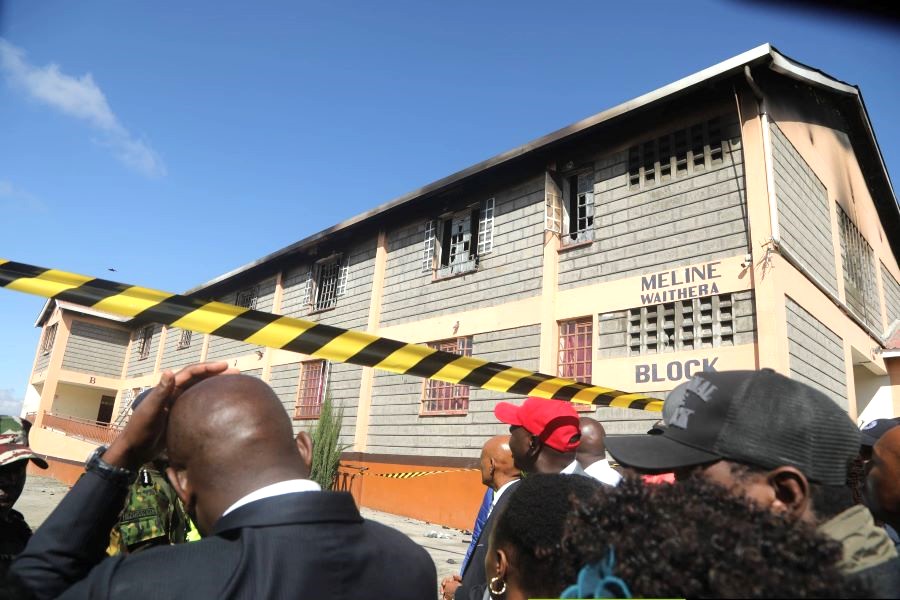
Kenya is mourning yet another school fire tragedy. The devastating blaze at Utumishi Girls Academy has reopened painful national memories of dormitories engulfed in flames, terrified students trapped behind metal grills, and families waiting helplessly outside school gates for news of their children.
Every time such a tragedy occurs, the country responds with outrage, grief, and promises of reform. Yet after the tears dry and investigations fade from headlines, very little fundamentally changes. The fires return. The deaths continue. The lessons remain unlearned.
For decades, Kenya has experienced recurring school infernos, many of them in boarding institutions. From the 2001 tragedy that killed 67 boys to more recent dormitory fires in Nyeri, Nairobi, and other counties, the pattern has become disturbingly familiar. Investigations often point to overcrowding, poor emergency preparedness, faulty electrical systems, student unrest, or negligence. Reports are written. Committees are formed. Recommendations are announced. But implementation remains weak and inconsistent.
The deeper tragedy is that most school fires are preventable.
Many boarding schools across Kenya still operate with alarming safety deficiencies. Dormitories designed decades ago for fewer learners now accommodate double or triple their intended capacity because of rising enrolment. Metal grills installed to prevent students from sneaking out or intruders from entering can quickly become death traps during emergencies. Some dormitories have only one accessible exit. Others lack functioning fire extinguishers, smoke detectors, or emergency alarms. In some institutions, students have never participated in a fire drill.
This reflects a broader national culture where compliance is often reactive rather than preventive. Fire safety inspections intensify only after deaths occur. School administrators rush to repaint buildings, purchase extinguishers, and clear pathways whenever government crackdowns begin. Months later, complacency returns. Safety becomes a paperwork exercise rather than a living institutional culture.
Pressure on schools
The pressure facing Kenyan schools also contributes to the problem. Many principals are overwhelmed by financial constraints, overcrowding, and intense expectations for academic performance. Resources that should strengthen infrastructure and student welfare are sometimes diverted toward examination preparation, prestige projects, or expansion. Dormitory safety upgrades rarely attract the same attention as KCSE mean scores or new tuition blocks.
Yet no examination result can justify unsafe learning environments.
Student frustration
Another uncomfortable truth is that some school fires are linked to student frustration, indiscipline, or psychological distress. This does not excuse criminal acts, but it forces society to confront what is happening inside many schools. In highly authoritarian environments where learners feel unheard, overcontrolled, or emotionally neglected, anger can manifest destructively. Students today are navigating immense pressure: academic competition, social anxiety, family instability, and uncertain futures. Some schools still respond with rigid command structures instead of meaningful guidance and counselling systems.
Kenya’s education sector has heavily invested in curriculum reforms, digital learning, and assessment models, but emotional wellbeing and institutional culture remain underdeveloped in many schools. Guidance and counselling departments are often weak, underfunded, or treated as secondary. Some learners suffer silently until tensions explode through violence, strikes, or destruction of property.
Role of parents and government
Parents, too, have a role to play. Increasingly, some families outsource moral formation entirely to schools while maintaining little engagement with the emotional lives of their children. Effective discipline is not built through fear alone. Young people require communication, mentorship, accountability, and emotional support both at home and in school.
Government agencies must also accept responsibility for weak enforcement. Kenya already has fire safety regulations and school infrastructure guidelines. The problem is not always the absence of policy but failure of implementation. Some schools continue operating despite obvious violations because inspections are irregular, compromised, or poorly coordinated. After every tragedy, officials promise stricter oversight. Yet dangerous conditions persist in many institutions across the country.
Lasting reforms
The country should treat school fires as a national emergency requiring sustained intervention rather than episodic reactions. Every boarding school should undergo mandatory independent safety audits annually. Dormitories should have multiple accessible exits, working extinguishers, smoke alarms, and clearly marked evacuation procedures. Fire drills should become routine rather than ceremonial events performed only during inspections.
Equally important is rethinking the culture of schooling itself. Schools must become spaces where learners feel secure, respected, and heard. Student leadership structures should be strengthened to allow grievances to surface before frustration escalates. Teachers and administrators should be trained not only in classroom instruction but also in adolescent psychology, conflict resolution, and crisis management.
Technology can also help. Modern fire detection systems are no longer luxuries reserved for elite institutions. If schools can invest millions in buses, gates, and branded infrastructure, they can invest in life-saving systems. County governments, alumni associations, and private partners can support vulnerable schools lacking resources.
Beyond temporary outrage
The media and the public should resist the cycle of temporary outrage. Each tragedy generates emotional headlines and political statements for a few days before national attention shifts elsewhere. Sustainable reform requires long-term pressure from citizens, parents, and professional bodies. School safety should become a permanent national conversation, not merely a breaking-news topic after deaths occur.
Ultimately, the true measure of an education system is not only how many students pass examinations, but also whether children are safe within its institutions. A nation cannot claim educational progress while learners continue dying in preventable dormitory fires.
The fire at Utumishi Girls Academy should not become another statistic added to Kenya’s painful archive of school tragedies. It should force a national reckoning. The country has buried too many children. The warnings have been repeated too many times. The investigations have produced enough recommendations to fill shelves.
READ ALSO: Moi Varsity in mourning over death of second-year student
What Kenya lacks is not knowledge of the problem. It is the collective discipline and political will to act before the next siren pierces another school compound in the middle of the night.
By Ashford Kimani
Ashford teaches English and Literature in Gatundu North Sub-county and serves as Dean of Studies.
You can also follow our social media pages on Twitter: Education News KE and Facebook: Education News Newspaper for timely updates.
>>> Click here to stay up-to-date with trending regional stories
>>> Click here to read more informed opinions on the country’s education landscape