In many Kenyan high schools today, one of the greatest challenges facing learners is not lack of intelligence, but limited thinking.
Too many students quietly underestimate themselves. Some believe greatness belongs only to children from wealthy families, top national schools, or privileged backgrounds.
Others conclude too early that because they failed Mathematics, struggle with English, or come from rural villages, they cannot compete globally.
Yet history continues to prove that human potential is not determined by background, but by mindset, discipline, and vision.
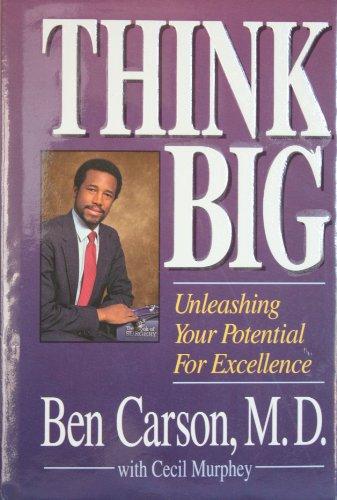
Few stories demonstrate this truth more clearly than the life of Ben Carson.
From one of the weakest students in class to one of the world’s best neurosurgeons — yes.
Ben Carson’s story teaches the power of mindset
Ben Carson was not born into comfort or privilege.
He grew up in poverty in Detroit, raised by a single mother who had little formal education.
As a child, he struggled academically and ranked among the weakest students in his class. His classmates mocked him, and many people doubted his future.
Despite these disadvantages, Ben Carson later became one of the world’s most respected brain surgeons.
His transformation did not begin with money or connections. It began with a change in thinking.
He started believing that he could become more than his circumstances.
That shift in mindset changed everything.
This is the lesson Kenyan high school students urgently need today: they must learn to think big.
Thinking big does not mean arrogance or unrealistic fantasies. It means refusing to imprison your future inside your current limitations.
It means believing that a student in a village school in Murang’a, Turkana, Kisii, Meru, Tana River, Kilifi, or Gatundu can someday become a doctor, engineer, lawyer, author, pilot, scientist, diplomat, entrepreneur, or global innovator.
Unfortunately, many learners shrink their dreams too early.
Some students already believe certain careers are reserved for “other people.” Others stop trying after poor examination results.
In some schools, learners fear speaking English, participating in debates, or expressing ideas because they assume they are inferior.
Such thinking quietly destroys potential long before examinations do.
Ben Carson’s story teaches that greatness begins in the mind before it appears in reality.
Reading culture and discipline matter
One of the major reasons Ben Carson succeeded was his reading culture.
His mother forced him and his brother to spend more time reading books instead of watching television endlessly.
Through reading, his world expanded. He discovered ideas, possibilities, and knowledge beyond his environment.
Kenyan students must embrace this lesson seriously.
A learner who reads widely begins thinking differently.
Reading introduces students to leaders, inventors, scientists, and reformers from around the world.
It strengthens communication skills, imagination, and confidence.
Unfortunately, many students today spend more time on social media than on books.
Hours disappear on short videos, gossip, celebrity drama, and entertainment, while dreams slowly weaken.
Thinking big requires feeding the mind with meaningful content.
Kenyan students must also stop fearing difficult subjects and careers.
Many students prematurely conclude that they “cannot do sciences” or “are not good at Mathematics.”
Yet Ben Carson himself once struggled academically before later mastering one of the most demanding medical specialities in the world.
Difficulty is not inability.
Sometimes learners simply need persistence, better study habits, mentorship, and confidence.
Another important lesson from Ben Carson’s life is the power of discipline.
Big dreams without discipline remain fantasies.
Carson worked tirelessly to improve himself. He spent long hours studying and preparing.
In Kenyan schools today, many students want success without sacrifice.
Some expect excellent grades while avoiding books, assignments, revision, and consultation with teachers.
Thinking big must be accompanied by hard work.
Students must avoid limiting beliefs
High school students must also avoid the dangerous habit of comparing themselves negatively with others.
Some learners lose confidence because they attend day schools rather than prestigious national schools.
Others feel disadvantaged because of poverty or family struggles.
Ben Carson’s background was full of hardship, yet he refused to become a victim of circumstances.
Kenyan students must understand that circumstances can delay progress but should never destroy ambition.

Another challenge facing many young people today is small social circles that discourage ambition.
Sometimes students are mocked for speaking good English, reading books, aiming high, or being serious about academics.
READ ALSO: From struggling student to world-class neurosurgeon: The inspiring story of Ben Carson
Peer pressure often celebrates mediocrity while mocking excellence.
Ben Carson succeeded partly because he learned to focus on long-term goals rather than on temporary approval from peers.
Students must choose friends who inspire growth rather than destroy dreams.
Kenyan students must believe in their potential
The Kenyan education system today offers enormous opportunities.
Through CBC pathways, university education, digital technology, scholarships, and global connectivity, students can now access knowledge and careers that were unimaginable decades ago.
However, opportunities only benefit learners who believe in their potential.
Thinking big also means developing character.

Ben Carson became respected not only because of his intelligence, but also because of his professionalism, humility, discipline, and persistence.
Kenyan students must understand that success is not built on grades alone.
Integrity, communication skills, emotional control, leadership, and resilience are equally important.
Teachers and parents also have a responsibility to nurture big thinking among learners.
Schools should encourage innovation, creativity, leadership, reading culture, and mentorship.
Students should constantly hear messages reminding them that they can compete globally regardless of their background.
Every Kenyan high school student should remember this: the world does not ask where you came from before rewarding excellence.
Talent, discipline, knowledge, and determination can lift anyone beyond limitations.
Ben Carson once moved from the bottom of the classroom to the top of the medical world.
His story is proof that impossible journeys can become possible when young people refuse to think small.
Kenyan students must therefore dream boldly, read widely, work consistently, and believe deeply in their future.
The next globally celebrated scientist, surgeon, inventor, author, or transformative leader may currently be sitting quietly in an ordinary Kenyan classroom.
By Ashford Kimani
Ashford teaches English and Literature in Gatundu North Sub-county and serves as Dean of Studies.
You can also follow our social media pages on Twitter: Education News KE and Facebook: Education News Newspaper for timely updates.
>>> Click here to stay up-to-date with trending regional stories
>>> Click here to read more informed opinions on the country’s education landscape