- Proposed reforms offer Kenya an opportunity to rethink how teachers are prepared for future classrooms.
- Singapore’s experience shows that institutional consolidation works best when accompanied by quality, research and continuous training.
- The ultimate measure should be better teachers and learning outcomes rather than administrative restructuring alone.
After six decades of independence, Kenya is once again reorganising teacher education. A Bill before Parliament proposes bringing all 32 Teacher Training Colleges under one institution.
Good. But centralisation is not transformation.
The danger is obvious: Kenya could spend years moving staff, assets and liabilities into one giant bureaucracy while classrooms remain unchanged.
We should be thinking much bigger.
Singapore offers a powerful historical lesson. Its teacher-training system evolved from a Teachers’ Training College established in 1950 into the National Institute of Education (NIE), created in 1991. The important achievement was not simply putting teacher training under one institution. Singapore built a professional system around quality, research, continuous training and national workforce planning.
That is where Kenya must be bold.
If the 32 colleges are brought together, the new institution should become the national engine of teacher excellence—not another administrative headquarters.
The Kenya 2060 test
By 2060, every Kenyan teacher should be trained for a world we cannot fully predict today.
Artificial intelligence will transform work. Technology will reshape classrooms. Climate change will alter communities and livelihoods. New industries will demand skills that today’s curriculum may barely imagine.
So why are we still training teachers mainly to deliver today’s curriculum?
Train teachers to create tomorrow’s learners.
The new system should make five things non-negotiable:
First, quality. Entry into teacher training should be competitive. Teaching must become a profession of choice for Kenya’s brightest and most committed young people.
Second, evidence. Teacher education must be driven by science about how children learn—not educational fashion. Kenya needs stronger links between teacher training, classroom research, psychology, technology and learning science.
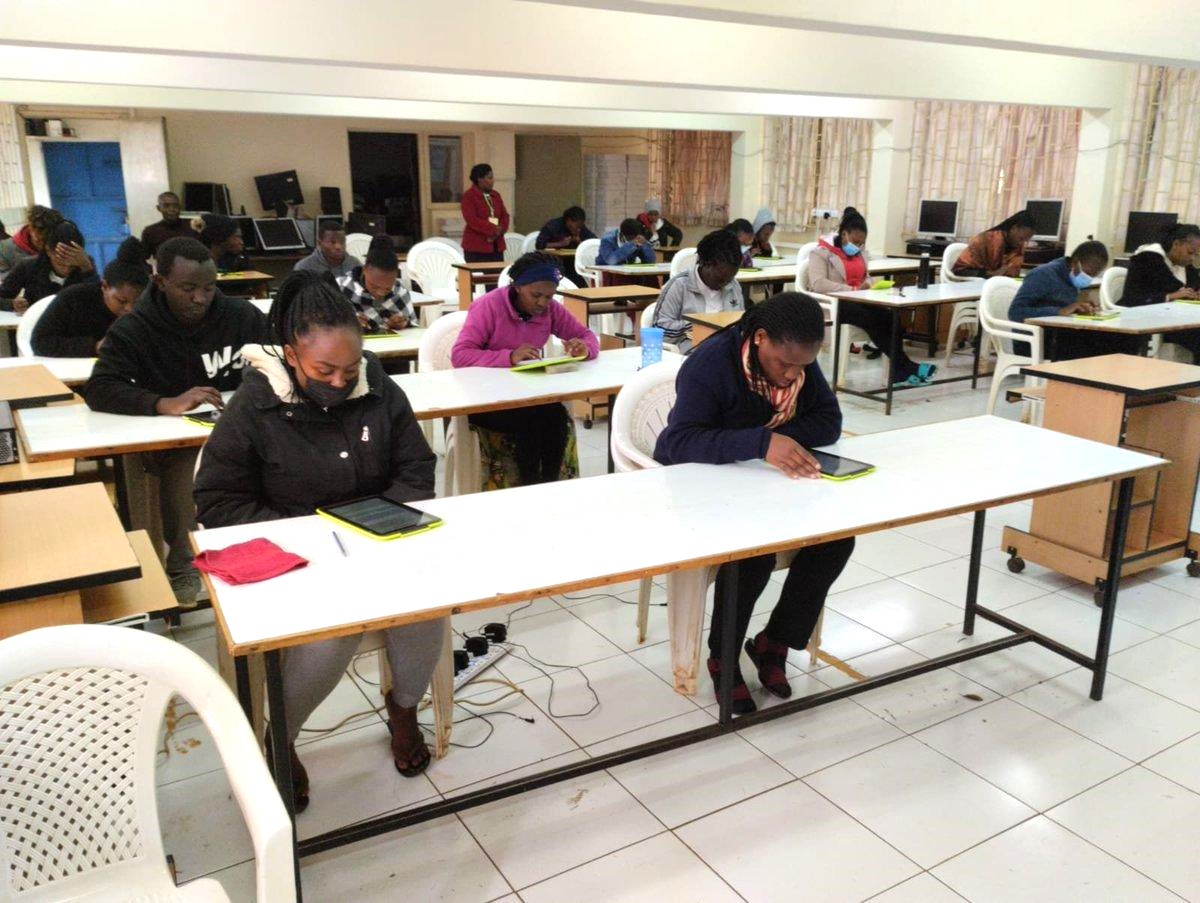
Third, practice. A trainee teacher should spend serious time in real classrooms before being trusted with a generation of children. Theory without classroom mastery is not enough.
Fourth, lifelong learning. A teacher should never stop learning. Digital skills, AI, special-needs education, leadership and new teaching methods must become part of continuous professional development.
Fifth, accountability. The new national institution must be judged by classroom outcomes—not the number of meetings held, offices created or files transferred.
This is where Parliament must be tough.
Do not approve a bigger bureaucracy and call it education reform.
Give the new institution measurable targets: teacher quality, classroom competence, research output, graduate employment, professional development and, ultimately, learning outcomes.
And give the 32 colleges a mission beyond producing certificates. Turn them into regional centres of teacher innovation, research and professional development.
Singapore’s experience shows that serious teacher education is a long-term national project. Kenya should take that lesson seriously—but build its own model for its own realities.
Our ambition should be simple:
By 2060, Kenya should export teaching expertise, not import educational solutions.
The Bill can be a beginning.
But Parliament must demand a revolution, not a rearrangement.
Building teachers for the future
The question is not whether 32 colleges can be controlled from one institution. The question is whether one national vision can produce millions of better learners.
That is the standard Kenya should demand.
READ ALSO: MMUST targets 130,000 indigenous trees in Western Kenya conservation drive
Build the teacher. Transform the classroom. Change the nation.
By Yabesh Onwong’a
The writer is a history and language analyst.
You can also follow our social media pages on Twitter: Education News KE and Facebook: Education News Newspaper for timely updates.
>>> Click here to stay up-to-date with trending regional stories
>>> Click here to read more informed opinions on the country’s education landscape
>> Click here to stay ahead with the latest national news.