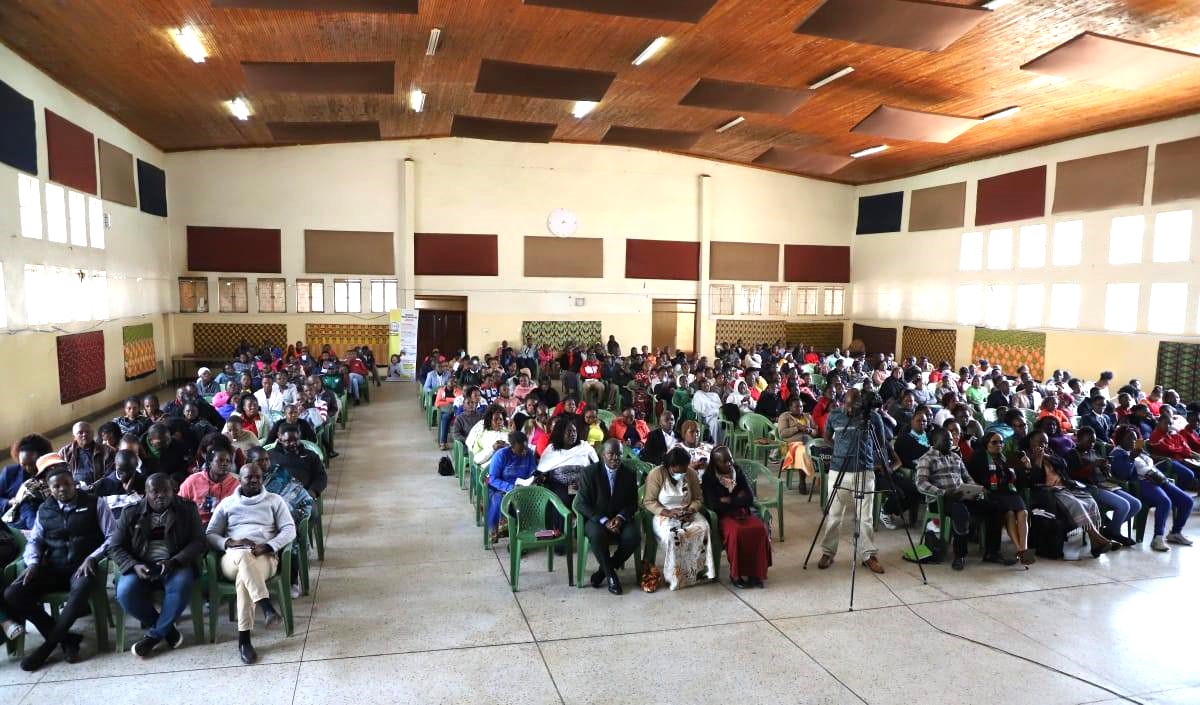
- Hillary Muhalya argues that Kenya must rethink how long qualified P1 teachers wait before securing public employment.
- He says experience gained in private schools should count as Kenya develops a fair, needs-based teacher recruitment system.
- Mahalya argues that better workforce planning would protect public investment while ensuring learners have adequate teachers in classrooms.
Kenya’s debate on teacher recruitment needs to move beyond the simple question of how many teachers the government can employ and confront a bigger national concern: what happens to thousands of trained P1 teachers who have spent years waiting for an opportunity to serve in public schools?
Some have overstayed at home, watching recruitment exercises come and go while their professional skills remain underutilised. Others have found refuge in private schools, where they have continued teaching, preparing lessons, assessing learners and managing classrooms, often under modest salaries and without the security and career progression associated with public service.
These teachers should not be dismissed as graduates who have merely been waiting for jobs. Many have continued to build valuable classroom experience despite the absence of public employment.
The tragedy is that time is slowly working against them.
A teacher who qualified several years ago but remains unemployed today may eventually be recruited at an age when only a relatively short period of active service remains before retirement. In other words, prolonged unemployment does not simply deny teachers an income; it consumes part of the very working life for which they were trained.
This creates a serious workforce-planning question: Why should Kenya invest in training teachers only to leave them outside classrooms for years and eventually employ some when a significant portion of their productive working years has already passed?
The investment in training must not be wasted
Teacher education represents a national investment.
Training a teacher requires institutions, lecturers, facilities, teaching practice, examinations and public and private resources. When a qualified teacher remains outside the classroom for years, that investment is not being fully utilised.
At the same time, Kenya continues to demand better literacy, numeracy, discipline, creativity and competencies from learners.
The contradiction is difficult to ignore.
On one hand, the country has trained teachers looking for opportunities. On the other, schools continue to grapple with staffing pressures and large classes in some areas. Teacher shortages remain a live concern before Parliament, including questions to the Education Cabinet Secretary over shortages in particular parts of the country.
The answer is not necessarily to recruit every unemployed teacher immediately. Rather, Kenya needs a credible, evidence-based teacher workforce plan that identifies where teachers are required and creates a predictable pathway from training to employment.
Private-school teachers should not be treated as if they have been idle
The situation of P1 teachers who moved into private schools deserves special consideration.
For some, private schools became the only available route to remain connected to their profession. They may have spent years teaching children, preparing schemes of work and lessons, assessing learners, managing classrooms and working with parents.
That experience has value.
A teacher who has spent several years in a private classroom has not necessarily been professionally stagnant. In fact, such experience may have strengthened practical teaching skills.
When recruitment opportunities arise, relevant private-school experience should therefore be considered within a transparent and merit-based framework, alongside professional qualifications, performance and actual staffing needs.
The country should not create a situation where a teacher is told that experience matters, only for the experience gained while waiting for public employment to be ignored.
The foundation of education needs teachers
Primary education remains the foundation of the entire education system.
It is where children acquire basic literacy and numeracy, develop communication skills, build confidence and establish learning habits that influence their subsequent educational journey.
Competency-Based Education has further expanded what teachers are expected to do. Teaching is no longer simply about delivering content and waiting for an examination at the end of the learning cycle.
Teachers are expected to monitor individual progress, support different learning abilities, conduct continuous assessment, encourage participation and develop competencies.
Such responsibilities become increasingly difficult when classrooms are overcrowded.
Adequate staffing is therefore not merely an employment issue. It is a learner-outcome issue.
Delayed recruitment has a hidden cost
There is another dimension that deserves greater attention: age.
When recruitment is delayed for many years, some teachers eventually enter public service with a much shorter period before retirement.
This can create an inefficient cycle. The government spends years carrying the consequences of unemployment and then finally recruits a teacher when only a limited number of working years may remain.
This should encourage policymakers to think about recruitment as a long-term human-resource strategy rather than an occasional exercise dictated by available funds.
Teachers should ideally enter service while they are still young enough to build long careers, develop professionally, take up leadership responsibilities and make maximum contributions to learners and the education system.
The longer recruitment is postponed, the more difficult that becomes.
Government must match training with demand
Kenya also needs to confront the disconnect between teacher training and employment planning.
If thousands of teachers are trained every year without a sufficiently accurate assessment of future staffing requirements, unemployment becomes inevitable.
Teacher-training institutions, the Ministry of Education and the Teachers Service Commission need stronger coordination on workforce projections.
Recruitment planning should consider enrolment trends, new schools, teacher attrition, retirements, transfers, natural wastage, regional disparities and the evolving structure of the education system.
Where genuine shortages exist, qualified unemployed teachers should be considered as part of the solution.
A second chance for those who have waited
There is a strong case for giving long-waiting P1 teachers a fair second chance.
This does not mean abandoning merit or creating automatic employment. It means recognising that some qualified teachers have already demonstrated resilience by surviving years without public employment, with some continuing to teach in private institutions.
A well-designed recruitment programme could give priority to areas experiencing genuine teacher shortages while taking into account qualifications, experience, age, performance and willingness to serve where the need is greatest.
Such an approach would simultaneously address teacher shortages, create employment and make better use of an already trained professional workforce.
The bigger question is about the learner
Ultimately, the debate should not be reduced to teachers demanding jobs or government trying to control its wage bill.
The most important stakeholder is the learner.
Every learner deserves adequate teacher attention. Every classroom deserves a teacher who has the time and capacity to understand individual learners and support their progress.
Kenya cannot continuously demand better outcomes from teachers while allowing a pool of trained professionals to remain unused.
Nor should a teacher spend the most productive years of adulthood waiting for the profession for which he or she trained, only to enter public service when retirement is already approaching.
The longer Kenya leaves trained P1 teachers outside the classroom, the greater the loss to the teacher, the taxpayer and, ultimately, the learner.
The country therefore needs a smarter approach: recruit where genuine shortages exist, recognise relevant private-school experience, plan teacher supply against actual demand and ensure that qualified teachers do not spend an entire generation waiting for their chance to serve.
Employment should come when a teacher’s skills are most productive—not after years of waiting have consumed the best part of a professional life.
Kenya cannot afford to train teachers, park them at home or in private schools for years, and then discover that some are approaching retirement before they have had a meaningful opportunity to serve the public education system.
The issue is no longer simply about unemployed P1 teachers.
READ ALSO: Two killed as fresh Kisii-Trans Mara border clashes disrupt school reopening
It is about whether Kenya is prepared to use the human capital it has already invested in—and whether the country is willing to put the interests of the learner at the centre of teacher workforce planning.
By Hillary Muhalya
Get more stories from our website: Education News
To write to us or offer feedback, you can reach us at: editor@educationnews.co.ke
You can also follow our social media pages on Twitter: Education News KE and Facebook: Education News Newspaper for timely updates.
>>> Click here to stay up-to-date with trending regional stories