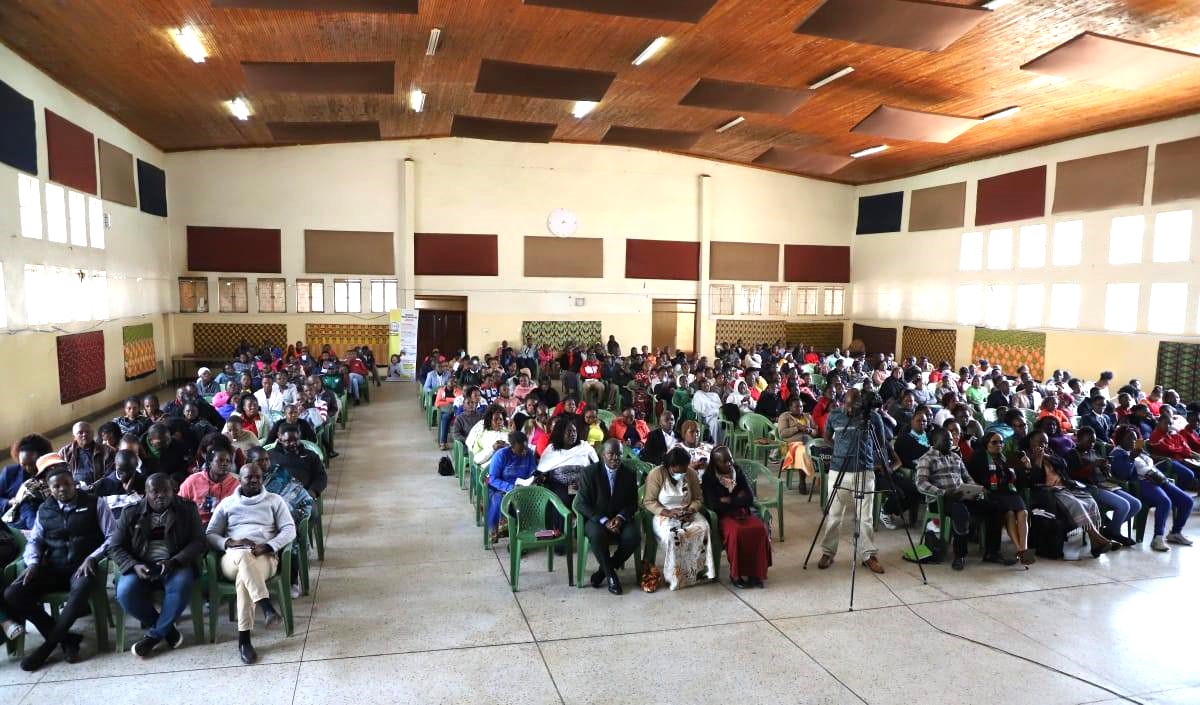
- Hillary Muhalya explains how the proposed universal tertiary funding model could reshape access to higher education.
- The new framework is expected to begin from the next academic semester, around January 2027.
- Muhlaya says students, parents and institutions need clear rules on funding, loans and transition arrangements.
President William Ruto has set the next academic semester, around January 2027, as the new starting point for Kenya’s proposed overhaul of university and college financing, raising fresh expectations among students and parents who have struggled with the cost and complexity of higher education.
Speaking in Kimana, Kajiado County, the President said the new funding arrangement would take effect from the next semester, signalling a significant departure from the current student-centred financing model and potentially changing how thousands of Kenyan students access and pay for higher education.
At the heart of the proposed change is a simple but far-reaching principle: a qualified student should not be locked out of higher education because the family cannot afford the cost.
The proposed universal funding framework is expected to replace the current Variable Scholarship and Loan Funding Model, under which students receive different combinations of government scholarships, loans and household contributions according to their assessed financial need.
Under the proposed system, eligible students placed in public universities, TVET institutions and the Kenya Medical Training College would receive government financial support. The Universities Fund says the proposed framework is intended to provide full government funding to eligible learners placed in public tertiary institutions.
This means the January 2027 model could fundamentally change the relationship between family income and access to higher education.
Instead of a poor family having to demonstrate its level of financial need before the student receives a particular mix of scholarship and loan support, eligible students would be covered under a broader universal funding arrangement.
But there is an important distinction.
Full government funding should not automatically be interpreted to mean that every amount will be provided as a free scholarship.
The Universities Fund says the proposed framework includes a full government loan programme for eligible students, alongside other financing mechanisms. The final legislation and regulations will therefore determine how much support is repayable and how much, if any, will be provided as non-repayable funding.
That distinction matters because the government is considering a broader restructuring of tertiary education financing.
For students, the practical process would begin with admission and placement. Once a learner qualifies for an eligible government-sponsored place, the State would provide financial support under the new framework.
For parents, one of the biggest attractions would be relief from the uncertainty that has accompanied the current model.
Families have had to navigate applications, scholarship percentages, loans and household contributions while simultaneously meeting accommodation, food, transport, books and other costs.
The current Student-Centred Funding Model provides undergraduate support through government scholarships, loans and household contributions, with financial need assessed through a Means Testing Instrument.
The new model will therefore be judged not simply by how much money the government announces, but by how easily an ordinary parent can understand and access it.
Loans and living costs still matter
The role of student loans will nevertheless remain important.
If part of a student’s support is provided as a loan, graduates will eventually be expected to repay that portion according to the rules established under the new system.
The government will consequently have to strike a careful balance between expanding access and preventing young graduates from emerging from university with unsustainable debt.
Universities themselves will also be watching the transition closely.
A student-centred funding system is only sustainable if institutions receive money on time and in sufficient amounts.
Universities need predictable revenue to pay lecturers and other staff, maintain laboratories and libraries, support research and provide essential student services.
The new arrangement must therefore solve two problems simultaneously: protect students from financial exclusion while protecting universities from chronic underfunding.
The January implementation period also raises questions about students already enrolled in universities.
The government will need to provide clear transitional rules explaining whether continuing students will remain under existing arrangements or move to the new framework, and how their outstanding fees, loans and scholarships will be treated.
For now, students joining institutions in September 2026 are continuing under the existing Student-Centred Funding Model as Parliament considers the proposed changes.
There is equally a need for clarity on upkeep.
Tuition is only one component of university life.
A student may have government-supported tuition but still struggle to pay rent, food, transport, learning materials and other basic expenses.
If these costs are ignored, financial exclusion could simply take another form.
Government must now provide clarity
The proposed reform therefore provides an opportunity to redefine higher education as an investment in Kenya’s human capital rather than merely a bill individual families must struggle to settle.
For decades, parents have sacrificed land, livestock, savings and businesses to educate their children.
Many have also borrowed heavily to keep their children in university.
Others have watched students defer studies because fees and living expenses became impossible to sustain.
The January 2027 implementation should seek to end that uncertainty.
But the government must now move beyond the political announcement and provide the legislation, regulations, financing arrangements and public communication required to make the promise credible.
Students should know what they will receive.
Parents should know what they will be expected to pay.
Universities should know when and how they will be funded.
And graduates should know clearly which part of their education support will eventually have to be repaid.
The success of the new model will ultimately be measured not by the number of policies launched but by the number of qualified young Kenyans who enter higher education, remain there and graduate without their families being pushed into financial ruin.
President Ruto’s announcement has therefore placed January 2027 firmly on Kenya’s higher education calendar.
The real question is no longer whether Kenya needs a new university funding model.
READ ALSO: New Kabarnet Boys principal takes charge, sets ambitious KCSE target
It is whether the January model will finally make higher education predictable, affordable and accessible to every qualified Kenyan student, regardless of the size of the wallet at home.
By Hillary Muhalya
Get more stories from our website: Education News
To write to us or offer feedback, you can reach us at: editor@educationnews.co.ke
You can also follow our social media pages on Twitter: Education News KE and Facebook: Education News Newspaper for timely updates.
>> Click here to stay up-to-date with trending regional stories