Unreliable rainfall has become one of the greatest environmental and socio-economic challenges confronting Kenya today. A combination of climate change, global warming, deforestation, environmental degradation, destruction of water catchment areas and unsustainable land-use practices has disrupted the country’s natural water cycle, making rainfall increasingly erratic, unpredictable and poorly distributed. Once dependable rainy seasons are now characterised by delayed onset, prolonged dry spells and uneven rainfall, leaving farmers uncertain about when to plant and harvest.
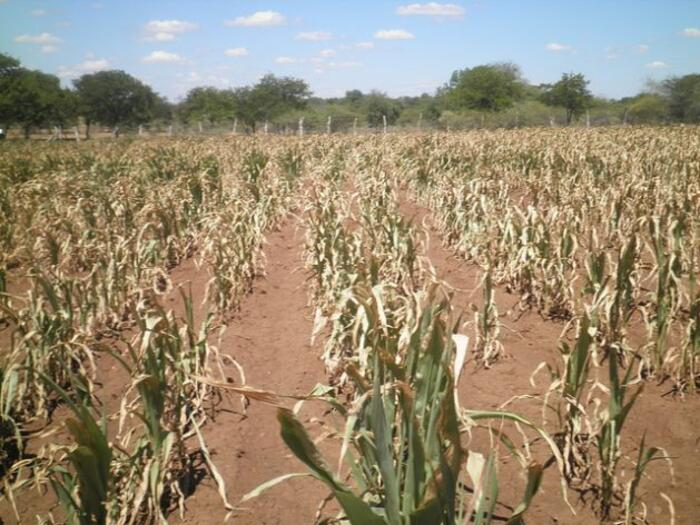
The consequences are becoming increasingly visible across Kenya’s agricultural landscape. Maize crops suffering from prolonged dry conditions display unmistakable signs of moisture stress. Their leaves gradually turn yellow or brown, curl inward and eventually dry up. Growth becomes stunted as plants remain short and weak, while cobs either fail to develop or remain unusually small. The soil surrounding the crops hardens, cracks and loses moisture, and in severe cases entire fields wilt and die long before the crop reaches maturity. Where rainfall has been patchy, some sections of farms remain relatively healthy while neighbouring fields are completely scorched, resulting in uneven crop growth and sharply reduced yields.
More alarmingly, some maize crops have already withered under intense heat in regions traditionally regarded as Kenya’s breadbasket. Fields that initially promised bumper harvests have deteriorated before grain filling because of persistent moisture stress and soaring temperatures. At the same time, Kenya’s arid and semi-arid lands (ASALs) continue to bear the greatest burden of prolonged drought. Crops have failed, grazing fields have dried up, rivers and water pans are shrinking, livestock deaths are increasing and household incomes are declining, exposing millions of people to worsening food insecurity.
The combination of poor harvests in Kenya’s high-potential agricultural zones and repeated crop failures across ASAL counties threatens to weaken national food reserves, increase dependence on food imports, and drive up the prices of essential food commodities, particularly maize.
Kenya’s struggle with prolonged drought is not new. The country has repeatedly faced severe weather extremes over the last five decades. The 1973–1974 drought brought widespread crop failure, livestock losses, and food shortages across much of the country. Another period of erratic rainfall followed in 1975–1976, reducing maize yields, particularly in the Rift Valley and Eastern Kenya.
ALSO READ:
Drug abuse fueling defilement and school dropouts in Mwala, MP Kamene warns
During President Jomo Kenyatta’s administration, government interventions focused mainly on emergency food imports, strategic grain reserves and relief food distribution through the Provincial Administration. Families survived by rationing food, selling livestock, relying on extended family support, and reducing the number of meals consumed each day.
The country again experienced poor rainfall during 1980–1981, before the devastating 1983–1984 drought became one of Kenya’s worst agricultural disasters. Vast maize fields dried before reaching maturity, livestock perished, and widespread hunger spread across many regions. Another drought followed in 1987–1988, further reducing food production.
Under President Daniel arap Moi, the government declared emergencies, imported maize and other cereals, expanded relief food distribution and relied on the National Cereals and Produce Board (NCPB) to stabilise grain supplies. Churches, humanitarian organisations and development partners complemented government efforts by supporting vulnerable communities with food assistance. Families coped by selling livestock, migrating in search of pasture and water, seeking casual employment and increasingly embracing drought-tolerant crops such as sorghum, millet, cassava and sweet potatoes.
Another severe drought struck during 1999–2000, affecting much of the Rift Valley, Eastern and North Eastern Kenya. The government expanded relief programmes and appealed for international assistance, although the crisis exposed weaknesses in drought preparedness.
The 2008–2009 drought once again severely reduced maize production. Under President Mwai Kibaki, Kenya mounted one of its strongest responses by importing substantial quantities of maize, expanding irrigation programmes, improving road infrastructure, strengthening food security initiatives and supporting farmers through fertiliser subsidy programmes. Many agricultural analysts regard this period as one of the country’s most comprehensive drought responses because it combined emergency relief with long-term agricultural investments.
During the 2016–2017 drought under President Uhuru Kenyatta, delayed rainfall and prolonged dry spells devastated farms across many counties. The government declared the drought a national disaster, expanded relief food distribution, strengthened cash transfer programmes, enhanced early warning systems and collaborated closely with county governments to support affected communities.
Between 2020 and 2022, Kenya endured consecutive failed rainy seasons that left millions food insecure. Scientists increasingly linked the worsening situation to climate change, rising temperatures and environmental degradation.
Most recently, during 2025–2026, delayed rainfall, prolonged dry spells and extreme temperatures have once again affected large parts of the North Rift, South Rift, Eastern, Coastal and sections of Western Kenya. Maize crops have shown severe moisture stress, with curled leaves, stunted growth and poor cob development, raising concerns over reduced national food production.
The government under President William Ruto has responded through emergency food distribution, cash transfer programmes, school feeding initiatives, livestock support and climate adaptation measures supported by improved weather forecasting and stronger coordination with county governments. Nevertheless, the prolonged nature of consecutive droughts continues to challenge recovery efforts.
Throughout these difficult periods, Kenyan families have demonstrated extraordinary resilience. They have reduced household food consumption, sold livestock and household assets, diversified income sources, depended on remittances, sought casual employment, migrated temporarily, embraced drought-tolerant crops and relied on churches, community organisations and humanitarian agencies to survive difficult seasons.
However, the impact of declining rainfall extends far beyond agriculture. Education is rapidly emerging as one of the sectors most vulnerable to climate-induced food insecurity.
Hungry learners struggle to concentrate in class, participate less actively, experience fatigue more quickly and are more likely to miss school. As harvests fail and household incomes decline, many parents find it increasingly difficult to pay school fees, purchase uniforms and learning materials or contribute towards school feeding programmes. Without timely intervention, prolonged food insecurity could increase absenteeism, school dropout rates, child labour, early marriages and other social challenges, particularly among vulnerable households.
Schools themselves are likely to experience unprecedented financial pressure beginning in the third term and extending into the next academic year. Rising prices of maize, beans, cooking oil, vegetables and other food commodities will substantially increase the cost of operating school feeding programmes. Institutions that rely on parental contributions may struggle to sustain daily meals, while schools that have traditionally depended on their own farms are also facing declining harvests because prolonged drought has reduced the production of maize, beans and vegetables. Many schools will therefore be forced to purchase food from increasingly expensive markets, placing enormous strain on already constrained budgets.
ALSO READ:
Gulley erosion threatens Nasokol Girls Secondary School fence
The financial burden is likely to affect more than feeding programmes alone. As schools divert more resources towards food procurement, funding for learning materials, infrastructure maintenance, co-curricular activities, laboratory equipment and other essential educational programmes may become increasingly constrained. Some institutions could be forced to reduce meal portions, serve fewer meals or suspend feeding programmes altogether if additional support is not secured.
The situation is expected to be particularly severe in public day schools, junior schools and institutions located within Kenya’s ASAL counties, where school meals often provide the only reliable source of daily nutrition for many learners. Without adequate nutrition, learner attendance, concentration, academic performance and retention are likely to deteriorate, widening educational inequalities between vulnerable and more affluent communities.
School leaders will therefore face difficult decisions as they seek to protect both learning and learner welfare. Many institutions may be compelled to strengthen financial prudence, minimise food wastage, diversify food sources and seek partnerships with county governments, development partners, alumni associations, faith-based organisations, well-wishers and local communities. Schools with available land can further strengthen resilience by establishing kitchen gardens, investing in rainwater harvesting, adopting small-scale irrigation technologies and cultivating drought-tolerant crops to supplement school feeding programmes while providing learners with practical environmental and agricultural skills.
Ultimately, safeguarding rainfall is about far more than protecting crops. It is about protecting Kenya’s schools, preserving children’s nutrition, sustaining household livelihoods and securing the country’s future human capital. Looking back across the droughts of 1973–1974, 1975–1976, 1980–1981, 1983–1984, 1987–1988, 1999–2000, 2008–2009, 2016–2017, 2020–2022 and 2025–2026, one lesson stands out clearly: drought is no longer simply an agricultural challenge but a national development challenge that affects every sector of society.
Protecting forests, restoring degraded ecosystems, conserving water catchment areas, expanding irrigation, promoting climate-smart agriculture, strengthening school feeding programmes and integrating environmental stewardship and climate resilience into the Competency-Based Education (CBE) curriculum must become national priorities. The decisions Kenya makes today will determine whether future generations inherit resilient schools, secure food systems and thriving communities, or face recurring hunger, rising education costs and widening inequality.
By Hillary Muhalya
You can also follow our social media pages on Twitter: Education News KE and Facebook: Education News Newspaper for timely updates.
>>> Click here to stay up-to-date with trending regional stories
>>> Click here to read more informed opinions on the country’s education landscape
>>> Click here to stay ahead with the latest national news.