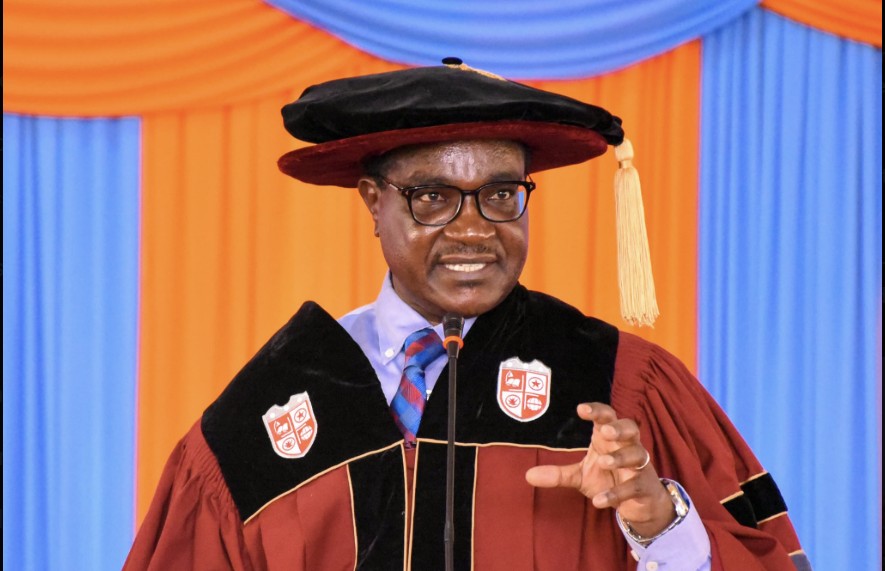
- Ashford Kimani examines how school principals can address sensitive sexuality-related issues through counselling, parental engagement, learner welfare and professional leadership.
- School leaders are increasingly encountering complex issues related to learner welfare, identity and adolescent development.
- Experts say principals should respond through leadership, counselling, parental engagement and clear school policies.
- Maintaining discipline, learner safety and educational excellence remains the primary responsibility of schools.
As school principals gather in Mombasa for their annual conference, they are expected to deliberate on a wide range of issues affecting education in Kenya. Discussions on school unrest, artificial intelligence, mental health, discipline, digital transformation and learner welfare are likely to dominate the agenda.
Among the emerging issues that some school leaders increasingly encounter are sensitive questions relating to learner identity, relationships and adolescent development.
Few topics generate as much debate, emotion and controversy. Parents, religious leaders, educators, policymakers and learners themselves often hold strong and differing opinions.
Yet regardless of personal beliefs, school heads cannot afford to approach such matters emotionally. They must approach them professionally, responsibly and with the best interests of learners at heart.
The principal’s office has never been a place for ideological battles. It is a place for leadership.
Understanding the realities of adolescence
The first challenge for school heads is understanding the realities of adolescence.
Secondary school learners are at a stage of rapid physical, emotional, psychological and social development. It is a period characterized by curiosity, experimentation, identity formation, peer influence and heightened emotions.
During adolescence, learners often ask difficult questions about themselves and the world around them. They seek acceptance, belonging and affirmation.
They are also increasingly exposed to global conversations through social media, entertainment platforms and digital technologies.
This means that issues relating to sexuality and identity can no longer be dismissed as distant societal concerns. They have entered school compounds through mobile phones, online content and learner interactions.
The question therefore is not whether school leaders will encounter these discussions. The question is how they should respond when they do.
Maintaining safe and orderly schools
The first principle should be maintaining a safe and orderly learning environment.
Schools exist primarily for education. Their central mission is to develop learners intellectually, morally, socially and emotionally.
Any behaviour that undermines learning, discipline, safety or the welfare of learners must be addressed in accordance with school policies and established regulations.
This is where principals must exercise consistency.
If a school has regulations governing conduct, privacy, relationships and learner behaviour, those rules should apply fairly and consistently.
Discipline should focus on conduct rather than rumours, assumptions or labels.
Many school conflicts arise not because of actual misconduct but because of suspicion, gossip and misinformation.
Principals must therefore insist on facts rather than speculation.
Strengthening guidance and counselling
Secondly, guidance and counselling departments must take centre stage.
Many issues that emerge under discussions of sexuality may actually stem from broader challenges such as loneliness, emotional distress, family instability, peer pressure, trauma, low self-esteem or a search for identity and belonging.
Punishment alone rarely resolves such underlying concerns.
Learners need trusted adults who can listen calmly, provide guidance and help them navigate the challenges of adolescence.
Effective counselling programmes create opportunities for early intervention before problems escalate into crises.
School heads should therefore invest in strengthening counselling departments, mentorship programmes and peer support systems.
Promoting dignity and respect
Thirdly, principals should promote dignity and respect for every learner.
Schools cannot function effectively where bullying, harassment, intimidation, ridicule or violence are tolerated.
Every learner deserves protection from abuse and access to a safe learning environment.
When learners fear humiliation, they often become withdrawn, secretive or rebellious.
Conversely, when they feel respected and safe, they are more likely to seek guidance and support from responsible adults.
Respect does not require agreement. It requires recognizing the dignity and humanity of every learner entrusted to a school’s care.
Engaging parents and preparing teachers
Another important responsibility of school heads is engaging parents.
Parents remain the primary educators of their children. Schools complement rather than replace the role of families.
When sensitive matters arise, school leaders should seek constructive engagement with parents while maintaining professionalism and confidentiality.
Open communication helps prevent unnecessary conflict and builds trust between schools and families.
Teacher preparedness is equally important.
Many teachers feel uncomfortable discussing issues related to adolescent development and sexuality. Others may react emotionally or allow personal beliefs to dictate their responses.
Neither approach serves learners well.
Teachers require training on adolescent development, safeguarding, counselling referrals, confidentiality and professional boundaries.
A well-prepared teacher can often defuse situations that might otherwise become major disciplinary challenges.
The importance of clarity and school culture
School heads must also provide clarity.
Silence often creates a vacuum that rumours quickly fill.
Schools should communicate clear expectations regarding conduct, relationships, respect and discipline.
Learners should understand what behaviour is acceptable and what consequences accompany violations of school rules.
Clarity reduces confusion and promotes accountability.
Perhaps the greatest mistake school leaders can make is treating every sensitive issue solely as a disciplinary problem.
Most adolescent challenges are leadership challenges before they become disciplinary challenges.
They require listening, understanding, communication, guidance, mentorship and strong relationships.
Learners who trust their teachers and administrators are more likely to seek help before problems become serious.
Learners who feel alienated often retreat into secrecy and resistance.
This is why school culture matters.
A healthy school culture is built on trust, fairness, consistency, compassion and accountability. It creates an environment where learners know they can approach adults without fear and where difficult conversations can be handled maturely.
Such a culture does not emerge by accident. It is cultivated deliberately through effective leadership.
Leadership in a changing world
As principals meet in Mombasa to discuss the future of education, they would do well to remember that the challenges facing schools are becoming increasingly complex.
The solutions therefore require wisdom rather than panic, leadership rather than rhetoric and professionalism rather than prejudice.
The broader challenge confronting educators is how to guide young people through a rapidly changing world while preserving discipline, safeguarding welfare and maintaining educational excellence.
The answer lies not in fear.
It lies in strong leadership.
Leadership that listens.
Leadership that guides.
Leadership that protects.
READ ALSO: Retired TSC teachers urged to join school boards and support community initiatives
Leadership that remains focused on the fundamental mission of every school: helping young people become responsible, productive and well-rounded members of society.
That is the challenge before today’s school heads.
And that is the leadership Kenya’s schools need.
By Ashford Kimani
Ashford is a teacher of English and Literature who writes on education and social affairs.
You can also follow our social media pages on Twitter: Education News KE and Facebook: Education News Newspaper for timely updates.
>>> Click here to stay up-to-date with trending regional stories
>>> Click here to read more informed opinions on the country’s education landscape