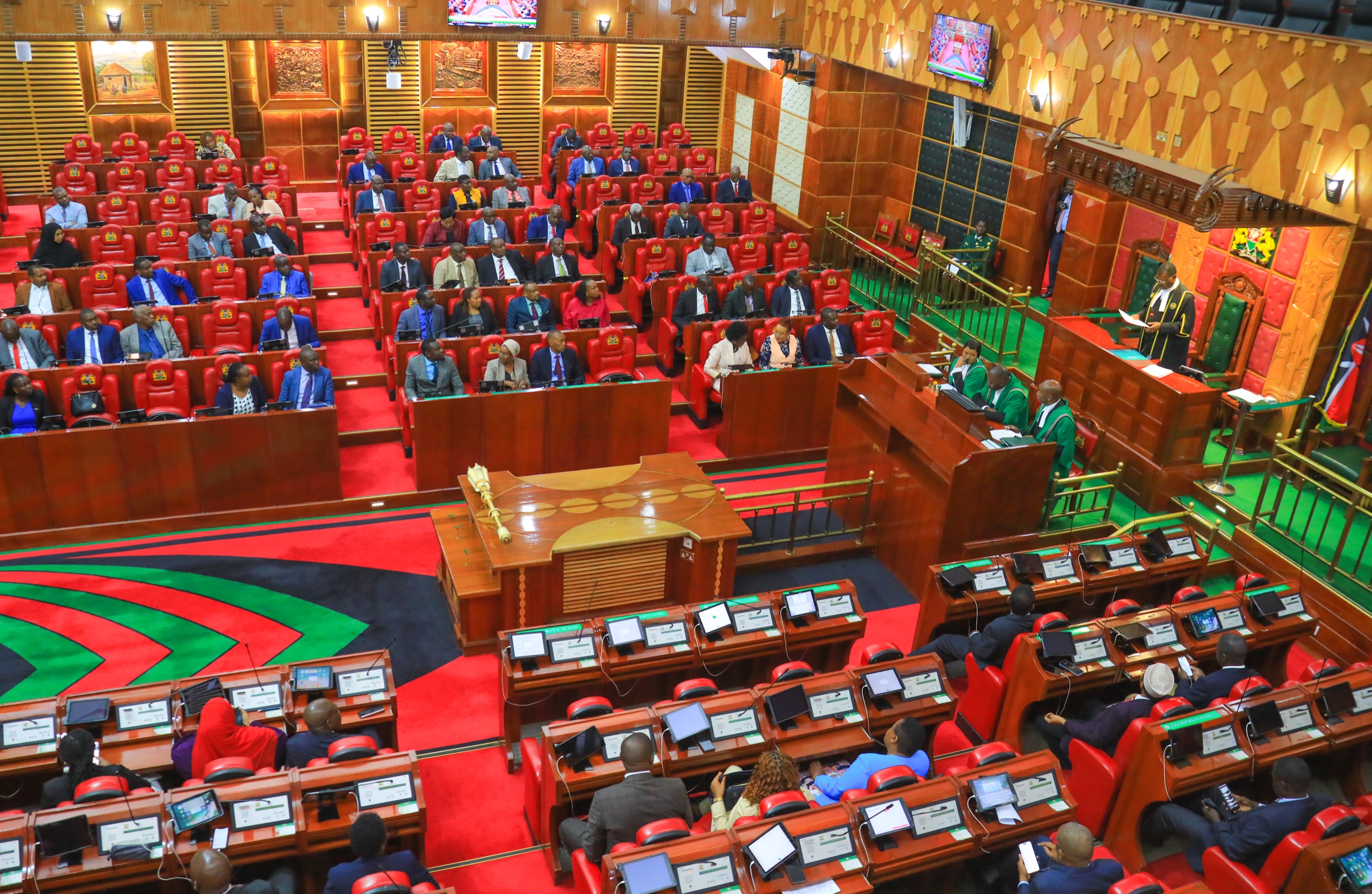
The National Assembly’s approval of sweeping changes to the structure of teachers, civil servants’ payslips marks a defining moment in Kenya’s public sector governance. While it may appear, on the surface, to be a routine payroll adjustment, the reform is in fact a far-reaching reset of how public workers are compensated, graded, and treated within the broader state machinery.
At the core of these changes are the 2025 remuneration regulations championed by the Salaries and Remuneration Commission (SRC), the constitutional body tasked with bringing order, fairness, and fiscal discipline to public sector pay. For years, Kenya’s wage bill has been burdened by inconsistencies, overlapping job groups, and a fragmented allowance system that produced wide disparities among employees performing similar roles. The new framework seeks to close those gaps decisively.
A central pillar of the reform is the introduction of a streamlined and uniform job grading structure. Every civil servant will now be placed within a clearly defined job category, eliminating the ambiguity that previously allowed institutions to interpret roles and ranks differently. In theory, this creates a transparent career progression path, where promotion and salary movement are guided by clear, standardized criteria rather than institutional discretion or historical privilege.
Closely tied to this is the standardisation of pay scales across government. Under the new arrangement, employees performing comparable duties across ministries, departments, and agencies will fall within the same salary bands. This represents a significant shift from the past, where certain institutions—by virtue of legacy structures or internal bargaining power—offered more favourable remuneration packages than others. The guiding principle is now unmistakable: equal work, equal pay.
ALSO READ;
Senior schools face administrative crisis as principals set to retire
Perhaps the most sensitive and consequential aspect of the reform is the overhaul of allowances. For many civil servants, allowances have long formed a substantial and sometimes unpredictable portion of their monthly income. Yet they have also been the least regulated component of the pay system, varying widely across institutions and job categories. The SRC now proposes a tightly defined framework specifying which allowances are payable, to whom, and under what conditions. While this enhances accountability and transparency, it also introduces uncertainty for employees who may see reductions where previously inflated or irregular allowances existed.
For teachers under the Teachers Service Commission (TSC), the implications are particularly profound. The teaching profession has historically been shaped by uneven application of allowances such as hardship, commuter, and responsibility benefits. With the new system, teachers are likely to experience a more predictable and harmonised pay structure. However, the rationalisation of allowances may also redefine net earnings, especially for those whose take-home pay has heavily depended on supplementary benefits.
Beyond individual pay packets, the reforms reflect a broader fiscal strategy aimed at controlling Kenya’s expanding public wage bill. By harmonising salaries and eliminating unjustified disparities, the government is seeking to enhance efficiency without necessarily increasing total expenditure. The objective is not simply to reduce or increase pay, but to ensure that compensation is structured, defensible, and sustainable.
In Parliament, the motion received backing from legislators including Jared Okello and Samuel Chepkonga, who argued that the reforms will strengthen accountability and restore public trust in government expenditure. A transparent payslip, they noted, is not merely an employee record, it is a public statement of fiscal responsibility and equity in the use of taxpayer resources.
Yet, as with all structural reforms, the transition is likely to be complex. Longstanding pay arrangements inevitably generate resistance, particularly where perceived losses are involved. Additional challenges may arise in system upgrades, payroll realignment, staff sensitisation, and the harmonisation of existing employment terms with the new framework.
ALSO READ;
KNEC contracted teachers yet to receive allowances despite Treasury funds release
For school leaders, principals, and institutional administrators, this reform introduces a new managerial burden. Beyond academic leadership, they must now interpret and communicate complex pay structures to their staff, manage expectations, and maintain morale during a period of financial adjustment. In such moments, clarity, consistency, and communication will be as important as policy itself.
In the long term, however, the promise of a transparent and standardised compensation system is significant. It has the potential to reduce pay-related disputes, improve equity across institutions, and strengthen trust in public service systems. When employees clearly understand how their remuneration is determined, and believe in the fairness of that system, institutional focus naturally shifts toward productivity and service delivery.
As Kenya implements these reforms, one reality stands out: the era of opaque, uneven, and fragmented payslips is steadily giving way to a more structured and accountable system. This transformation is not merely administrative—it is cultural, reshaping the relationship between the state and its workforce.
The ultimate measure of success will not lie in the legislation itself, but in how effectively it is implemented on the ground. If managed with precision, fairness, and sensitivity, this payslip revolution could redefine public sector employment in Kenya for a generation.
By Hillary Muhalya
You can also follow our social media pages on Twitter: Education News KE and Facebook: Education News Newspaper for timely updates.
>>> Click here to stay up-to-date with trending regional stories
>>> Click here to read more informed opinions on the country’s education landscape