

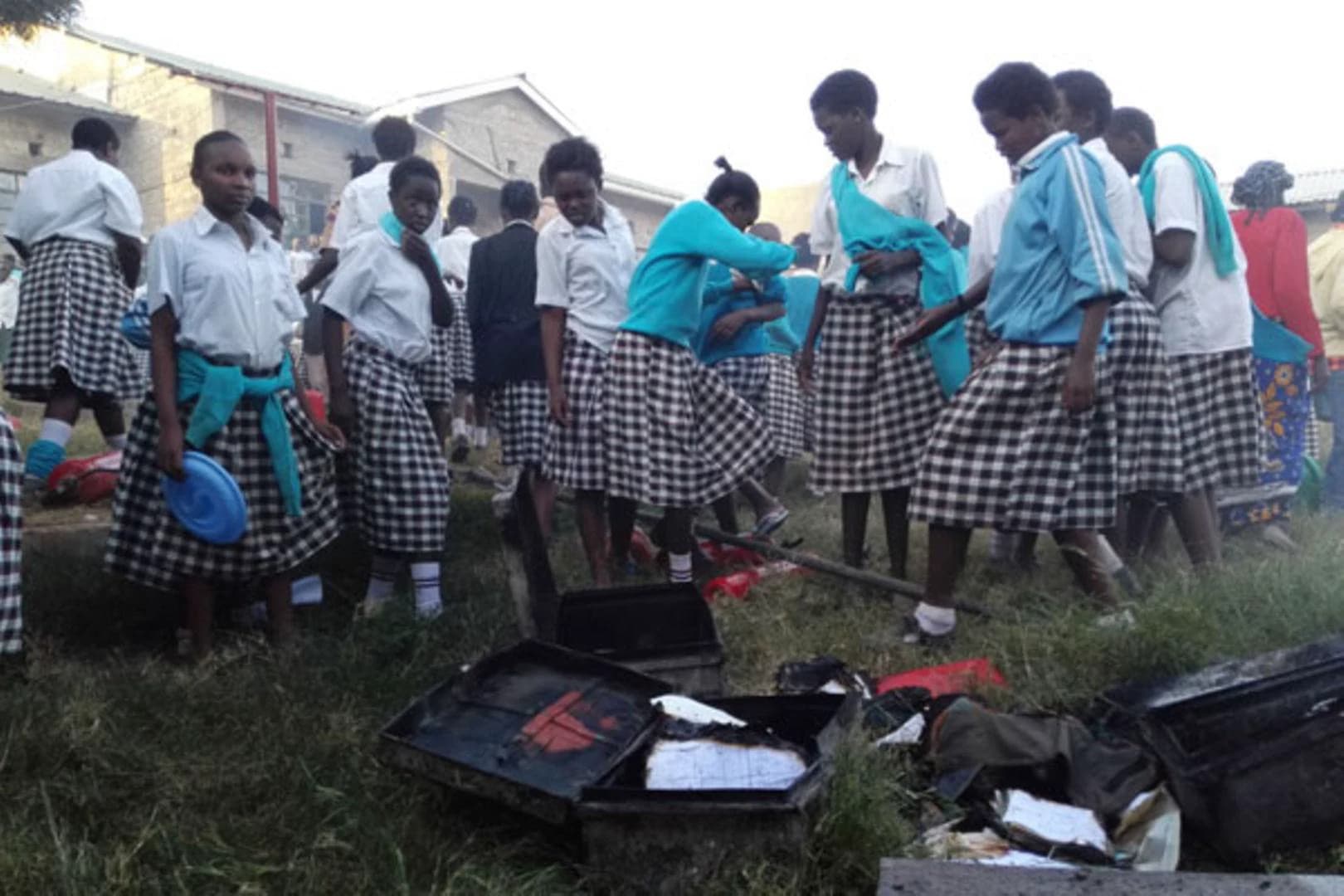








- Ashford Kimani argues that while many factors contribute to school unrest, principals must accept ultimate responsibility for creating safe, disciplined and responsive learning environments.
- As KESSHA meets in Mombasa, student unrest has once again become a central concern in Kenya’s education sector.
- While many factors contribute to school unrest, ultimate accountability rests with school leadership.
- Effective leadership requires communication, trust, early intervention and responsive school management.
“The buck stops here.”
Few leadership statements have carried as much weight as this famous phrase associated with former United States President Harry S. Truman. Truman displayed a sign bearing those words on his desk in the Oval Office to remind himself that ultimate responsibility for government decisions rested with him.
He could not pass blame to advisers, Cabinet secretaries, Congress or previous administrations. When things went wrong, he accepted that leadership required accountability. The buck stopped at his desk.
The expression itself predates Truman. Historians trace it to the American frontier card game poker, where a marker called a “buck” was passed around the table to indicate whose turn it was to deal. If a player wished to avoid responsibility, he would “pass the buck” to someone else.
Truman reversed the logic. Rather than passing responsibility, he embraced it. The buck would stop with him.
Today, as Kenyan secondary school principals gather in Mombasa under the auspices of the Kenya Secondary School Heads Association (KESSHA), the phrase acquires renewed significance.
Student unrest has once again emerged as a dominant agenda item. Dormitories have gone up in flames. Learning has been disrupted. Parents are anxious. Communities are worried. The nation is searching for answers.
Many factors have been advanced to explain the rising unrest. Some point to social media influence. Others blame parental neglect, mental health challenges, drug and substance abuse, peer pressure or the pressures associated with examinations and academic expectations.
Some argue that changing societal values have altered learners’ attitudes towards authority.
All these explanations may contain elements of truth.
However, leadership principles remain constant. While principals may not be responsible for every cause of unrest, they are ultimately accountable for what happens within their institutions.
The buck stops with them.
Accountability comes with leadership
This is neither an attack on principals nor an attempt to scapegoat them.
On the contrary, it is an acknowledgment of the immense authority and influence vested in school leaders.
Every school has teachers, parents, learners, Boards of Management and education officers. Yet only one individual occupies the principal’s office.
Only one person signs official documents on behalf of the institution.
Only one person serves as the chief executive officer of the school.
When a school excels academically, the principal is praised. When infrastructure improves, the principal receives recognition. When discipline is exemplary, the principal is celebrated.
By the same token, when chaos erupts, responsibility cannot be outsourced.
Leadership is not about claiming credit when things go well and distributing blame when things go badly.
School culture reflects leadership
The reality is that school culture reflects leadership.
A school where learners feel heard is often a reflection of deliberate leadership. A school where grievances are addressed before they escalate is usually led by administrators who value communication.
A school where learners trust teachers enough to express concerns rarely descends into destructive rebellion.
Conversely, schools where learners feel alienated, ignored or oppressed often become fertile grounds for unrest.
This does not mean that principals must become friends with learners or surrender authority.
Discipline remains essential. Rules must be enforced. Standards must be maintained.
Yet effective discipline is built not merely on fear but on legitimacy.
Learners are more likely to respect authority when they believe that authority is fair, consistent and humane.
The challenge facing Kenyan schools today is not simply one of discipline.
It is fundamentally a challenge of leadership.
The contemporary learner is different from the learner of thirty years ago.
Today’s learners are exposed to vast amounts of information. They are connected through digital platforms. They question, compare and evaluate.
Attempts to govern them solely through command-and-control approaches are increasingly proving ineffective.
Principals must therefore evolve from being mere administrators into transformational leaders.
Transformational leaders listen before they speak. They anticipate problems before they explode. They build systems for learner engagement.
They establish channels through which grievances can be aired safely and resolved promptly.
They cultivate trust among learners, teachers, parents and support staff.
Most importantly, they understand that unrest rarely begins with a burning dormitory.
The fire is usually the final chapter of a story that has been unfolding for weeks or months.
It may begin with unresolved complaints. It may start with perceived injustice. It may emerge from poor communication. It may grow through rumours, frustration or accumulated resentment.
By the time flames become visible, the underlying issues have often been smouldering for a long time.
The principal’s indispensable role
This is why the principal’s role is indispensable.
Teachers may notice warning signs. Parents may raise concerns. Student leaders may offer feedback.
Yet it is the principal who must connect the dots and take action.
The gathering in Mombasa presents an opportunity for deep reflection.
Rather than focusing exclusively on punitive measures, principals should ask difficult questions:
- Are learners being heard?
- Are guidance and counselling programmes effective?
- Are prefects and student councils functioning meaningfully?
- Are teachers approachable?
- Is communication transparent?
- Is the school environment conducive to learning and emotional well-being?
The answers to these questions may reveal more about unrest than any investigation conducted after a dormitory has burned down.
Leadership has never been easy.
The principal’s office is often a lonely place. School heads must balance competing demands from parents, teachers, learners, government agencies and Boards of Management.
They operate under intense pressure and often with limited resources.
Yet leadership was never intended to be comfortable.
READ ALSO: The Kenyan boy child and the education gap: Has affirmative action left some behind?
Harry Truman understood this reality when he declared that “the buck stops here.”
He recognized that authority and accountability are inseparable twins. One cannot enjoy the privileges of leadership while evading its responsibilities.
As Kenya grapples with recurring school unrest, the same principle must guide educational leadership.
The nation can debate causes, analyse trends and discuss external influences. These conversations are important.
However, when all explanations have been exhausted, one truth remains:
Not because principals cause every problem, but because leaders are entrusted with solving them.
By Ashford Kimani
Ashford is a teacher of English and Literature who writes on education and social affairs.
You can also follow our social media pages on Twitter: Education News KE and Facebook: Education News Newspaper for timely updates.
>>> Click here to stay up-to-date with trending regional stories
>>> Click here to read more informed opinions on the country’s education landscape



Reader Discussion (0)
Sign in to comment