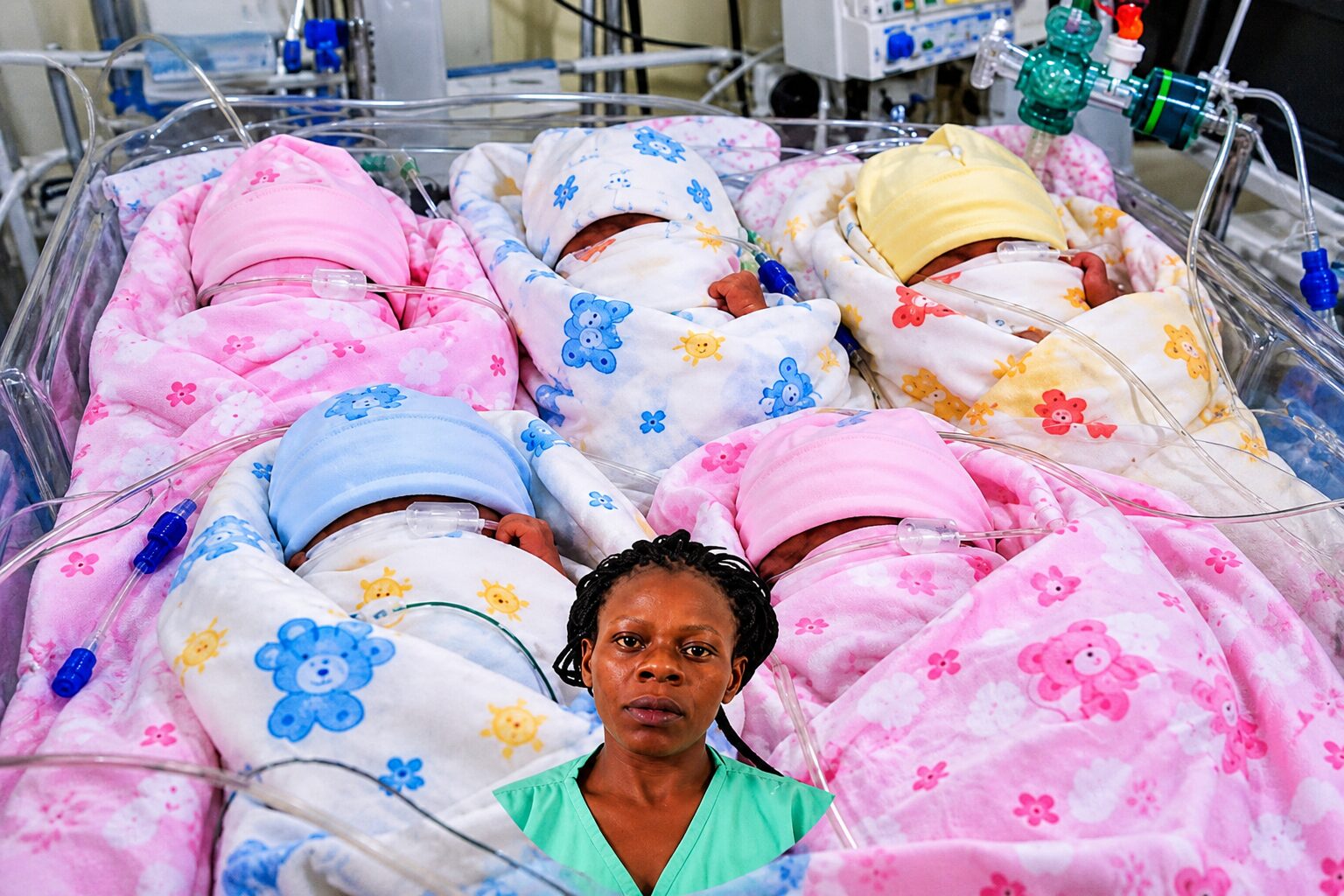
The story of the five babies born to Mercy Kanini and Evans Nyamhanga is one of those tragedies that leaves a nation searching for words. The quintuplets, Bravin, Bravlyn, Bravelle, Bravina and Braelyn, were born after a rare vaginal delivery at Thika Level Five Hospital, but all five died within about 48 hours. They were later named by their grieving family and are expected to be buried at their father’s home in Migori County.
Beyond the grief of the parents, relatives and medical workers involved, this tragedy presents Kenya with an opportunity for sober reflection. It should not become a platform for rushing to blame individuals or institutions before investigations are complete. The family has called for thorough investigations, including an independent medical review and preservation of medical records. Those investigations are important because lessons drawn from a tragedy must be based on evidence rather than speculation.
The first lesson is that high-risk pregnancies require high-risk preparation. A quintuplet pregnancy is extraordinarily complicated, particularly when delivery is expected at around 25 to 26 weeks. According to a neonatal expert cited by the Nation, such a situation may require several resuscitation teams, thermal-care stations, respiratory support equipment, ventilators, surfactant and sufficient specialised personnel. In other words, the arrival of five extremely premature babies cannot be treated as an ordinary delivery involving only five times the number of babies; it is an entirely different level of medical preparedness.
The second lesson is the importance of antenatal care and early identification of danger. The Nation report notes that expert guidance would ordinarily favour a documented multidisciplinary plan involving obstetrics, maternal-fetal medicine, neonatology, anaesthesia and nursing once such a pregnancy is identified, with the delivery facility ideally determined before labour becomes an emergency.
ALSO READ:
Grade 11 textbook crisis: 90 days to save the January 2027 rollout
This raises a broader question about Kenya’s referral system. If a pregnancy is known to be exceptionally high-risk, the mother may need to be transferred before delivery to a facility capable of handling the anticipated complications. The medical expert quoted by the Nation described in-utero transfer as safer in appropriate circumstances, because transporting extremely premature newborns after delivery presents additional risks and logistical challenges. At the same time, the report correctly acknowledges that once advanced labour has begun, transferring the mother may itself be unsafe. That is why decisions must be based on the mother’s condition, fetal status and professional medical assessment at the time.
The third lesson is that referral is not simply about moving a patient from one hospital to another. A referral system must guarantee continuity of care: who receives the patient, how quickly, with what equipment, which specialists are available, what information accompanies the patient, and what happens during transportation. In this case, the family has raised questions about the stabilisation of the babies before transfer and the equipment and personnel accompanying them. These are matters that should be established through proper investigation, not public speculation.
The fourth lesson concerns emergency care and administrative procedures. The family alleges that there were delays at Kenyatta National Hospital related to registration of the babies under the Social Health Authority. Their lawyer argued that emergency care should come before payment or registration. These allegations require verification, but they raise an important policy question: when a critically ill newborn arrives at a referral hospital, the system must be designed to ensure that urgent clinical stabilisation is not compromised by administrative processes.
Teenage pregnancy: Are we doing enough to protect the girl child?
The fifth lesson is the need to invest in specialised newborn care beyond major urban centres. Kenya has made progress in expanding health infrastructure, but a hospital having a newborn unit does not automatically mean it can manage five extremely premature babies simultaneously. The tragedy highlights the importance of regionalisation of perinatal care, specialised neonatal teams, equipment, referral coordination and continuous professional training. The Nation’s expert specifically identified regionalisation of perinatal care and antenatal referral as important lessons from the case.
There is also a lesson for the public: compassion must come before commentary. Social media can turn a family’s worst moment into a spectacle. Questions surrounding medical care are legitimate, but accusations made before facts are established can deepen the suffering of parents already mourning their children. The appropriate response is to demand transparency, accountability and evidence while allowing investigators and medical professionals to establish what happened.
There is a lesson for policymakers too. Every neonatal death should prompt us to ask what could have been done differently, but particularly so when several lives are lost in one high-risk event. A proper perinatal mortality review should not merely determine what happened to these five children; it should identify whether similar risks exist elsewhere and what changes can prevent another family from experiencing the same pain.
Bomet: KMTC Siongiroi campus nears completion, set to admit pioneer students in December
Finally, this tragedy reminds us that healthcare is ultimately about people, not systems alone. Behind every statistic is a mother who carried a pregnancy, a father who anticipated a future, grandparents who imagined grandchildren and a family that gave five children names before having the opportunity to watch them grow.
The five babies may not have lived long enough to attend school, make friends, play games or choose careers. Yet their brief lives can still provoke an important national conversation. Kenya can honour their memory not only through mourning, but by asking difficult questions, protecting emergency care, strengthening referral systems, investing in neonatal services and ensuring that exceptionally high-risk pregnancies receive exceptionally careful preparation.
The family deserves answers. The country deserves lessons. And the five little lives deserve to leave behind a healthcare system that is better prepared for the next five babies.
By Ashford Kimani
Ashford is a teacher of English and Literature.
Get more stories from our website: Education News
To write to us or offer feedback, you can reach us at: editor@educationnews.co.ke
You can also follow our social media pages on Twitter: Education News KE and Facebook: Education News Newspaper for timely updates.
>> Click here to stay up-to-date with trending regional stories