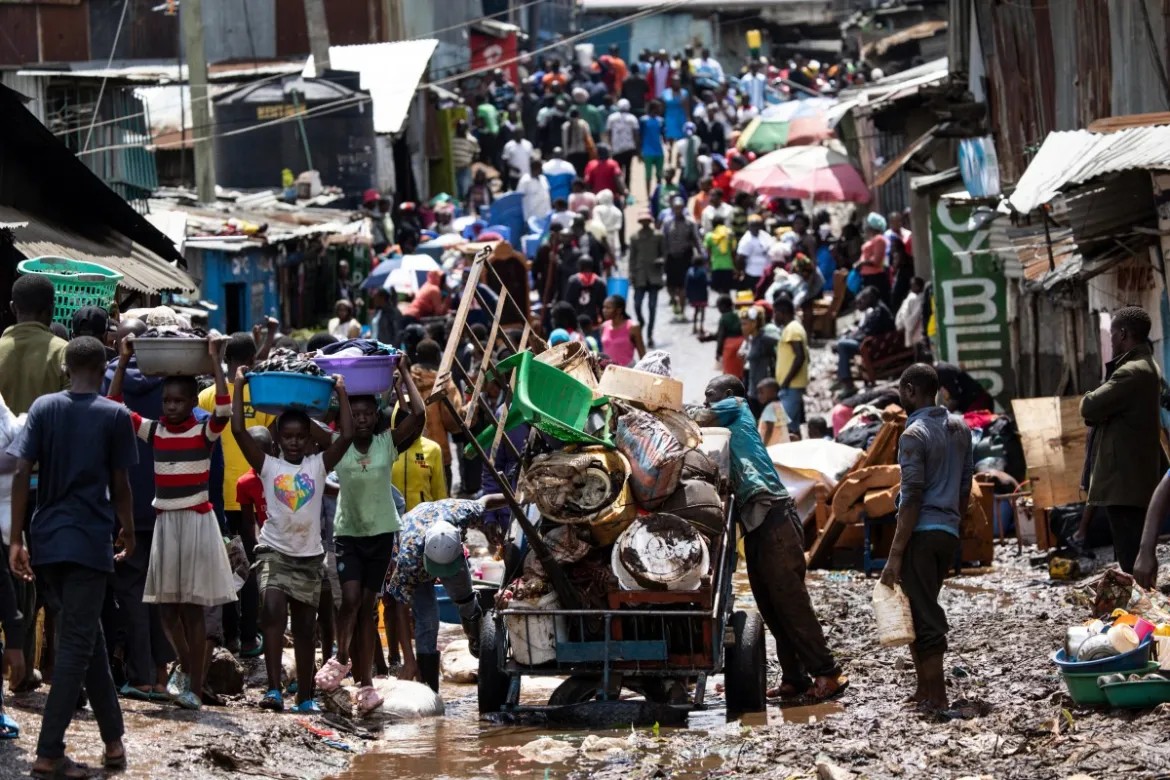
- Kenya has been forecast to receive enhanced rainfall across about 80 per cent of the country during the October-December 2026 short-rains season.
- Previous heavy-rainfall events have caused deaths, displacement, infrastructure damage, livestock losses and disease outbreaks across the country.
- Authorities and communities have been urged to prepare for flooding, landslides and other risks as the October rains approach.
Kenya is bracing for above-average rainfall during the October-December 2026 short-rains season, with the Kenya Meteorological Department (KMD) forecasting enhanced rainfall across about 80 per cent of the country and warning of increased flood and landslide risks.
The onset of the rains in many areas is expected during the second and third weeks of October, while western parts of the country are already receiving rainfall. The forecast has raised concerns in areas that have previously experienced flooding, landslides, displacement, infrastructure damage and disease outbreaks.
The warning has been issued under the leadership of Edward M. Muriuki, Acting Director of the Kenya Meteorological Department, whose mandate includes providing authoritative early-warning information to protect life and property.
Muriuki said: “Expect enhanced rainfall in most parts of Kenya during the October to December 2026 short rains season.”
Previous rainfall disasters
Kenya’s experience with heavy rainfall has exposed the country to repeated humanitarian emergencies. During the 1997-98 El Niño episode, extensive flooding damaged roads and bridges, disrupted water supplies, destroyed homes and farms and affected roughly one million people.
The period was also associated with major disease outbreaks. Research on the 1997-98 El Niño period estimates that 33,137 cholera cases and about 1,549 cholera deaths occurred.
The 1,549 deaths were associated with cholera during the wider El Niño period and do not represent the number of people directly killed by floods. Extreme rainfall can also contribute to deaths through drowning, collapsed structures, contaminated water, displacement and disruption of health services.
Kenya’s vulnerability was demonstrated again in 2006, although that disaster should not simply be classified as an El Niño event. After weeks of heavy rainfall, the Kenya Red Cross reported 114 deaths and about 723,000 people affected by December.
The northeastern region, parts of the Coast and low-lying western areas were among those badly affected. The Nyando River also burst its banks, displacing thousands of households in Budalangi.
Kenya experienced another major El Niño-linked rainfall disaster in October-December 2023. KMD’s State of the Climate report says severe flooding associated with El Niño and a strong positive Indian Ocean Dipole affected more than 750,000 people, while agriculture, health, energy and transport infrastructure suffered major disruption.
ALSO READ:
Siaya National Polytechnic wins international award for TVET excellence
By December 2023, UNICEF reported 17,287 livestock deaths and 1,212 businesses destroyed, while the floods intensified an existing cholera outbreak. Communities in northern Kenya, the Coast and western Kenya were among those affected.
The March-May 2024 long rains generated another major flood emergency, with the previous El Niño-enhanced wet conditions contributing to already saturated environments.
KMD’s 2024 State of the Climate report recorded 295 deaths by May 19, 2024, alongside 412,763 people affected, 278,380 people displaced and 188 people injured. Forty-one counties had been affected by that point.
UNICEF similarly reported that 41 of Kenya’s 47 counties were affected by heavy rainfall, flooding and landslides during the emergency.
Areas facing flood and landslide risks
In Nairobi, areas close to rivers, drainage channels, floodplains and low-lying locations face potential flooding risks. These include Mathare, Korogocho, Lucky Summer, Gikomba, Eastleigh, Industrial Area, Kibera, Mukuru Kwa Reuben, Mukuru Kwa Njenga, South B, South C, Kawangware, Kangemi, Dandora, Kariobangi, Kayole, Njiru and Ruai.
The Nairobi, Mathare and Ngong river systems and their tributaries can become particularly dangerous when intense rainfall overwhelms drainage capacity. The 2024 floods again demonstrated the vulnerability of informal settlements, where homes may be located close to waterways and drainage infrastructure may be inadequate.
The Tana River basin remains one of Kenya’s important flood-risk zones. Communities around Hola, Garsen, Kipini and other lower-Tana settlements can face serious flooding when river levels rise. Rainfall upstream can also affect downstream communities even when local rainfall appears manageable.
The 2023-24 experience showed how quickly homes, farms, roads and livestock could be overwhelmed.
The Nyando, Nzoia and Yala river systems create another area of concern in western Kenya. Parts of Kisumu, Siaya, Busia, Homa Bay and Migori contain low-lying areas vulnerable to flooding. The Kano Plains and Nyando Basin have historically been exposed to river flooding, while Budalangi and parts of the lower Nzoia corridor face similar risks.
Narok: Learners stranded as KFS evictions disrupt schooling in Maasai Mau
In central Kenya, including Nyandarua, Nyeri, Murang’a, Kiambu, Kirinyaga, Embu, Meru and Tharaka-Nithi, risks include landslides, mudslides, collapsing slopes, swollen rivers and washed-out roads. The Aberdare and Mount Kenya regions require particular vigilance when prolonged rainfall saturates the ground.
Counties including Nakuru, Narok, Baringo, Kericho, Bomet, Nandi, Uasin Gishu, Trans Nzoia, West Pokot and Elgeyo-Marakwet also contain combinations of floodplain, river, flash-flood and landslide risks.
The rainfall threat extends to Mombasa, Kilifi, Kwale, Lamu, Tana River, Machakos, Makueni and Kitui. In coastal cities, drainage congestion can produce urban flooding, while rivers, seasonal streams and low-lying settlements in rural areas can become dangerous during intense storms. KMD’s 2026 forecast places many of these counties among areas expected to receive above-average rainfall.
Preparing for the October rains
The historical casualty figures should not be combined into a single cumulative El Niño death toll. The approximately 1,549 cholera deaths from the 1997-98 period refer to disease-associated mortality, while the 114 deaths reported during the 2006 floods relate to a different heavy-rainfall disaster. The 295 deaths recorded by KMD by May 19, 2024 relate to the 2024 long-rains flood disaster.
The figures nevertheless demonstrate the scale of the consequences associated with extreme rainfall in Kenya, including deaths, displacement and destruction of livelihoods.
With the 2026 short rains approaching, households in flood-prone settlements need to know where they will move if water levels rise. Schools located near rivers or unstable slopes need contingency plans, while drivers need to exercise caution around roads and bridges during heavy rainfall.
Farmers also need to protect livestock, equipment and harvested produce, while county governments need functioning drainage, evacuation routes, emergency communication and accessible rescue capacity.
KMD’s seasonal forecast does not mean every county will experience flooding. Rainfall varies from place to place, while flooding depends on rainfall intensity, river levels, drainage capacity, soil saturation, terrain and settlement patterns.
ALSO READ: Murkomen orders crackdown on drug abuse menace to protect learners
However, Kenya’s experience during the 1997-98 El Niño period, the 2006 floods and the El Niño-linked rainfall of 2023-24 highlights the need for preparedness as the October-December rains approach.
The forecast has been issued, and areas exposed to flooding and landslides have been identified. The effectiveness of early-warning systems, county preparedness, infrastructure and community response will be important as the country enters the 2026 short-rains season.
By Hillary Muhalya
Get more stories from our website: Education News
To write to us or offer feedback, you can reach us at: editor@educationnews.co.ke
You can also follow our social media pages on Twitter: Education News KE and Facebook: Education News Newspaper for timely updates.
>> Click here to stay up-to-date with trending regional stories