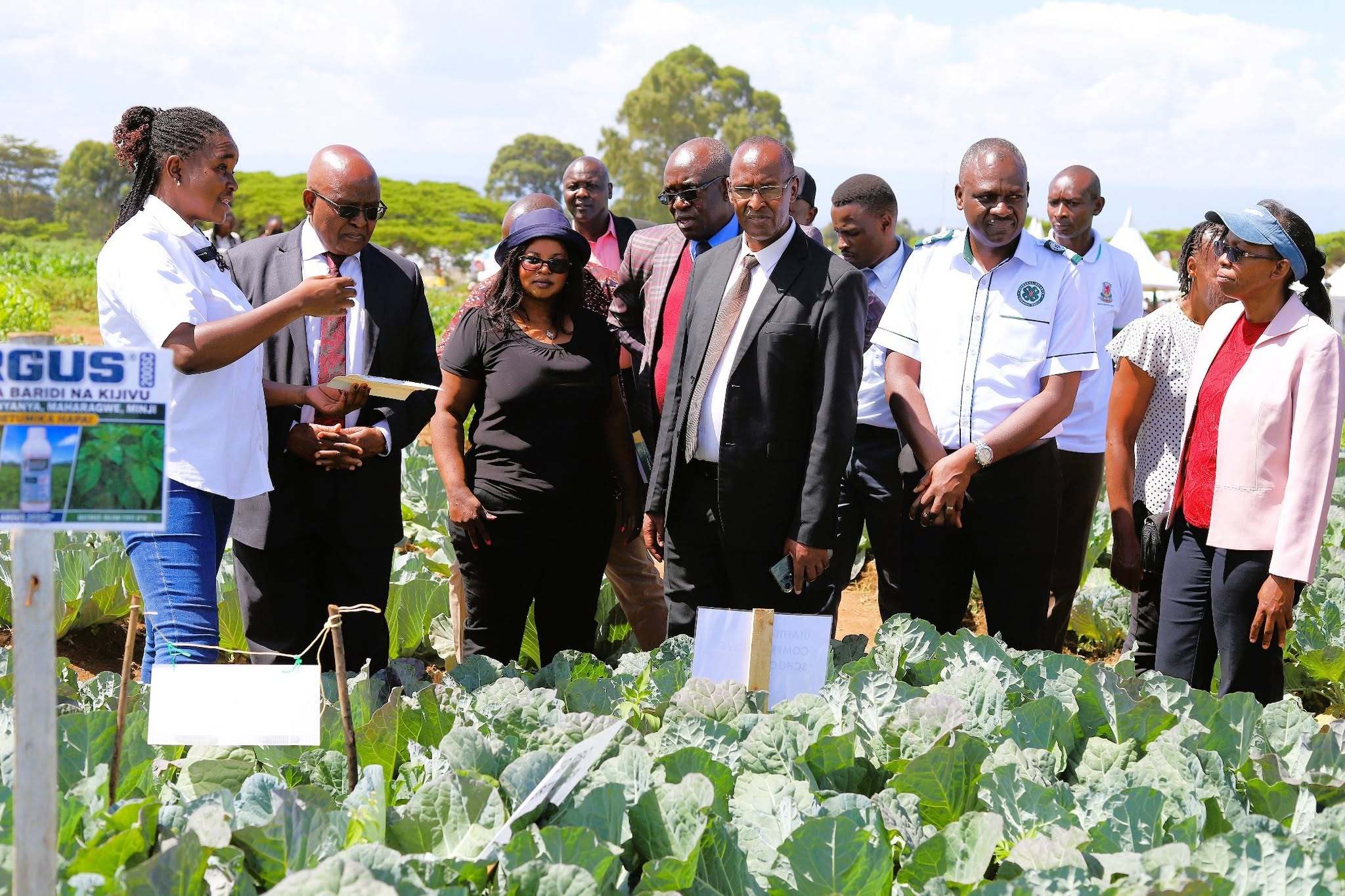
Egerton University has partnered with key stakeholders to revitalize 4K Clubs in more than 50 schools across Nakuru County, with the aim of equipping young learners with practical skills in sustainable agriculture, responsible crop protection, and climate-smart farming practices.
The initiative seeks to empower pupils with agricultural knowledge and hands-on experience while nurturing a new generation of environmentally conscious farmers. As part of the programme, the university is training 4K Club patrons, members, headteachers, and school administrators on agricultural innovations and sustainable agronomic practices.
Speaking during Egerton University’s 4K Club Open Day at the Njoro Main Campus, Vice Chancellor Prof. Isaac Kibwage emphasized the need to revive school-based farming programmes to address emerging challenges in the agricultural sector, including an aging farming population and diminishing arable land.
“Egerton University is proud to continue working with schools in Nakuru County to support 4K Clubs, helping pupils learn practical farming skills and develop a passion for agriculture from an early age. The partnership aims to enhance agricultural productivity, ensure food safety, and improve health outcomes within the community,” said Prof. Kibwage.
He noted that the programme is strengthening the capacity of school-based 4K Clubs by equipping learners with practical skills to address climate change and adopt sustainable agricultural practices.
ALSO READ:
The Vice Chancellor further encouraged learners to embrace agroforestry by planting tree seedlings alongside vegetables, a practice that promotes environmental conservation while enhancing agricultural productivity.
Currently, participation in 4K Clubs is limited to learners in Grades Four to Six. However, Egerton University is developing a proposal to extend membership to young people up to the age of 35 to ensure continuity and long-term sustainability of the initiative.
Under the programme, each participating school is assigned an Egerton University lecturer as a mentor, working alongside a teacher patron and student coaches from the Agricultural Education and Extension Student Association (AEESA). The university also conducts regular training sessions for teachers and school heads who oversee club activities.
Prof. Kibwage described the clubs as an important platform for nurturing a generation that understands and actively participates in sustainable agriculture and environmental stewardship.
To support the initiative, Egerton University has established a dedicated demonstration farm and technology hub under the coordination of Dr. Miriam Kyule. The facility exposes learners to modern agricultural technologies, including drone applications in farming and smart irrigation systems.
The 4K Club programme; an acronym for Kuungana, Kufanya, Kusaidia Kenya (Unite, Act, Help Kenya), was widely popular in Kenyan schools during the 1990s but has gradually declined over the years due to shifting educational priorities and resource limitations.
With climate change increasingly affecting agricultural productivity and livelihoods, stakeholders believe the programme offers an effective platform for preparing young people to tackle future food security challenges.
ALSO READ:
“Climate change is no longer a distant concern; it is a reality affecting every aspect of our lives. We must empower children with the knowledge and skills needed to address these challenges from an early age. Strengthening 4K Clubs can play a significant role in achieving this goal,” Prof. Kibwage said.
He added that the multi-stakeholder partnership is focused on promoting the responsible use of crop protection innovations while integrating sustainable farming practices into school activities.
The initiative is expected to influence positive behavioural change among learners, schools, and surrounding communities, ultimately contributing to improved agricultural productivity, food safety, and public health.
The long-term objective of the programme is to create a generation of informed and skilled young people capable of driving sustainable agricultural development and enhancing food security in Kenya.
By Juma Ndigo
You can also follow our social media pages on Twitter: Education News KE and Facebook: Education News Newspaper for timely updates.
>>> Click here to stay up-to-date with trending regional stories
>>> Click here to read more informed opinions on the country’s education landscape