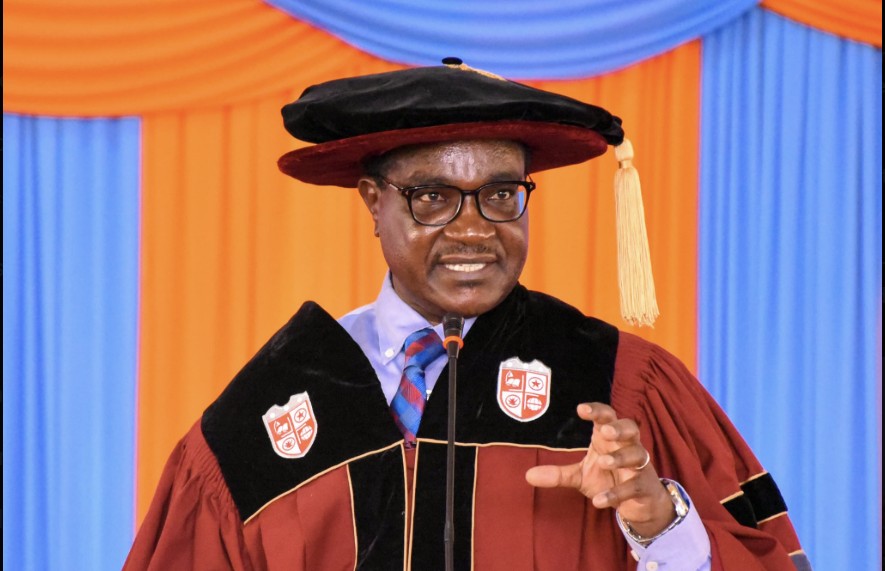
- Astiba Kebong’o argues that classroom excellence deserves a clear career pathway alongside school administration.
- The proposed TSC guidelines could recognise experienced teachers without requiring them to seek leadership positions.
- Transparent promotion criteria, equitable opportunities and clear remuneration arrangements will determine whether the reforms succeed.
As the country prepares to celebrate World Teachers’ Day on October 5, the teaching profession has received news of a development that could significantly reshape the way teachers view career advancement.
The proposed revision of the Teachers Service Commission’s (TSC) Career Progression Guidelines (CPG) introduces an important principle: professional advancement should not necessarily require a teacher to leave the classroom.
For a profession whose greatest contribution takes place in classrooms, this is a significant shift in thinking.
For years, career progression has often been closely associated with administrative responsibility. Teachers seeking higher grades have traditionally had to compete for positions such as deputy headteacher, principal, senior principal and chief principal. This has created the impression that the ultimate measure of professional ambition is movement from the classroom into the office.
But teaching and administration demand different competencies.
A teacher may be an exceptional classroom practitioner, curriculum specialist, assessor, mentor or innovator without necessarily possessing the desire to become a school administrator. Conversely, a person may have strong leadership and institutional management abilities and find fulfilment in administration.
Both forms of professional contribution are valuable.
The proposed CPG could therefore provide a more rational career structure by allowing teachers to pursue professional growth without making administration the compulsory destination for advancement.
This is particularly relevant under competency-based education, where teachers are expected to facilitate learner-centred experiences, nurture competencies, undertake continuous assessment and provide opportunities for learners to demonstrate creativity, innovation and problem-solving abilities.
Experienced classroom teachers are central to this transformation.
Their expertise should not be diminished simply because they choose to remain where teaching and learning actually occur.
A teacher who remains in the classroom should not be regarded as having failed to progress. Professional growth should be measured by competence, contribution, experience and impact, not merely by the office one occupies.
The proposed reform could also have implications for the manner in which administrative leadership is selected.
When teachers no longer have to view administration as the principal route to career advancement, leadership positions can increasingly become a matter of suitability rather than a compulsory step in professional progression.
Schools require leaders with sound judgement, integrity, strategic vision, communication skills, accountability and the ability to manage people and resources. These qualities should take precedence whenever administrative positions are filled.
This is important because institutions lose direction when professional appointments are influenced by considerations unrelated to leadership competence.
Where ethnicity, clan, religious affiliation, personal connections or other extraneous interests are allowed to overshadow merit and suitability, the consequences can extend beyond the individual appointment. Staff morale suffers, trust deteriorates and institutional effectiveness can be compromised.
A revised career structure will not automatically eliminate such practices. However, creating separate professional and administrative pathways could reduce unnecessary competition for administrative positions and allow leadership to be pursued by those interested in and equipped for it.
Clear implementation details are essential
There is, however, a need for caution.
Teachers should distinguish between the proposed revised CPG and a fully implemented policy. TSC has been advancing the revision of the guidelines, including taking the proposals through a process involving the Salaries and Remuneration Commission on their financial implications. The final implementation framework and its financial provisions must therefore be understood through official communication from the relevant institutions.
This is particularly important because teachers will want clear information on grading, remuneration, transition arrangements, promotion criteria and professional development requirements.
Recent communication from TSC has nevertheless pointed towards a significant change in career structure, including the possibility of teachers progressing to the highest professional levels without necessarily taking administrative positions. There has also been an indication that heads of institutions in primary schools could be redesignated as principals from July 2027 if the proposed framework takes effect as announced.
If implemented effectively, this could become one of the more consequential reforms in teacher career management.
It would affirm something the profession has long needed to hear: the classroom is not the end of a teacher’s career; it can be the highest expression of professional expertise.
The reform could also help address career stagnation among experienced teachers who have accumulated years of knowledge and practical expertise but have little interest in institutional administration.
Such teachers could become a formidable professional resource. They can mentor younger colleagues, support curriculum implementation, strengthen assessment practices, develop teaching innovations and preserve institutional knowledge.
But for the reform to achieve its intended purpose, implementation will matter more than policy language.
The Commission must ensure that promotion criteria are transparent, opportunities are equitable and teachers clearly understand the expectations attached to each professional level. The relationship between classroom grades and administrative positions must also be communicated without ambiguity.
Above all, the system should reward demonstrated professional competence.
Professional excellence deserves its own ladder
As Kenya celebrates its teachers this October, therefore, the proposed changes offer an opportunity to reconsider what society means by career success in education.
Schools need effective administrators. But they equally need outstanding classroom practitioners.
They need teachers who can inspire learners, mentor colleagues, interpret curriculum reforms, undertake meaningful assessment, nurture talent and continuously improve their practice.
Leadership in education does not begin and end in the principal’s office. Some of its most enduring forms take place quietly in classrooms, where teachers shape the knowledge, skills, character and aspirations of the next generation.
The proposed revised CPG could consequently usher in a healthier understanding of professional progression: one in which teachers can rise without being compelled to leave the classroom, and in which leadership positions are pursued by those with the interest and competencies to lead.
As we celebrate teachers, that would be a fitting recognition of their professional worth.
READ ALSO:
A teacher should not have to abandon teaching to demonstrate ambition.
Professional excellence deserves a ladder of its own.
By Astiba Kebong’o
Email: jackiekebongo@gmail.com
Get more stories from our website: Education News
To write to us or offer feedback, you can reach us at: editor@educationnews.co.ke
You can also follow our social media pages on Twitter: Education News KE and Facebook: Education News Newspaper for timely updates.
>> Click here to stay up-to-date with trending regional stories