- Kenya has recorded2,322 child-trafficking cases in 2025, the highest figure in the latest five-year KNBS series, up from 1,976 in 2021.
Kenya recorded 2,322 reported child-trafficking cases in 2025, the highest figure in the latest five-year national series, exposing a child-protection challenge whose consequences extend far beyond immediate safety to classrooms, examinations, learning outcomes and the prospects of thousands of children.
Data contained in the Kenya National Bureau of Statistics (KNBS) Economic Survey 2026 show that 1,185 of the children involved were boys and 1,137 were girls. The 2025 figure rose from 2,129 cases in 2024, 2,009 in 2023, 1,947 in 2022 and 1,976 in 2021. The increase from 1,976 cases in 2021 to 2,322 in 2025 represents about 17.5 per cent. However, reported cases are influenced by identification, reporting practices, public awareness and the ability of authorities to detect and record incidents, so the increase should not automatically be interpreted as an equivalent increase in the underlying incidence of trafficking. Nevertheless, the five-year series shows that child trafficking remains a persistent national concern.
Understanding the Different Child-Protection Figures
Several figures have recently been cited in discussions about child trafficking and missing children in Kenya, but they measure different things and should not be added together. The 2,322 cases are the appropriate figure for this article, as they represent child-trafficking cases reported during the full calendar year 2025 in the KNBS annual series.
A separate Child Protection Information Management System dataset recorded 10,581 child-protection cases between January 2025 and March 2026. These included abandonment, abduction, missing or lost-and-found children and trafficking. Within that particular 15-month dataset, only 173 cases were classified as trafficking. The 173 figure therefore does not contradict the 2,322 figure, since the two statistics come from different reporting systems and cover different periods and administrative datasets. Likewise, the 10,581 cases should not be described as trafficking cases or missing children, as they represent a broader child-protection caseload.
KNBS also reported 200,669 child-protection cases in 2025, an even broader annual measure covering multiple categories of child protection, of which the 2,322 trafficking cases form only one component. Keeping the statistics separate is important because combining them would inflate the number of trafficking cases and give a misleading picture of the scale of the problem.
ALSO READ:
Western Region teachers earn honours in World Teachers’ Day celebrations
When Trafficking Takes a Child Out of School
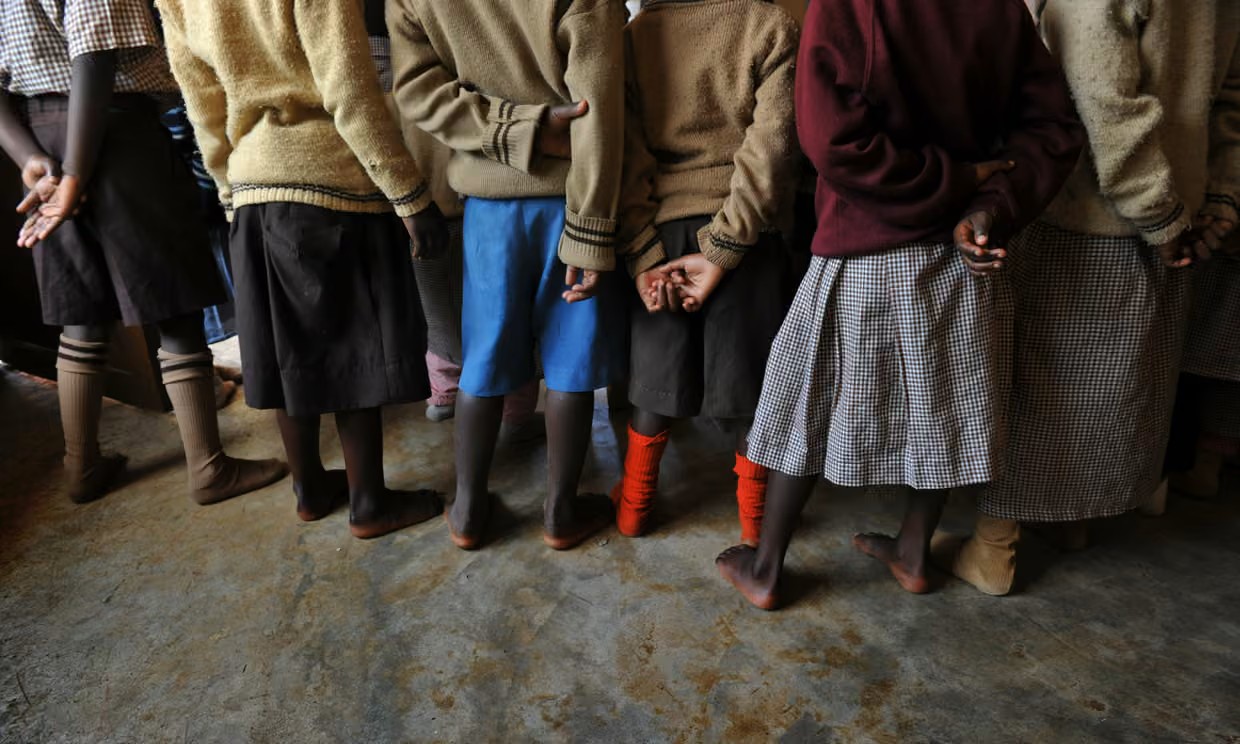
For education, the consequences can be devastating. A trafficked child can disappear from the classroom for days, months or even years. Children subjected to domestic labour, forced begging, agricultural work, sexual exploitation, criminal activity or other forms of exploitation may have little opportunity to attend school. The damage goes beyond missed lessons: a learner can miss examinations, continuous assessment, curriculum content, peer interaction and critical developmental experiences, and prolonged absence creates learning gaps that can become increasingly difficult to close. For some children, education may stop altogether.
Even after rescue, returning to school is not automatic. A learner may require safe accommodation, family tracing, psychosocial support, educational assessment, catch-up programmes and assistance with re-enrolment, making trafficking not only a security and child-protection issue but also an education crisis. The success of an intervention should therefore be measured not only by how many children are rescued, but also by how many return to school, remain there and recover the learning they lost.
Where Vulnerability Is Concentrated
The available national data do not provide a single, comparable county ranking showing which counties accounted for the largest share of the 2,322 trafficking cases recorded in 2025. It would therefore be misleading to use broader missing-child or child-protection figures to declare particular counties the most affected by trafficking. What the wider data do show is that child protection pressures are spread across urban centres, rural communities, border areas, transport corridors and economically vulnerable settlements.
Specific trafficking concerns have been reported in Busia and other parts of western Kenya, while locations in Kiambu, including Ruiru, Wangige and Tigoni, have featured in reporting concerning the exploitation of children through activities such as hawking, begging and agricultural labour. These examples should be understood as reported areas of concern rather than a definitive national ranking of trafficking prevalence. The geographical pattern nevertheless demonstrates why the response cannot focus only on international borders, since a child can be recruited in one county, transported through another and exploited somewhere else entirely within Kenya.
Why Children Become Vulnerable
Poverty and household financial hardship are among the vulnerabilities traffickers can exploit, with children and families sometimes approached with promises of employment, food, accommodation, education, sponsorship or a better life. Unemployment and limited livelihood opportunities can make apparently attractive offers difficult to reject, while demand for cheap or easily controlled labour can expose children to domestic work, agriculture, street vending, begging and informal businesses.
Sexual exploitation remains another serious dimension of trafficking, with recruitment sometimes disguised as an employment opportunity, education sponsorship, modelling, travel, accommodation or marriage. Technology has created another avenue, as social-media platforms and messaging applications can enable strangers or intermediaries to establish contact with children, build trust and eventually facilitate exploitation or movement. The recruiter may therefore not resemble the stereotypical image of a trafficker, making prevention increasingly dependent on the ability of parents, teachers and children themselves to recognise deceptive offers before exploitation occurs.
A Warning From the Numbers
The five-year series also permits a simple mathematical scenario illustrating what could happen if the historical rate of growth continued unchanged. The increase from 1,976 cases in 2021 to 2,322 in 2025 corresponds to a compound annual growth rate of approximately 4.1 per cent. Applying that rate mechanically produces an illustrative scenario of about 2,418 cases in 2026, about 2,517 in 2027 and about 2,621 in 2028. These are not government forecasts, but trend-based calculations intended only to demonstrate the possible scale of the problem if the historical growth rate continued. The significance is not simply whether reported cases reach 2,600, but that each additional case potentially represents another child missing lessons, assessments or examinations, falling behind academically or becoming disconnected from education.
Schools Can Become an Early-Warning System
Child trafficking is sometimes associated with international movement, yet trafficking can occur entirely within Kenya, with a child moved from a rural home to a nearby town, from one county to another, or between urban settlements, and still be a victim. Prevention therefore cannot be concentrated only at airports, border points and major transport corridors; schools, parents, teachers, chiefs, assistant chiefs, community organisations, religious institutions, police officers and children’s officers all have roles in identifying vulnerable children and responding to warning signs.
Teachers and school administrators are often among the first people capable of noticing significant changes in a learner’s circumstances. Unexplained absenteeism, repeated movement between schools, sudden withdrawal from learning, unexplained money or gifts, fear of particular adults, declining academic performance or a child reporting a new employer or accommodation arrangement may warrant safeguarding attention. None of these signs alone proves trafficking, but they can indicate that a child requires closer attention and, where necessary, referral to the appropriate child-protection authorities. Kenya should therefore strengthen safeguarding systems within schools and train teachers and administrators to recognise, document and appropriately report potential cases.
British or American English: Which spelling system should learners use?
From Rescue to Prevention
Kenya has laws and institutions designed to combat trafficking, including the Counter-Trafficking in Persons Act and the national framework for combating trafficking. The challenge is to make these mechanisms work consistently from the community level to national institutions.
Prevention should begin with the vulnerabilities traffickers exploit. Families need accessible information about recruitment tactics, communities need simple and reliable reporting channels, and children need age-appropriate information about online grooming, fraudulent employment offers, fake scholarships and other deceptive approaches. The Child Helpline 116 should remain a major entry point for reporting and referral, while information from schools, communities, children’s officers and law-enforcement agencies should be shared quickly enough to allow intervention before exploitation escalates. Law-enforcement efforts should also move beyond rescuing victims to disrupting the networks that recruit, transport and exploit children, with investigations identifying recruiters, intermediaries, transporters, exploiters and others who facilitate or financially benefit from trafficking.
Kenya also needs more detailed and regularly published trafficking data. County and sub-county information should distinguish trafficking from other child-protection categories and, where possible, identify the child’s age, sex, form of exploitation, recruitment method, location of recruitment, movement pattern, school status and case outcome. Such information would help authorities determine where children are being recruited, where they are being moved and where they are being exploited, and would also help education authorities identify areas where trafficking is contributing to absenteeism and school dropout.
Rescue Must Lead Back to Learning
Removing a child from exploitation is only the beginning of recovery. Every rescued learner should have an education-reintegration assessment, establishing where the child was studying, how long they were out of school, which examinations or assessments were missed and what learning support is required. Depending on the circumstances, the learner may need accelerated learning, psychosocial support, assistance with examinations, educational materials, safe accommodation and sustained follow-up. Family reunification should also be carefully assessed rather than treated as an automatic final step, since returning a child to an environment that remains unsafe can expose the learner to renewed exploitation. The ultimate objective should be to restore safety, education and the opportunity to build an independent future.
The scale of the problem requires stronger coordination among the Ministry of Education, Teachers Service Commission, State Department for Children Services, National Police Service, county governments, schools, families and community organisations. A child reported missing from school should not disappear into separate administrative systems. Where there are indicators of exploitation, the education system should be able to trigger appropriate child-protection referral, children’s officers should coordinate with schools during reintegration, police should receive timely information where criminal activity is suspected, and schools should then monitor the learner’s return and continued attendance.
ALSO READ: Court declines bid to halt transfer of former Highway Secondary School principal
The 2,322 trafficking cases reported in 2025 form only one part of Kenya’s much wider child-protection challenge. Behind every trafficking case is a child whose education, development and security may have been disrupted. If the historical trafficking growth rate continued unchanged, the illustrative calculation would put reported cases above 2,600 annually by 2028, though that is not an inevitable outcome. Kenya can intervene before children disappear, strengthen detection when warning signs emerge, disrupt trafficking networks, protect survivors and ensure that rescued learners return to education.
The measure of success should therefore go beyond the number of children rescued. It should include children protected before exploitation occurs, trafficking networks disrupted, perpetrators prosecuted, survivors safely reintegrated, and learners successfully returned to classrooms. A child rescued from trafficking but permanently lost to education represents an incomplete intervention. Kenya must make the classroom part of the rescue mission, and prevention must begin before the child disappears.
By Hillary Muhalya
Get more stories from our website: Education News
To write to us or offer feedback, you can reach us at: editor@educationnews.co.ke
You can also follow our social media pages on Twitter: Education News KE and Facebook: Education News Newspaper for timely updates.
>> Click here to stay up-to-date with trending regional stories