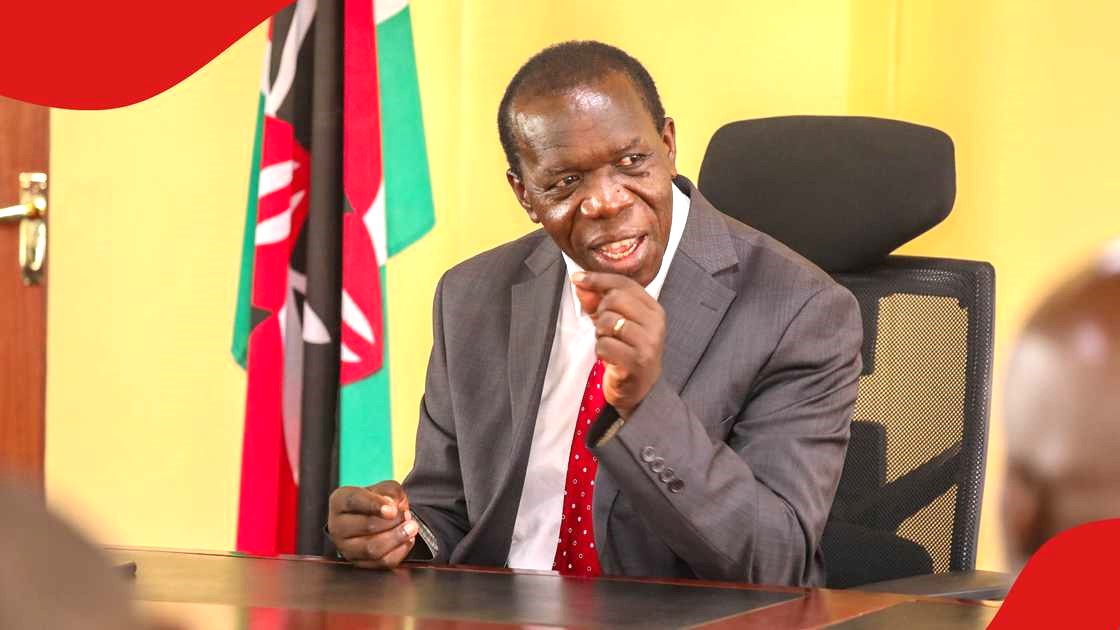
- Universities are increasingly tightening student dress requirements, bringing campus appearance back into national debate.
- Yabesh Onwonga argues that differing institutional rules require a consistent national framework rather than isolated directives.
- He proposes that CUE, the Ministry, Parliament and university councils clarify standards while protecting students from arbitrary enforcement.
Kenya’s public universities are sending a message through their dress codes: what students wear on campus matters.
Moi University has now joined a growing number of institutions tightening rules on dress, including restrictions on mini and micro-skirts, skin-tight trousers, ripped jeans, cropped tops, transparent clothing and other attire considered inappropriate for the university environment.
Recent and documented restrictions include those at Moi University, Masinde Muliro University of Science and Technology, the University of Eldoret, Egerton University, the University of Kabianga, Kaimosi Friends University, Technical University of Mombasa and Alupe University.
University of Embu’s published dress guidelines also require skirts and dresses to reach the knee or below and say mini-skirts above the knee should be avoided.
This is, therefore, no longer simply a “Moi University issue”. It is a national conversation about the culture Kenya wants inside its institutions of higher learning.
At Moi University, the September 22, 2026, directive prohibits micro and mini-skirts, skin-tight trousers, ripped jeans, cropped tops, low-cut clothing, micro-shorts, transparent clothing and several other forms of attire. Staff were also instructed not to serve students dressed contrary to the prescribed standards.
At MMUST, students have similarly been warned against mini-skirts, skin-tight trousers, ripped jeans, low-cut clothing, micro-shorts, transparent clothing, Crocs and slippers.
The University of Eldoret’s regulations identify micro and mini-skirts, skin-tight trousers, ripped jeans, micro-shorts, transparent dresses and revealing tops as inappropriate. Egerton, Kabianga and Kaimosi Friends University have now joined this expanding group, with 2026 directives using strikingly similar language on mini-skirts, tight clothing, ripped jeans, transparent garments and other attire.
Technical University of Mombasa has also prohibited miniskirts and sexually revealing clothing, alongside crop tops and other forms of revealing attire. Alupe University’s official dress-code document explicitly lists micro and mini-skirts among clothing female students should not wear.
University of Embu’s guidelines require female students’ skirts and dresses to reach the knee or below and say mini-skirts above the knee should be avoided.
The development has triggered the familiar argument about personal freedom. But there is another question that deserves serious national attention: should every public university in Kenya be left to invent its own definition of appropriate dress?
The answer should be no.
There is nothing inherently radical about expecting students in a public institution to dress appropriately for an academic and professional environment. Universities prepare people for workplaces in which appearance can communicate professionalism, respect for colleagues and sensitivity to institutional expectations.
The Bible is equally clear that modesty is not a strange modern invention. First Timothy 2:9 calls for “modest apparel, with propriety and moderation”. First Peter 3:3–4 places emphasis beyond outward adornment, directing attention to the character of the person.
The biblical argument is, therefore, not that a particular length of skirt makes somebody righteous. It is that clothing should not become a rejection of dignity, restraint and modesty.
Science, too, tells us that clothing communicates social information. Research in social psychology has found that people use clothing as a cue when forming impressions about others.
That does not mean that clothing determines a person’s morality, nor does it ever excuse harassment. It simply establishes an important fact: appearance communicates.
Kenya should, therefore, stop treating university dress codes as isolated campus controversies.
CUE must set the national framework
The Commission for University Education already has a statutory mandate to promote the objectives of university education, advise the Cabinet Secretary on policy, set standards, regulate university education and undertake inspections, monitoring and evaluation to ensure compliance with established standards and guidelines.
CUE should use that mandate to develop a national university dress-code framework.
It need not prescribe every colour, shoe or hairstyle. But it should establish minimum standards applicable to public universities: appropriate coverage, prohibition of transparent and excessively revealing garments, minimum standards for professional appearance, and clear rules on clothing that is unsuitable for academic or laboratory environments.
The framework should be gender-neutral, clearly written and publicly available.
Parliament should examine whether the existing university regulatory framework adequately addresses institutional standards of appearance.
Its role should not be to legislate skirt lengths from the National Assembly chamber. Rather, Parliament should provide the statutory framework within which CUE and university councils can establish reasonable, constitutional and enforceable standards.
Public universities are institutions created and maintained with public resources. There is a legitimate national interest in ensuring that their institutional standards are consistent, transparent and professionally administered.
The MoE must coordinate
The Ministry of Education, as the parent ministry of CUE, should bring the institutions together and drive harmonisation rather than waiting for each university to issue a controversial directive after another.
Indeed, the Ministry, in consultation with CUE, has developed the proposed Universities (General) Regulations, 2026 and invited stakeholders and members of the public to submit views on the draft regulations and their Regulatory Impact Statement.
This provides an opportunity to consider whether institutional standards, including dress, require a more coherent national framework.
The Ministry should require every public university to publish its dress code, incorporate it into student orientation and apply it consistently.
Most importantly, dress rules must be enforced equally. A rule that applies to female students but ignores male students’ inappropriate dress will rightly be challenged. The standard should be about the university environment, not about policing one sex.
Kenya does not need dozens of different definitions of respectable university dress.
Nor does it need arbitrary enforcement, humiliation or morality policing.
It needs clear national standards, consistently applied.
The public university should be a place where freedom and discipline coexist — and where students learn that entering an academic institution also means entering a professional environment.
CUE should set the framework.
The Ministry should coordinate it.
Parliament should provide the appropriate legal foundation.
University councils should implement it.
And students should know, before they walk through the gate, what their university expects them to wear.
That is not an attack on freedom.
READ ALSO: Kisii MCA pushes for 50 per cent fee waiver to boost TVET enrolment
It is the ordinary business of setting standards in public institutions.
By Yabesh Onwonga
The writer is a history and language analyst and Moi University alumnus.
Get more stories from our website: Education News
To write to us or offer feedback, you can reach us at: editor@educationnews.co.ke
You can also follow our social media pages on Twitter: Education News KE and Facebook: Education News Newspaper for timely updates.
>> Click here to stay up-to-date with trending regional stories