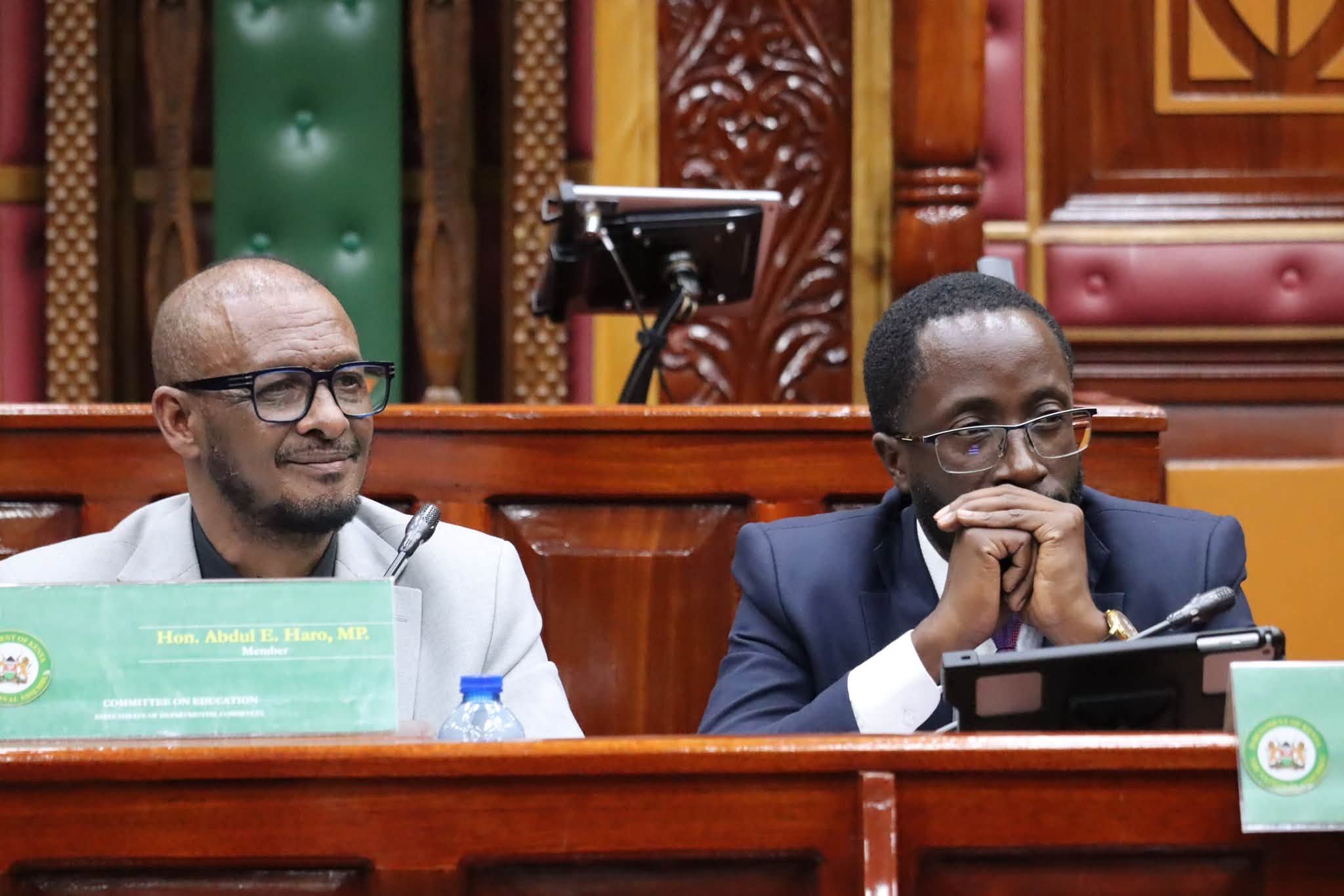
- Parliament has advanced six education reform Bills covering basic education governance, tertiary financing, national assessment, teacher preparation, qualifications integrity and curriculum authority.
- Public participation has already surfaced disputes over JSS governance, loan repayment terms and TVET representation in tertiary financing structures.
- Education experts should be embedded in the drafting process from the outset, as inconsistencies across the six interconnected Bills could create implementation problems once enacted.
Kenya’s Parliament is approaching a decisive stage in an education reform agenda that could reshape the country’s education system from basic education to universities and TVET institutions.
Six education Bills are among the priority matters before the National Assembly as the House resumes, with the Education Committee completing nationwide public participation before the proposals proceed to the next stages of parliamentary consideration. The Committee’s public hearings have already exposed significant questions over JSS governance, student financing, teacher preparation, school management, assessment, qualifications and curriculum. The six Bills are the Basic Education Bill, 2026; the Tertiary Education, Placement and Funding Bill, 2026; the Kenya National Educational Assessments Council Bill, 2026; the Pre-Service Education and In-Service Training Bill, 2026; the Kenya National Qualifications Framework (Amendment) Bill, 2026; and the Kenya Institute of Curriculum Development (Amendment) Bill, 2026. All six appear on Parliament’s official Bills register.
The parliamentary stakes are enormous. These are not six routine amendments. They seek to redraw the legal framework governing how children enter and move through education, how teachers are prepared, how learning is assessed, how qualifications are recognised, how students access tertiary institutions and how curriculum is developed. That is precisely why the policy table must be full of education experts. Lawyers can test legality, economists can test affordability, and legislators can test accountability, but education experts must test whether the proposed architecture makes educational sense.
What Each of the Six Bills Puts at Stake
The Basic Education Bill carries perhaps the broadest institutional stakes. It proposes to repeal and replace the Basic Education Act, 2013, while establishing a new framework covering school registration, governance, inspection, learner protection, special-needs education, scholarships, education data and other aspects of basic education. Its most politically and professionally sensitive question is likely to be how basic education is organised and governed, particularly at the JSS level, including who has administrative authority, who controls resources, who supervises teachers, how Boards of Management operate, how schools are inspected and how accountability is enforced. Stakeholders have already offered divergent views on JSS autonomy and governance, while also demanding timely capitation and adequate infrastructure.
The Tertiary Education, Placement and Funding Bill carries perhaps the most immediate financial stakes for millions of students and families. It proposes a new framework for placement and financing of students and trainees in universities, colleges and TVET institutions, alongside the Tertiary Education Funding Authority and changes to how tertiary education financing is administered. The central legislative question is not merely how students are placed but how Kenya will finance access to tertiary education, including who qualifies for support, how much is scholarship versus loan, what happens to students who cannot repay, when repayment should begin, what interest rate is sustainable, and how TVET trainees and institutional funding are treated. Public participation has already generated questions about loan repayment and interest rates, while stakeholders in Makueni proposed extending the repayment period and giving TVET institutions stronger representation in placement and financing structures.
ALSO READ:
Some contentious issues in the Basic Education Act Amendment Bill 2026
The Kenya National Educational Assessments Council Bill carries the stakes of assessment integrity. It proposes a new legal framework for the national assessment body and would repeal the existing KNEC Act, addressing assessment centres, candidate registration, e-assessment, marking, processing and release of results, certificates and diplomas, and assessment-related offences. The legislative stake is trust: whether learners, teachers, institutions, employers and the country can trust the information produced by the national assessment system.
The Pre-Service Education and In-Service Training Bill carries the stakes of teacher quality and professional development. It proposes a legal framework for preparing prospective teachers before entry into the profession and for continuing professional development of serving teachers and education managers, and also proposes a Kenya Teachers Training College. Central questions include who enters teacher training, what teacher preparation should contain, how much practical teaching experience is necessary, and how professional development connects to classroom performance and career progression. The Bill also has to fit with the Teachers Service Commission framework and KICD’s curriculum responsibilities.
The Kenya National Qualifications Framework Amendment Bill carries the stakes of credential integrity and national recognition of qualifications. It proposes stronger regulation of qualification-awarding institutions and a national database of qualifications, requiring institutions to submit information on qualifications and making the National Qualifications Framework binding on them. Critical questions include who is authorised to award a qualification, how its quality is verified, how fraudulent credentials are detected, and who owns and controls qualification data. The stake is public confidence that a Kenyan qualification is authentic, recognised and backed by an accountable quality-assurance system.
The KICD Amendment Bill carries the stakes of curriculum authority and institutional boundaries. Its stated objective is to streamline KICD’s operations, with proposed changes affecting its mandate and terminology, including provisions intended to remove overlaps with tertiary education and focus specified functions on basic and teacher education. This raises the question of who should develop, approve, accredit and regulate curriculum and programmes at different levels of education, a question that cannot be settled merely by moving words from one statute to another.
ALSO READ: TVET CDACC showcases skills certification at Nairobi International Trade Fair
Why the Six Bills Must Be Read as One Connected System
This is where the greatest drafting challenge begins. The six Bills cannot be treated as six independent documents. They form an education chain: teacher preparation affects teaching, teaching affects learning, learning is assessed, assessment influences progression, progression leads to qualifications, qualifications influence placement and employment, tertiary placement depends on financing, and the entire journey begins with the governance and quality of basic education. A contradiction in one Bill could therefore create an implementation problem in another. A definition used differently across Bills could create confusion. A new institution could duplicate the mandate of an existing institution. A new responsibility could be created without a corresponding funding mechanism. A teacher-training provision could conflict with curriculum or professional-management arrangements. A qualifications database could create data-protection obligations not adequately addressed elsewhere. This is why Kenya needs a six-Bill coherence audit before final passage.
The Policy Table Must Be Full of Education Experts
The answer is not to exclude lawyers, economists or legislators. It is to ensure that education expertise is not subordinate to them. The policy table should include experienced classroom teachers, headteachers and principals, teacher educators, curriculum specialists, assessment and psychometric experts, education researchers, special-needs education professionals, child-protection specialists, education economists, TVET and higher-education specialists, teacher-management and professional-development experts, quality-assurance officers, education data and ICT specialists, and legislative and constitutional experts.
The critical principle is simple: education experts should not be called only after a controversial clause has been drafted. They should be involved before the clause is written. That is the difference between consultation and co-design. Consultation asks, “What do you think of our proposal?” Co-design asks, “What should the proposal be, what evidence should support it, and how will it work in practice?” For legislation that could govern an entire generation of learners, Kenya needs the second approach.
ALSO READ: Stakeholders call for JSS autonomy and more funding in education Reform Bills
The ultimate examination of the six Bills will not occur in the Chamber. It will occur when the law reaches the school, when a teacher reports for duty, when a headteacher manages a budget, when a JSS learner enters a classroom, when a parent seeks admission, when a trainee seeks funding, when an assessment is administered, when an employer verifies a qualification, and when a curriculum is implemented. That is where parliamentary language becomes educational reality.
The six Bills therefore carry six distinct legislative stakes: governance, financing, assessment, teacher quality, qualification integrity and curriculum authority, but one overarching national stake: whether Kenya can build an education system whose laws are coherent enough to work together and practical enough to work in the real world. Parliament has the constitutional responsibility to scrutinise, amend and ultimately decide the fate of these proposals, but it should not have to do that without the deepest possible education expertise at the policy table. The lawyer should test the law, the economist should test the cost, the administrator should test implementation, the data expert should test the system, and the legislator should test accountability. But the education expert must test the education itself, because Kenya may pass these Bills in Parliament, while their real success or failure will be written in the classrooms, colleges, universities and training institutions where Kenyans will have to live with them.
By Hillary Muhalya
Get more stories from our website: Education News
To write to us or offer feedback, you can reach us at: editor@educationnews.co.ke
You can also follow our social media pages on Twitter: Education News KE and Facebook: Education News Newspaper for timely updates.
>> Click here to stay up-to-date with trending regional stories