- KEMI is training 21,493 Junior School heads as Kenya prepares learners for Senior School transition.
- Hillary Muhalya examines how school leadership could strengthen career guidance, pathway selection and parental engagement.
- The virtual programme follows nationwide capacity building for career teachers and concludes on October 2.
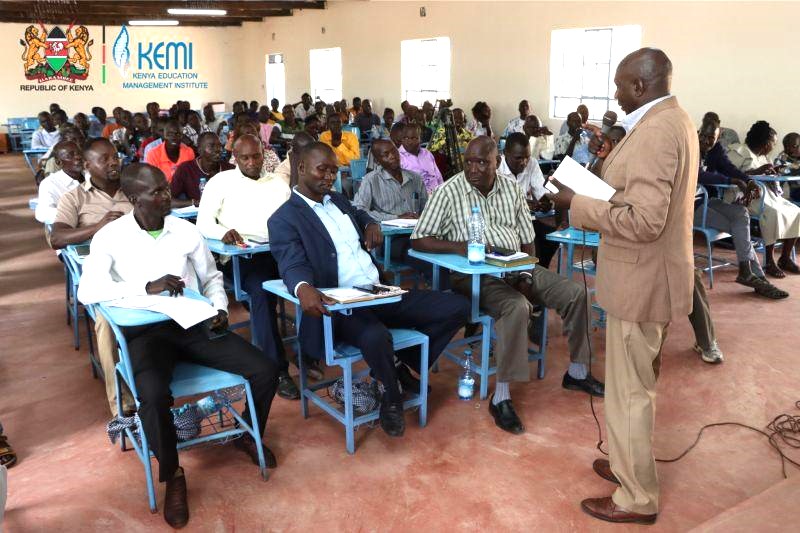
Kenya has stepped up preparations for the transition of Grade 9 learners into Senior School, with the Kenya Education Management Institute (KEMI) rolling out a nationwide virtual training programme targeting 21,493 Heads of Institutions in Junior Schools.
The programme, which focuses on career guidance, Senior School pathways, tracks and subject choices, comes as schools prepare learners for one of the most consequential stages of Competency-Based Education (CBE).
The training is being implemented under the Kenya Primary Education Equity in Learning (KPEEL) programme and is expected to strengthen the capacity of school leaders to support learners, teachers and parents during the pathway-selection process.
The initiative follows an earlier capacity-building programme for Junior School career guidance teachers conducted between August 17 and September 18, 2026, across all 47 counties.
With the teacher component completed, KEMI has now shifted its focus to school leadership, recognising that career guidance cannot depend solely on individual teachers without institutional support.
Under the CBE structure, learners completing Junior School are expected to make choices that determine their Senior School pathway and subject combinations.
The three broad pathways are STEM, Social Sciences, and Arts and Sports Science.
The decisions require learners and their families to understand the relationship between interests, abilities, subjects, pathways and possible future education and career opportunities.
KEMI’s intervention therefore seeks to reduce the information gap surrounding these choices by equipping school leaders with knowledge and resources that can be used when engaging learners and parents.
The programme targets a wider school ecosystem comprising 21,493 Junior Schools, 42,986 Junior School career teachers and 21,493 Heads of Institutions.
This scale makes the initiative one of the country’s major coordinated capacity-building exercises linked directly to the Senior School transition.
Why school heads matter
School heads occupy a critical position in translating career guidance policy into practice.
They influence how schools organise guidance sessions, allocate time and resources, engage parents and coordinate the work of teachers responsible for career guidance.
Training school leaders alongside career teachers is therefore intended to create greater institutional support for the decisions learners will make.
The programme also seeks to provide schools with Information, Education and Communication (IEC) materials, career assessment tools and digital resources that can continue supporting career guidance beyond the formal training sessions.
This could give teachers and parents reference materials for discussions with learners as they consider pathways, tracks and subject combinations.
Because of the size of the target population, the Heads of Institutions training is being delivered virtually in five cohorts.
The two-day training model enables KEMI to reach thousands of school leaders without requiring them to travel to central training venues.
Virtual delivery also reduces the logistical demands associated with accommodation, transport and physical training facilities while allowing the programme to reach schools across all parts of the country.
The approach reflects the growing use of digital platforms in Kenya’s education-sector capacity-building programmes.
For the training to have an impact beyond the virtual sessions, however, the knowledge acquired by school leaders will need to translate into consistent career guidance practices at school level.
Multi-agency implementation
KEMI is leading the programme in collaboration with the Ministry of Education, Teachers Service Commission (TSC) and other education-sector stakeholders.
The multi-agency approach is intended to align career guidance with wider curriculum implementation and teacher-management structures as Kenya moves deeper into the CBE transition.
It also places school leadership at the centre of preparations for the movement from Junior School to Senior School.
Speaking during the opening of the training, KEMI Chief Executive Officer Dr Maurice Odondo urged Heads of Institutions to remain focused and participate actively throughout the sessions.
The training, he said, is important in strengthening implementation of CBE and preparing school leaders to support learners during the pathway and subject-selection process.
The emphasis on school leadership comes at a critical point in the curriculum transition. Training teachers alone may not be sufficient if school systems do not provide the time, resources and institutional backing required for meaningful career guidance.
The virtual training is scheduled to conclude on October 2, 2026.
Its ultimate test, however, will be what happens after the virtual sessions end.
For the programme to achieve its intended purpose, the training must translate into practical guidance for learners and parents, reliable career information, appropriate assessment of learners’ interests and abilities, and informed decisions on Senior School pathways and subject combinations.
READ ALSO: Kenya has thousands of PhD holders, but why are there only 551 professors?
The coming transition will therefore test not only the curriculum’s pathway architecture but also Kenya’s ability to ensure that every learner—regardless of location or family background—receives adequate information before making choices that could influence the next stage of their education.
By Hillary Muhalya
Get more stories from our website: Education News
To write to us or offer feedback, you can reach us at: editor@educationnews.co.ke
You can also follow our social media pages on Twitter: Education News KE and Facebook: Education News Newspaper for timely updates.
>> Click here to stay up-to-date with trending regional stories