- School principals face renewed scrutiny over management of public funds as audits examine financial and administrative records.
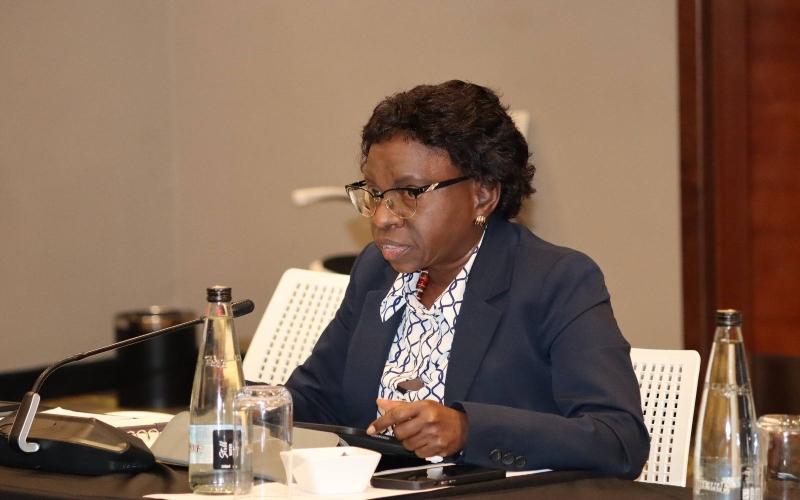
- Auditor-General Nancy Gathungu has urged school heads to support responses to audit queries with proper documentation.
- Hillary Muhalya examines records principals should maintain as the audit office confronts allegations of improper demands.
School principals are coming under renewed scrutiny over the management of public funds, with the Auditor-General warning that audit queries must be answered through proper documentation even as her office responds to allegations of extortion involving sums of up to KSh1.5 million.
Auditor-General Nancy Gathungu said Thursday that her office had taken seriously allegations that individuals linked to school audits demanded between KSh400,000 and KSh1.5 million from some school heads in exchange for favourable treatment.
The allegations were reported by The Standard, with some principals reportedly claiming they feared that refusing the demands could lead to negative findings or prolonged audits.
Gathungu urged anyone with evidence of misconduct by audit officers to report it for investigation, while maintaining that her office operates on the principles of integrity, credibility, relevance, accountability and independence.
But alongside the allegations, the Auditor-General delivered another message to school heads: audit findings must be answered with evidence.
As school audits continue, principals and Boards of Management need to ensure that financial and administrative records are properly maintained and can be produced when required.
Key records include:
- School financial records showing money received and how it was spent.
- Bank records and supporting documents for transactions.
- Payment vouchers, receipts and invoices supporting expenditure.
- Procurement records demonstrating how goods and services were acquired.
- Stores and inventory records showing what was purchased and received.
- Enrolment records supporting the number of learners reported by the school.
- Funding records showing how government and other authorised funds were utilised.
- BOM records and approvals supporting decisions involving school resources.
- Relevant contracts, quotations and delivery documentation for major purchases and services.
The objective is not merely to have documents stored somewhere in the school. The records should be complete, consistent, traceable and capable of supporting the transactions reflected in the school’s accounts.
An audit query does not automatically mean that a principal has committed wrongdoing.
Where an auditor identifies an issue, the school management should establish exactly what has been questioned, assemble the supporting evidence and provide a formal response.
If a transaction is legitimate, the supporting documentation should help demonstrate that.
If there was an administrative error, the school should explain the circumstances and provide evidence of corrective action where appropriate.
The critical point is that the response should be based on records rather than verbal assurances.
The KSh1.5 million question
The allegations of demands running into hundreds of thousands of shillings introduce a separate accountability issue.
Gathungu has urged school heads who have evidence of such conduct to report it.
A principal should therefore not assume that an alleged demand for money is an ordinary part of the audit process.
Any suspected extortion or improper demand should be documented and reported through the appropriate official channels so that the allegation can be investigated.
At the same time, allegations should not be used to avoid legitimate audit questions.
The Auditor-General’s office says it began auditing schools in the 2022/2023 financial year, with audits identifying issues involving financial records, school funding, enrolment records and expenditure management.
Parliament has also been discussing school audit reports, placing the management of public resources in schools under greater public scrutiny.
For principals, this means financial accountability must become part of everyday school management—not something prepared for only when auditors arrive.
For BOMs, it means financial decisions should be properly authorised and documented.
For teachers, it means school resources intended for learning must be protected and accounted for.
And for taxpayers, it means public money allocated to schools should be traceable from the point it is received to the point it is spent.
The bottom line for principals
Keep the records. Follow the procedures. Answer the queries. Protect the evidence. Report improper demands.
That is the line separating a defensible school audit from an avoidable accountability crisis.
The Auditor-General’s office must independently investigate credible allegations involving its officers, while school heads must equally account for public resources placed under their management.
READ ALSO:
Both responsibilities matter if school audits are to strengthen—not undermine—confidence in the management of public education funds.
By Hillary Muhalya
Get more stories from our website: Education News
To write to us or offer feedback, you can reach us at: editor@educationnews.co.ke
You can also follow our social media pages on Twitter: Education News KE and Facebook: Education News Newspaper for timely updates.
>> Click here to stay up-to-date with trending regional stories