- Kenya is assuming greater responsibility for Dual TVET as external project support approaches completion.
- The model combines college instruction with workplace training to strengthen practical and industry-relevant skills.
- Its sustainability will now depend on government financing, institutional capacity and stronger employer partnerships.
Kenya’s experiment with dual technical and vocational education is entering a decisive phase as the Government assumes greater responsibility for a training model that has increasingly shifted learning from classrooms and workshops into real workplaces.
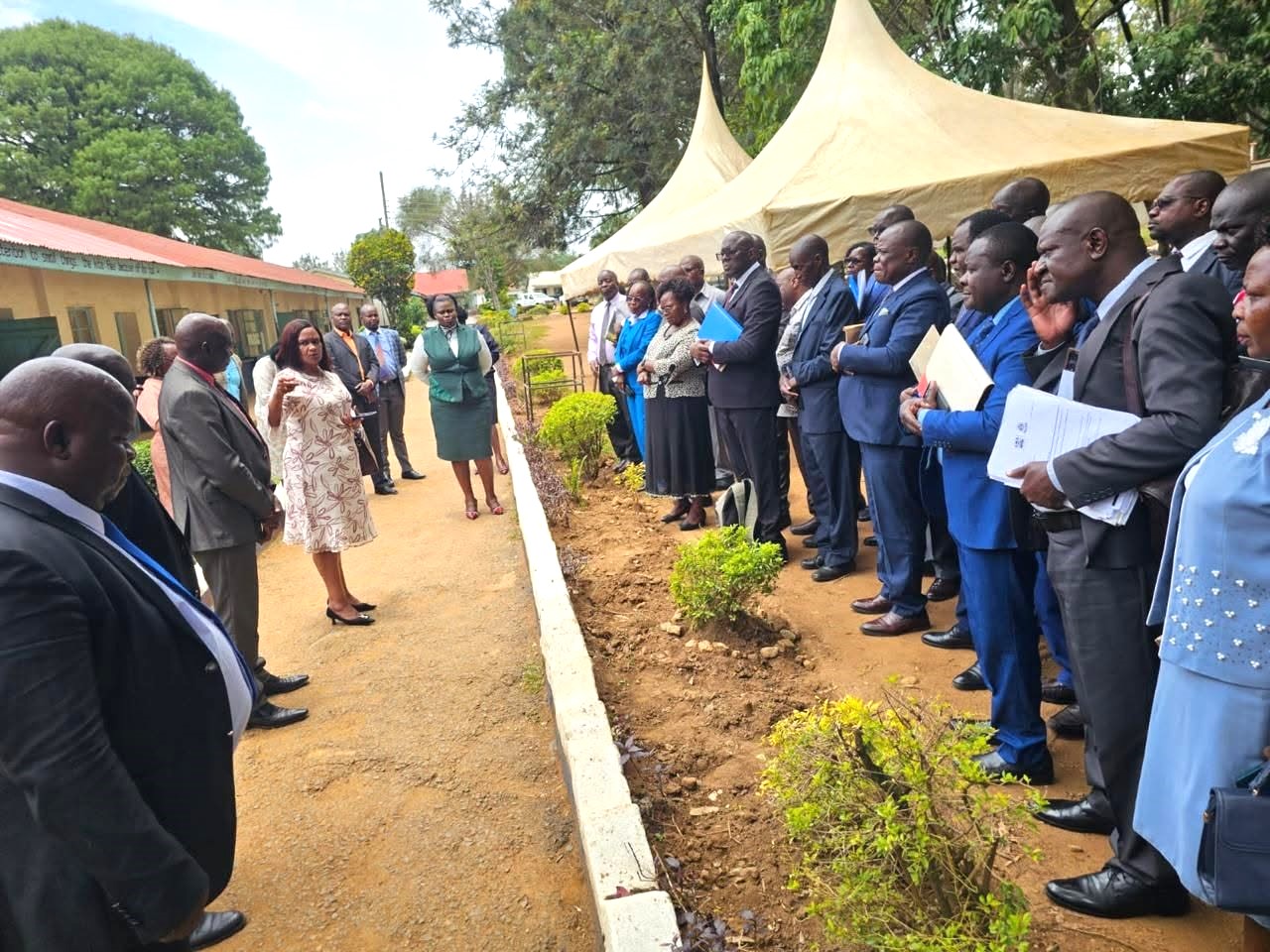
The transition became the focus of the Mt Kenya Regional Dual TVET Project Closure and Handover Meeting held in Sagana, Kirinyaga County, where government officials, TVET institutions, industry representatives, trainees and development partners reviewed the progress of the programme and considered how it can survive beyond project funding.
Twenty TVET institutions in the Mt Kenya region have participated in the programme under the Promotion of Youth Employment and Vocational Training Project, implemented through the State Department for TVET with technical support from GIZ Kenya.
The current project phase began in 2023 and is scheduled to conclude in December 2026, building on an earlier phase that ran from 2019 to 2022.
GIZ says the programme is supported by Germany and has also received co-financing from Finland and the Korea International Cooperation Agency.
The handover therefore represents more than the closure of a development project. It puts the sustainability of dual training squarely on the shoulders of the Kenyan Government and the institutions that have benefited from the programme.
Bridging college and workplace training
Under the dual model, trainees divide their learning between TVET institutions and industry, gaining theoretical knowledge in college while acquiring practical experience in actual workplaces.
The Kenya School of TVET describes Dual TVET as a model that combines classroom learning with structured hands-on training in workplaces, with the aim of aligning graduates’ skills more closely with labour-market needs.
That approach is designed to address one of the longstanding criticisms of vocational training: the gap between what learners are taught and what employers require.
The Government has been progressively expanding the model.
In 2023, the Ministry of Education reported that 20 TVET institutions in the Nairobi region were already implementing dual training, while another 63 institutions across the country were being prepared to introduce it.
But the end of external project support raises a more fundamental question: can Kenya finance and institutionalise dual training without relying on development partners to provide the technical and organisational push?
At the Sagana handover, Mt Kenya Regional Director for TVET Charles Nyota said institutions would need to strengthen their internal systems if the programme is to continue successfully.
Among the proposed measures are stronger mentorship programmes, expanding the number of institutions with trained Dual Training champions, mobilising resources through income-generating activities and improving the capacity of TVET trainers.
The sustainability question is particularly important because dual training cannot operate effectively on classroom resources alone.
It requires continuous relationships between colleges and employers, trainers who understand workplace-based learning, properly structured industrial placements and employers willing to participate in training.
Industry participation is consequently becoming as important as government financing.
For trainees, the difference can be substantial.
Former Ndia TVC student Alex Maina said workplace training enabled him to translate classroom knowledge into practical skills before completing his studies. He later secured work in water and plumbing maintenance at Masinga Dam.
Such experiences explain why Kenya is increasingly positioning dual training as part of the broader reform of TVET rather than treating it as a temporary donor-funded experiment.
Dual TVET Academy strengthens capacity
The Kenya School of TVET has already established a Dual TVET Academy intended to build institutional capacity, strengthen links between TVET institutions and industry and support implementation of industry-driven dual training programmes.
The Academy offers programmes covering areas such as course selection, acquisition of workplace training slots, implementation of Dual TVET, curriculum dualisation, assessment and certification, and training for in-company mentors.
The wider GIZ-supported programme is similarly designed around institutionalisation.
GIZ says the project seeks to establish labour-market-relevant dual vocational programmes and make dual vocational training an integral part of Kenya’s national qualification system.
This means the partner exit should not necessarily be interpreted as the end of Dual TVET.
Rather, it is a test of whether structures created during the supported phase have become sufficiently embedded in Kenya’s public TVET system.
The challenge now is to prevent dual training from becoming another reform that performs strongly while external financing and technical assistance are available but weakens once project partners leave.
Government will need to protect funding for workplace-based training, strengthen employer partnerships, continuously train TVET staff and ensure that industrial attachment becomes a structured component of training rather than an informal placement exercise.
The institutions themselves will also have to take greater ownership by developing sustainable industry partnerships and income-generating activities while maintaining the quality, assessment and certification standards expected under competency-based training.
For Kenya’s young people, the ultimate measure will not be the number of colleges that adopt the model but whether dual training produces graduates with skills that employers actually need.
The partner-supported phase has helped demonstrate what is possible.
READ ALSO:Inside TSC: What 9 commissioners do and how their decisions affect teachers
The next test is whether Kenya can make it permanent.
By Hillary Muhalya
Get more stories from our website: Education News
To write to us or offer feedback, you can reach us at: editor@educationnews.co.ke
You can also follow our social media pages on Twitter: Education News KE and Facebook: Education News Newspaper for timely updates.
>> Click here to stay up-to-date with trending regional stories