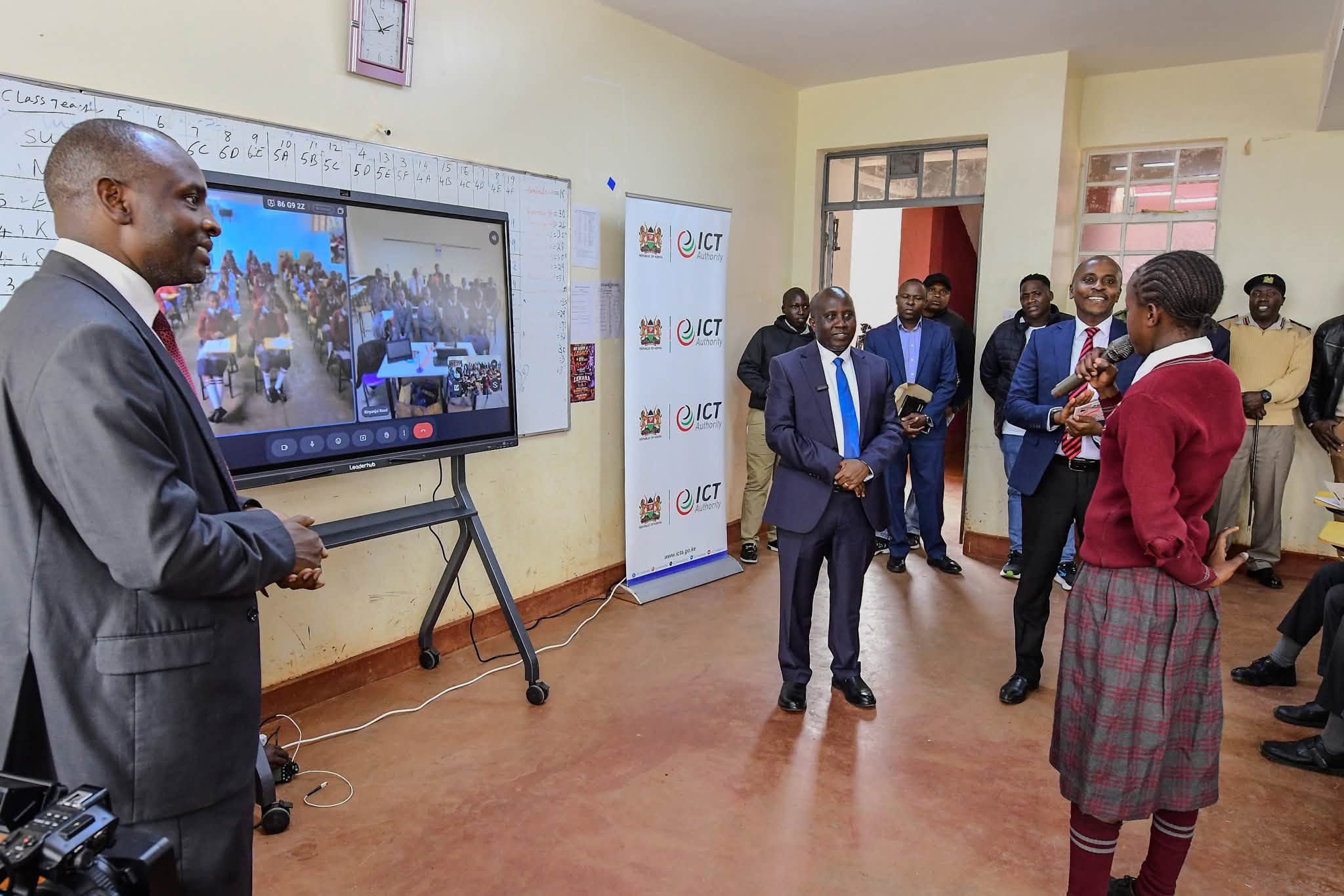
- The Govt has launched DLP Phase II, deploying teacher laptops and interactive smart boards to 10,382 public Junior Schools across all 47 counties.
- Nairobi County has achieved a 92.9 per cent completion rate, with devices delivered to all 98 targeted schools and installation completed in 91.
- PS John Tanui has led the rollout at Lenana Primary School, alongside MP John Kiarie and ICT Authority CEO Jessy Maruti
The Government has launched the second phase of the Digital Literacy Programme (DLP), beginning the deployment of teacher laptops and interactive smart boards to 10,382 public Junior Schools across all 47 counties.
The Nairobi phase of the rollout was launched at Lenana Primary School, with Principal Secretary for ICT and the Digital Economy Eng. John Tanui leading the exercise alongside Dagoretti South MP John Kiarie, Chairperson of the National Assembly Committee on Communication, Information and Innovation, and ICT Authority Chief Executive Officer Jessy Maruti. The 10,382 schools represent the national target for DLP Phase II, with the programme being implemented by the ICT Authority under the Kenya Digital Economy Acceleration Project (KDEAP). The equipment is intended to strengthen technology-supported teaching and learning by giving teachers access to laptops and classrooms access to interactive smart boards.
Nairobi County has made substantial progress in the rollout. Devices have been delivered to all 98 schools targeted in the county, while installation, inspection and acceptance have been completed in 91 schools, representing a 92.9 per cent completion rate. Lenana Primary School and other schools in Dagoretti South Constituency are among the beneficiaries.
ALSO READ:
Parents threaten legal action as Nyamira ECDE teachers’ strike enters fourth week
Training Component Aims to Ensure Effective Use of Devices
The programme is designed to go beyond the physical delivery of equipment. Teachers are being trained to use the technology effectively, with the training aimed at improving their digital skills, confidence and ability to integrate technology into classroom instruction. This component is important because placing laptops and smart boards in schools does not automatically improve learning; their impact will depend on how effectively teachers incorporate them into lesson preparation, presentation of content, assessment, research and interaction with learners.
The rollout comes at a time when technology is rapidly changing the workplace, with artificial intelligence, automation and other emerging technologies creating new opportunities while altering the skills required across many occupations. For Kenyan learners, this means digital literacy increasingly has to extend beyond knowing how to operate a device, requiring opportunities to develop the ability to find and evaluate information, solve problems, create digital content, collaborate and use technology responsibly.

The DLP can provide an important foundation for those skills by exposing learners to technology at an early stage of their education, with the skills gained potentially supporting pathways into fields including software development, cybersecurity, artificial intelligence and business process outsourcing.
Success Will Depend on Connectivity, Maintenance and Teacher Preparation
The initiative fits into the Government’s wider effort to expand digital infrastructure, connectivity and access to technology. However, the effectiveness of the school rollout will depend on conditions beyond the initial supply of equipment. Reliable electricity and internet connectivity will be necessary in schools where online resources form part of teaching, while equipment will require regular maintenance, technical support and timely replacement when devices become faulty or obsolete.
Teacher preparation will be equally important. Continuous professional development can help educators move beyond using smart boards merely to display information, and instead employ technology to support interactive teaching, differentiated instruction and learner participation. Schools will also need relevant digital content that aligns with the curriculum and complements rather than distracts from effective classroom teaching.
ALSO READ: KUPPET Nandi lauds government for doubling teacher promotion funding
The Government’s immediate challenge is therefore to complete the rollout to the 10,382 targeted public Junior Schools and ensure that the equipment reaches its intended users. The more significant measure of success will come later: whether teachers routinely use the devices, whether learners acquire stronger digital and problem-solving skills, and whether technology contributes to better classroom experiences. For Kenya’s education system, DLP Phase II represents a shift from simply supplying technology to schools towards making technology a practical tool for teaching, learning and preparing young people for an economy increasingly shaped by technological change.
By Hillary Muhalya
Get more stories from our website: Education News
To write to us or offer feedback, you can reach us at: editor@educationnews.co.ke
You can also follow our social media pages on Twitter: Education News KE and Facebook: Education News Newspaper for timely updates.
>> Click here to stay up-to-date with trending regional stories