- Education stakeholders say zonal deployment of QASOs would bring quality assurance services closer to schools.
- They argue that Competency-Based Education requires more regular monitoring, teacher support and timely intervention in schools.
- Stakeholders want clear staffing guidelines, adequate resources and stronger collaboration across the education sector.
Stakeholders in the education sector are calling on the Ministry of Education to strengthen quality assurance and standards by deploying adequate Quality Assurance and Standards Officers (QASOs) to all educational zones across the country.
Currently, QASOs are largely stationed at the sub-county level, where they are expected to oversee quality assurance across a wide geographical area and a large number of schools.
This arrangement can limit the frequency with which officers are able to visit and closely monitor individual institutions.
As the education system continues to change, there is a growing need to bring quality assurance services closer to schools.
The introduction and implementation of Competency-Based Education (CBE) makes this need even more urgent.
CBE requires close and continuous monitoring to ensure that its principles are properly implemented in classrooms.
Teachers need regular professional support and guidance on competency-based teaching, assessment, learner-centred approaches, practical learning and the development of learners’ competencies.
Recent Ministry-supported training has similarly emphasised the role of QASOs in observing lessons, providing constructive feedback and supporting teachers to implement CBE effectively, particularly in STEM subjects.
Deploying QASOs at the zonal level would enable more frequent school visits, closer monitoring of curriculum implementation and timely identification of challenges affecting teaching and learning.
It would also strengthen support for teachers and school administrators as they adapt to the requirements of CBE.
The involvement of key stakeholders — including the Ministry of Education, county and sub-county education offices, school administrators, teachers, parents, education unions and local communities — is essential in making this initiative successful.
Stakeholders can help identify staffing gaps, determine the specific needs of different zones and advocate for adequate resources to enable QASOs to perform their duties effectively.
Ministry urged to establish staffing guidelines
The Ministry should therefore consider establishing clear staffing guidelines to ensure that every educational zone has an adequate number of QASOs based on the number of schools, learner population, geographical coverage and workload.
The officers should also be provided with adequate transport, office facilities, digital tools and operational resources to facilitate regular monitoring and professional support.
The Ministry’s current quality-assurance framework recognises QASOs as central to maintaining standards in basic education, while the National Education Sector Strategic Plan provides for aligning quality assurance with competency-based education and strengthening officers’ capacity for school support.
A shift from relying primarily on sub-county-based quality assurance to a stronger zonal presence would bring education oversight closer to schools and communities.
It would allow emerging challenges to be identified and addressed promptly while strengthening accountability and continuous improvement in the education system.
As CBE places greater emphasis on competencies, continuous assessment, learner participation and practical application of knowledge, quality assurance can no longer be an occasional exercise.
It requires regular, accessible and supportive monitoring at the school level.
The deployment of QASOs to zonal levels should therefore be treated as a shared priority by all education stakeholders.
READ ALSO: Busia County, World Vision partner to strengthen school feeding programme
Strengthening the zonal quality assurance structure will provide the close monitoring and professional support necessary for effective implementation of CBE and, ultimately, better learning outcomes for learners across the country.
By John Chesiya
Get more stories from our website: Education News
To write to us or offer feedback, you can reach us at: editor@educationnews.co.ke
You can also follow our social media pages on Twitter: Education News KE and Facebook: Education News Newspaper for timely updates.
>> Click here to stay up-to-date with trending regional stories
Photo caption
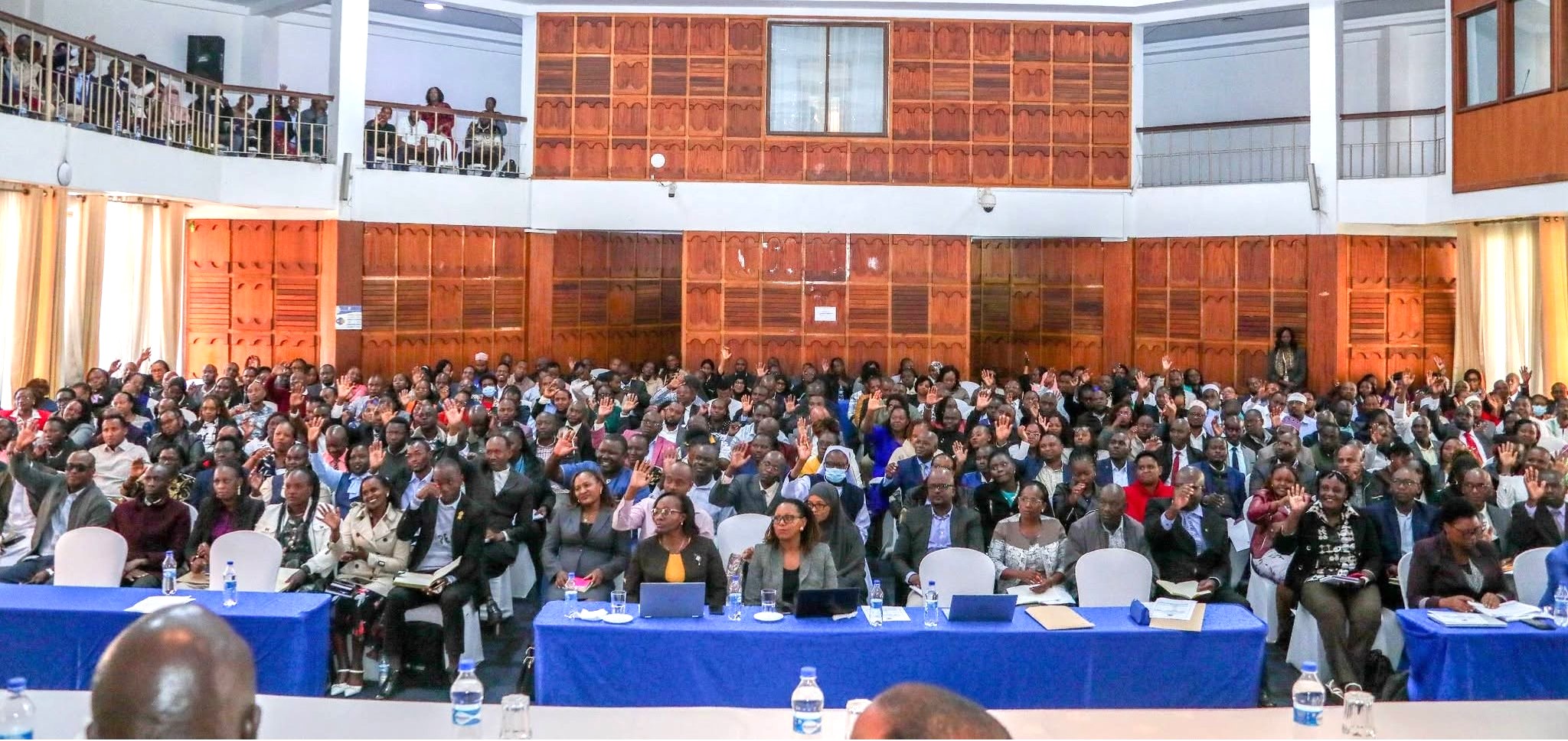
Quality Assurance and Standards Officers participate in a professional training session. Education stakeholders are calling for more QASOs to be deployed closer to schools to strengthen monitoring and support for CBE implementation. Photo/File