- MoE should issue a directive limiting ordinary Board of Management meetings to one to two hours, reserving longer sittings for exceptional matters.
- Muhalya has called for stronger criteria in selecting and inducting board members, arguing that membership should reflect competence and judgement rather than availability.
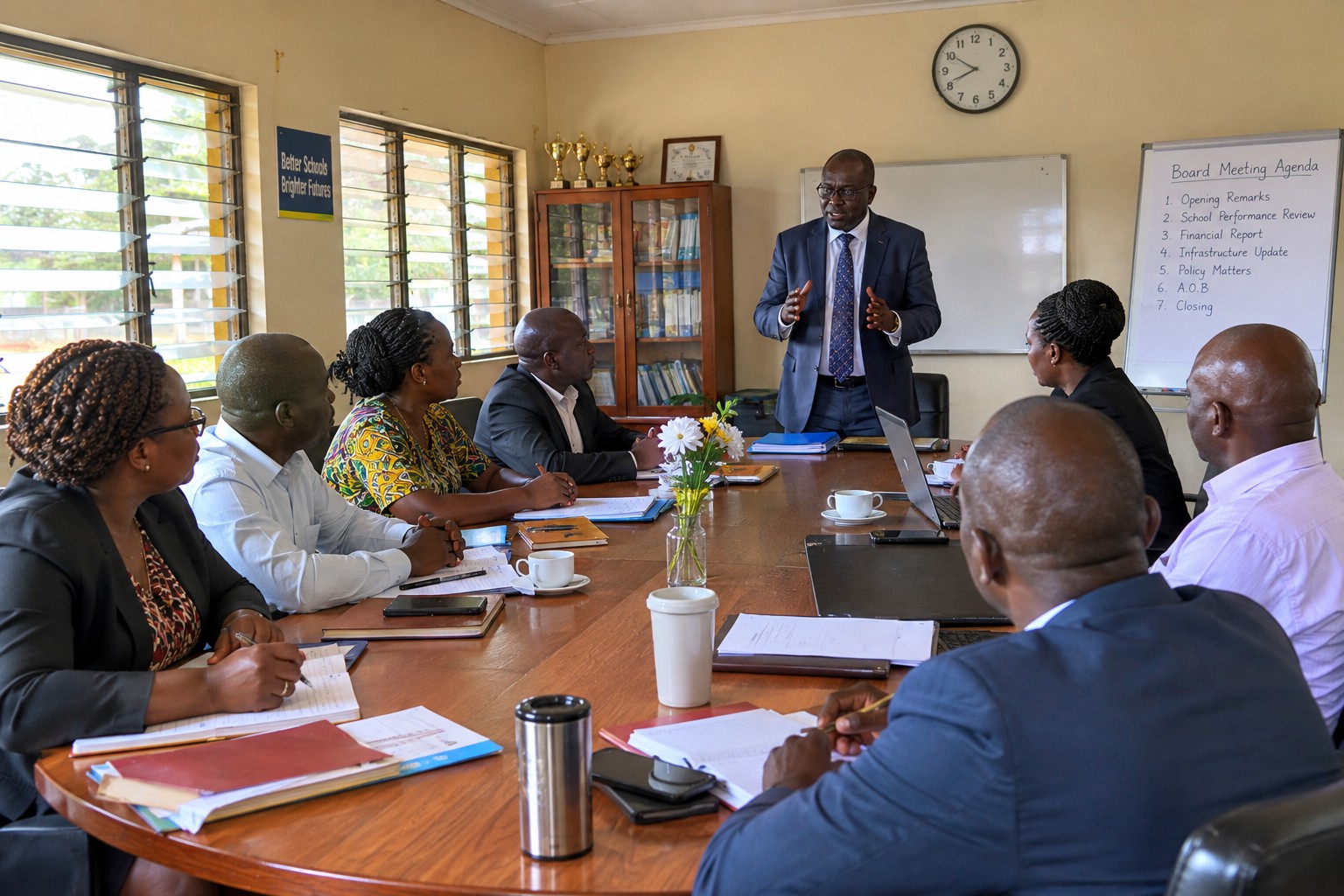
There should be no prize for the school whose Board of Management sits the longest. The Ministry of Education (MoE) should consider issuing a clear directive that ordinary school Board of Management meetings should ordinarily be completed within one to two hours, with longer sittings reserved for exceptional matters that genuinely require extended deliberation. A board meeting is a governance forum, not an endurance test.
In some schools, meetings begin in the morning and continue into the afternoon or evening, sometimes with discussions repeatedly circling the same issues. Important matters can get buried under lengthy speeches, personal disagreements, unrelated contributions and arguments that appear to continue simply because there is time to fill. The Ministry should address this culture by making time-bound meetings part of proper school governance.
The argument is not that important matters should be rushed. A board dealing with a major audit concern, serious disciplinary case, significant infrastructure project or other complex issue may legitimately require additional time, but such situations should be exceptions, not the standard operating procedure for ordinary board business. If routine school governance requires an entire day, the problem may be the organisation of the meeting rather than the complexity of the agenda. Some arguments arise because members have too much idle time, inadequate preparation or insufficient understanding of their mandate, and once a meeting loses structure, discussions can drift, settled matters can be reopened, and minor disagreements can consume disproportionate amounts of time.
The Quality of Board Membership Matters
This is partly linked to the quality of board membership. In some schools, people appear to be chosen because there is nobody else readily available rather than because they possess the competence, experience or judgement required for effective governance. That should not be the standard. A Board of Management oversees matters involving school finances, infrastructure, discipline, strategic planning, accountability and learner welfare. Members do not all have to be education specialists, but they should be capable of understanding reports, asking informed questions, scrutinising proposals and making decisions in the interests of the school. Board membership should be a responsibility, not a consolation prize for lack of alternatives.
The Ministry should therefore strengthen the criteria for selecting and inducting board members. Communities should be encouraged to identify people who can contribute professional knowledge, integrity, experience and sound judgement. Once appointed, members should receive proper induction on their mandate, responsibilities and limits of authority, understanding that a board provides oversight and strategic direction rather than taking over the day-to-day running of the school from the headteacher or principal.
ALSO READ:
A Practical Two-Hour Structure
The chairperson must ensure that the meeting operates within its mandate and agreed timetable. Preparation should begin before members enter the boardroom, with the agenda and supporting papers circulated early enough for members to study them. Members should not use meeting time to read documents for the first time or seek explanations for information that could have been clarified beforehand. The chairperson should allocate time to each agenda item and move discussions towards decisions. A practical two-hour structure could provide the discipline required without preventing meaningful debate.
A Practical Two-Hour BoM Meeting Template
0–10 minutes: Opening and agenda
- Attendance and apologies
- Confirmation of the previous minutes
- Declaration of conflicts of interest
- Adoption of the agenda
10–30 minutes: Matters arising
- Review outstanding action points
- Confirm completed actions
- Identify unresolved matters
30–60 minutes: Headteacher’s or principal’s report
- Academic performance
- Learner welfare and discipline
- Staffing and operational matters
- Major achievements and challenges
- Issues requiring board decisions
60–90 minutes: Finance, projects and governance
- Financial reports
- Expenditure and procurement requiring approval
- Infrastructure and development projects
- Audit and accountability matters
- Other substantive governance issues
90–110 minutes: Decisions and resolutions
- Debate key proposals
- Record decisions
- Assign responsibilities
- Set implementation timelines
110–120 minutes: Closure
- Confirm action points
- Address only genuinely urgent additional business
- Confirm the next meeting
- Closing
The template should not become a rigid straitjacket. Its purpose is to demonstrate that most ordinary business can be handled within a structured period when members are prepared.
ALSO READ: Banditry disrupts learning along Turkana-West Pokot border as enrolment plunges
Curbing the Misuse of “Any Other Business”
The Ministry should also discourage the misuse of “any other business.” It should not become an opportunity to introduce a dozen new subjects at the end of every meeting. Members with substantive matters should notify the chairperson in advance so that the issue can be properly listed and supporting information prepared. Where an issue requires extensive examination, it should be referred to the appropriate board committee and brought back with a recommendation. There is little justification for keeping an entire board seated for hours while a small group examines a technical matter, and equally little justification for allowing every disagreement to become an extended argument.
Good boards should disagree. They should question school management, scrutinise expenditure and challenge proposals where necessary, since robust debate is an important part of governance. But productive disagreement must eventually produce a decision, a resolution or a defined next step. Arguments that continue merely because members have time to spare serve neither the school nor the learners.
There is also a practical consideration. Board members are volunteers who may have employment, businesses, family responsibilities and other community obligations. Holding them in school from morning to evening imposes unnecessary demands on their time, particularly where much of the agenda consists of routine matters. Long meetings can also undermine decision-making, as fatigue sets in, concentration declines and patience diminishes. A focused two-hour meeting can produce better decisions than an eight-hour sitting characterised by repetition and distractions.
ALSO READ: Registration trap: Why schools remain stuck between provisional and full approval
The Ministry should therefore establish a simple governance principle: ordinary board business should ordinarily take one to two hours, while exceptional business may take longer, but the reason should be clear and recorded. This would not prevent boards from dealing with serious matters; instead, it would encourage them to distinguish between issues requiring detailed examination and matters that can be resolved quickly. The Ministry should also consider monitoring meeting practices through school governance audits, not merely checking whether meetings have been held. Boards should be assessed on whether agendas are prepared, minutes accurately capture decisions, action points are followed up and meetings remain within reasonable limits.
Ultimately, the issue is bigger than the length of a meeting. It is about the quality of governance in Kenya’s schools. A properly constituted board, equipped with competent members, adequately briefed and firmly chaired, should not need an entire day to demonstrate that it is doing its job. The test of a good board is not how long its members sit around the table; it is whether they ask the right questions, make sound decisions and ensure those decisions are implemented. The Ministry should therefore end the culture of board meeting marathons. Kenya’s schools need decision-makers, not professional meeting sitters. A board should leave the meeting with decisions to implement, not hours to explain.
By Hillary Muhalya
Get more stories from our website: Education News
To write to us or offer feedback, you can reach us at: editor@educationnews.co.ke
You can also follow our social media pages on Twitter: Education News KE and Facebook: Education News Newspaper for timely updates.
>> Click here to stay up-to-date with trending regional stories