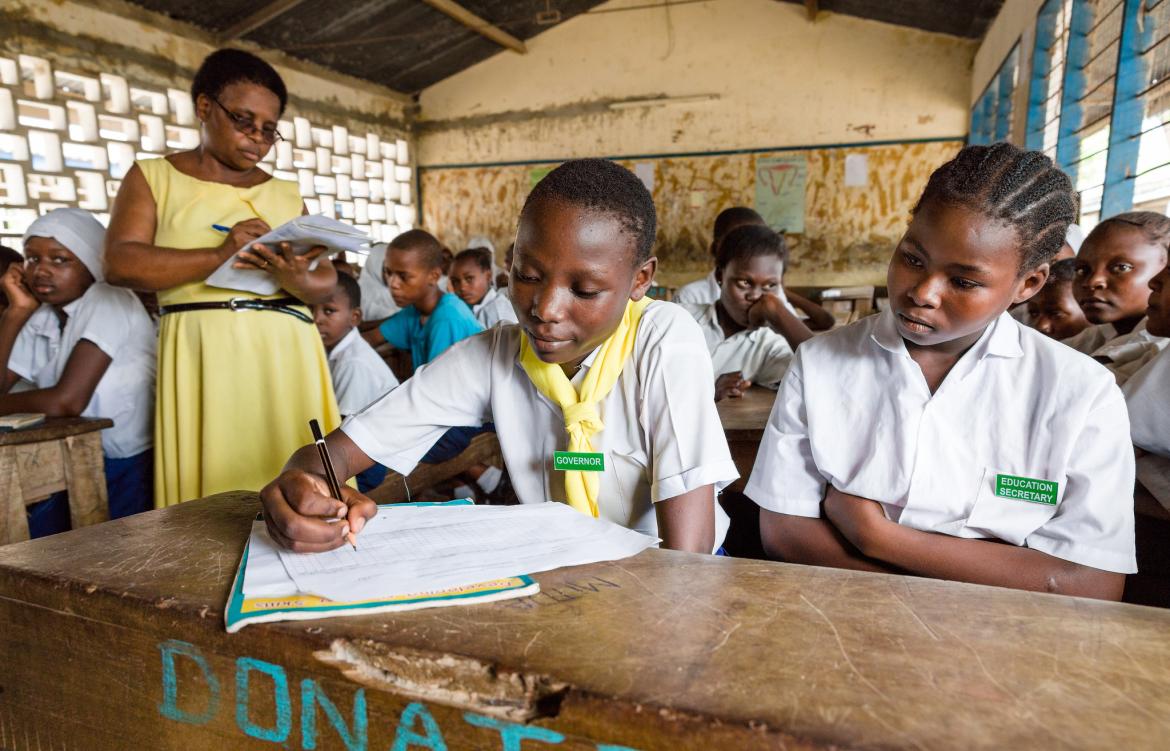
- Reading performance among 15-year-olds has fallen sharply across OECD countries, reaching the lowest PISA average recorded.
- PISA 2025 also identifies more “hasty readers” and links excessive digital distraction with weaker learning outcomes.
- Kenya’s first participation offers an opportunity to examine whether learners can understand, evaluate and apply information effectively.
A troubling education crisis is unfolding across the world: young people are spending more time consuming information, yet increasingly struggling to read, understand and analyse it deeply.
The latest Programme for International Student Assessment (PISA) results have sounded an international alarm, with reading performance among 15-year-olds declining across many industrialised countries.
Across OECD countries, average reading performance fell by 14 points between 2022 and 2025 — the largest decline between two PISA rounds. Reading scores have fallen by 28 points since 2015, equivalent to about one-and-a-half years of learning.
The problem is not simply that students are scoring lower.
The assessment suggests that young people are finding longer and more complex texts increasingly difficult to navigate. Of particular concern is their ability to evaluate information and make connections across multiple sources.
Researchers also identified an increasing proportion of what they describe as “hasty readers” — students who move rapidly through texts but are more likely to answer questions incorrectly.
The proportion of such readers almost doubled from 6.6 per cent in 2018 to 11.4 per cent in 2025, while the proportion of accurate and fluent readers declined by seven percentage points.
That finding could have consequences far beyond the classroom.
In a world increasingly dominated by smartphones, social media, instant information and artificial intelligence, the ability to concentrate on a difficult text for an extended period is becoming an educational asset in its own right.
PISA data show that teenagers are spending more time on social networks. Since 2022, the proportion spending more than an hour a day on social media has increased by almost six percentage points.
Artificial intelligence is adding another layer to the debate.
PISA found that students who reported using AI to draft text for writing assignments performed less well than those who did not. However, the OECD cautions against treating this as evidence that AI itself causes poorer performance. It also found that frequent AI users who used the technology to support learning and had been taught to evaluate AI-generated information tended to perform better than those without such guidance.
That raises an uncomfortable question for education systems everywhere: Are students becoming better at producing answers while becoming less capable of doing the thinking required to produce those answers themselves?
The warning is particularly significant because the decline is not restricted to one country.
Across the OECD, one in five 15-year-olds is now a low performer in reading, mathematics and science, compared with 16 per cent in 2022.
This suggests that the challenge facing education systems is not simply raising averages. It is ensuring that struggling learners receive the support necessary to keep pace with their peers.
PISA tests application, not just recall
PISA differs from many traditional examinations because it focuses heavily on what students know and can do with their knowledge.
The 2025 assessment covered science, reading, mathematics and computational problem-solving, examining how effectively learners apply knowledge to real-world challenges.
The assessment therefore provides a glimpse into whether education systems are preparing young people to think with knowledge rather than merely remember it.
The global warning arrives at an important moment for Kenya.
Kenya was among the first-time participants in PISA 2025, alongside Armenia, Dushanbe in Tajikistan, Ecuador, the Kurdistan Region of Iraq, Rwanda and Zambia. More than 760,000 students across 91 countries and economies participated in the assessment.
This gives the country an opportunity to compare the performance of its 15-year-olds internationally and, more importantly, identify where its education system needs greater attention.
Kenya should resist the temptation to treat PISA simply as another international ranking.
The bigger question is whether Kenyan learners can read a complicated passage, identify its central argument, compare information from different sources, distinguish evidence from opinion and reach their own conclusions.
That question goes directly to the heart of Competency-Based Education (CBE).
CBE seeks to strengthen competencies such as critical thinking, communication, creativity, collaboration and problem-solving. But these ambitions depend heavily on strong literacy.
A learner cannot think critically about information that he or she cannot understand.
Technology must remain a tool
The rapid expansion of digital learning makes the issue even more urgent.
Kenya should not treat technology as the enemy. Digital resources, educational platforms and AI can improve access to knowledge and support teachers and learners.
But technology must remain a tool for learning, not a replacement for learning.
If a learner routinely asks AI to write an essay, solve a problem or summarise a book without engaging with the underlying material, the immediate assignment may be completed — but the deeper competency may never develop.
The OECD reaches a similarly nuanced conclusion. Moderate use of digital devices for learning can be associated with stronger outcomes, but excessive use and classroom distraction are associated with poorer performance. More than one in four students reported that classmates were distracted by digital devices in most or every science lesson.
Schools therefore need to protect sustained reading.
Learners should encounter novels, textbooks, newspapers, research materials and extended passages that require patience and concentration. They should be challenged to read beyond the short posts, captions and snippets that dominate much of the digital environment.
Reading must also become a responsibility shared across the curriculum.
Science learners must understand scientific texts. Mathematics learners must interpret complex problems. Social studies learners must analyse evidence and competing accounts.
Every teacher is, in effect, a teacher of literacy.
Parents also have an important role. Reading for pleasure at home can help children develop vocabulary, concentration, imagination and confidence with increasingly complex material.
Kenya must strike the right balance
The lesson from PISA is not that Kenya should abandon technology and return to a purely traditional classroom.
It is that education must strike the right balance.
Children need digital skills, but they also need the patience to read a difficult book. They need AI literacy, but they also need the ability to think independently. They need access to information, but they must learn how to determine whether that information deserves to be trusted.
Kenya’s participation in PISA provides an opportunity to examine whether its education reforms are producing learners equipped for this new reality.
The ultimate measure of literacy is not whether a child can read words on a screen.
It is whether the child can understand, question, analyse and use what those words mean.
The world may be entering an age of unprecedented access to information. Kenya must ensure that its children do not become a generation that can scroll through everything — but understand very little.
By Hillary Muhalya
Get more stories from our website: Education News
To write to us or offer feedback, you can reach us at: editor@educationnews.co.ke
You can also follow our social media pages on Twitter: Education News KE and Facebook: Education News Newspaper for timely updates.
>> Click here to stay up-to-date with trending regional stories