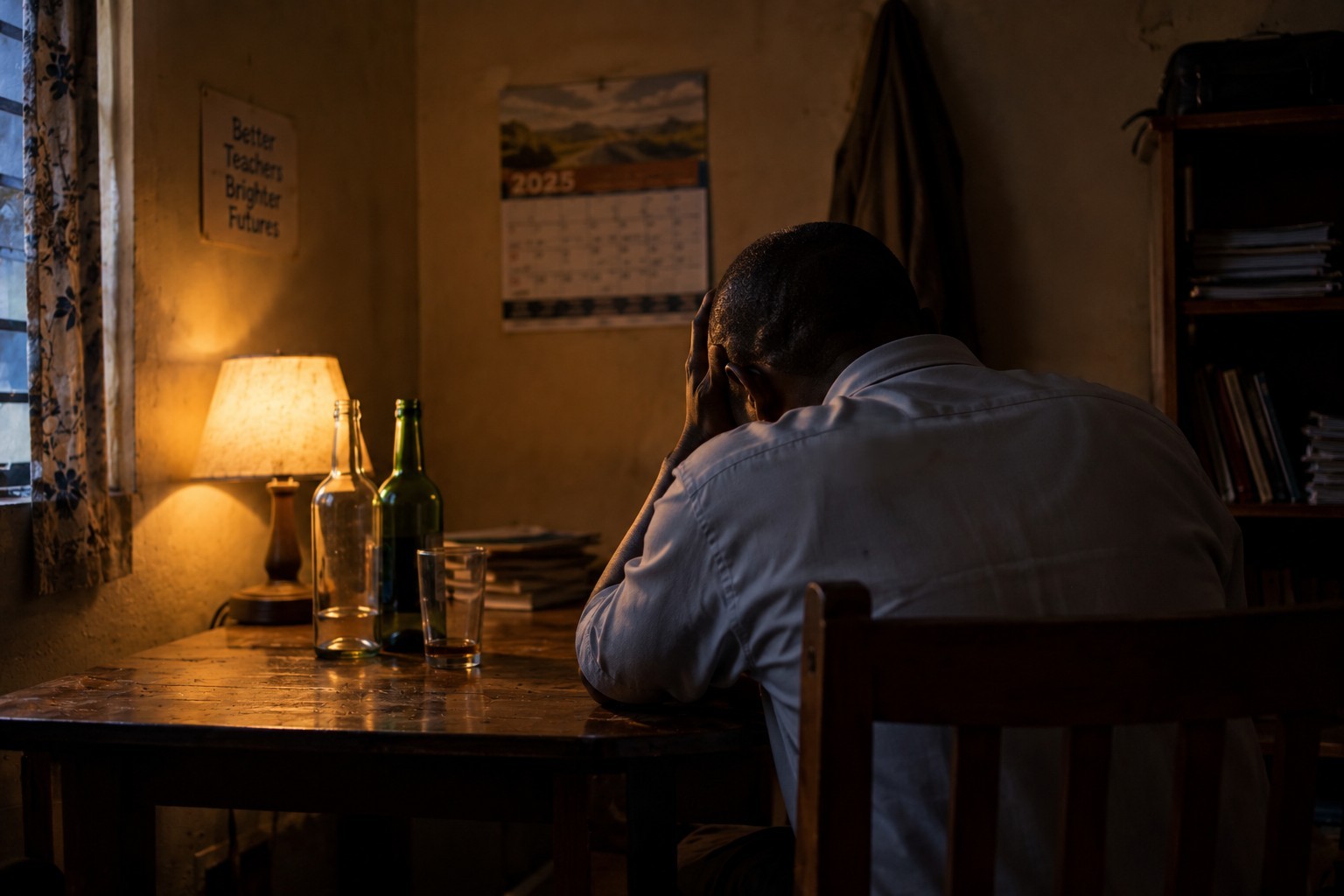
- Teachers battling alcohol dependence need treatment, support and a second chance rather than condemnation or disciplinary punishment alone.
- TSC’s wellness framework has been credited with recognising alcoholism as a workplace concern, though counties and sub-counties have been urged to make wellness services more accessible at the grassroots.
- Administrators, colleagues and families have been called upon to intervene early and supportively, while addressing financial pressure and stigma as key factors affecting recovery.
The disturbing reports about counterfeit and illicit alcohol in Kenya should not merely provoke outrage for a few days. They should force us to confront a deeper national problem: what are we doing to protect our people from an alcohol menace that is destroying lives, families and livelihoods? The teaching profession is not an exception. Teachers are expected to be role models, mentors, counsellors, curriculum implementers and custodians of values. Yet behind some classroom doors are teachers fighting battles that learners and colleagues may never see. One of those battles is alcohol dependence. This is an uncomfortable conversation, but one we can no longer avoid.
Alcohol-related problems should not automatically be reduced to indiscipline or moral failure. Alcohol is a psychoactive and dependence-producing substance, and the World Health Organisation links harmful use to health, mental-health, family, financial and workplace problems. The teacher who is struggling therefore needs more than condemnation. The teacher needs help.
TSC Has Taken an Important Step
The Teachers Service Commission deserves credit for recognising alcoholism and substance abuse as workplace-wellbeing concerns. TSC’s employee-wellbeing framework provides for prevention, treatment, management and mitigation of alcohol and drug-related problems, and its guidance also recognises rehabilitation as part of the intervention available to affected teachers. This is important. For some teachers, rehabilitation has provided a second chance, a chance to recover, return to work, rebuild relationships and reclaim their dignity. But there is an important question we must now ask: how do we bring wellness services closer to the teacher? TSC’s existing guidance already envisages intervention involving school administrators, county and sub-county structures and the Commission’s wellness function. It is therefore time to strengthen wellness services at the grassroots. A teacher in a remote school should not feel that professional help is a distant service available only at headquarters. County and sub-county wellness structures should be adequately staffed, visible, confidential and accessible. Wellness must move closer to where the teacher works.
There is no single answer to why teachers drink. Teachers, like other professionals, face stress, financial obligations, family responsibilities, relationship problems, bereavement, workplace conflicts, loneliness, burnout and emotional exhaustion. Some may begin drinking socially; for others, alcohol gradually becomes a coping mechanism. A difficult day becomes a drink, a difficult week becomes several drinks, and eventually drinking becomes a way of escaping problems rather than solving them. This is why we must ask a struggling teacher not only “why are you drinking?” but also “what are you going through?” That question may reveal the real problem. Of course, personal responsibility remains important, and teachers must make responsible choices. But prevention requires us to understand the circumstances that can increase vulnerability.
ALSO READ:
Architects Association challenges members to embrace AI in construction design
School administrators are often the first to notice changes in a teacher: persistent lateness, absenteeism, declining lesson preparation, poor classroom performance, changes in behaviour and deteriorating relationships. These signs should not simply be ignored until they become disciplinary cases, and administrators should not humiliate affected teachers either. There is a difference between accountability and abandonment. An administrator should be firm about professional standards while also knowing when a teacher needs counselling, medical intervention or rehabilitation. TSC guidance recognises the role of heads of institutions in advising affected teachers, involving appropriate family members or trusted persons and facilitating professional intervention. The administrator should therefore be neither an executioner nor an accomplice, but a bridge to help.
Colleagues, Families and the Financial Dimension of Recovery
The staffroom can become either a place of recovery or a place of destruction. Colleagues should not laugh at a teacher’s drinking problem, give the teacher money for alcohol, cover up repeated absenteeism, or normalise destructive drinking as simply “part of teacher life.” But neither should they turn the problem into staffroom gossip. TSC guidance specifically cautions teachers against condemning affected colleagues, covering up their absenteeism or enabling their drinking, and instead encourages supportive intervention and connection to recovery support. Sometimes intervention can begin with a simple conversation: “I have noticed that you have not been yourself lately. Is everything okay? Can we find someone to talk to?” That conversation could be the beginning of recovery.
Alcoholism rarely destroys only the person drinking. It enters the household, consumes money, creates mistrust, affects spouses and children, and can contribute to conflict and violence. The teacher may arrive at school carrying the consequences of what happened at home the previous night. Families therefore have an important role in prevention and recovery, but supporting an affected teacher does not mean excusing destructive behaviour. It means combining love with accountability and compassion with boundaries. Professional help should be sought before the situation reaches a point of no return.
We cannot discuss teacher wellbeing while ignoring financial wellbeing. Debt, financial pressure and inability to meet family obligations can produce enormous emotional strain. This does not mean financial problems automatically cause alcohol dependence; they do not. But financial stress can become one of the pressures that push vulnerable individuals towards unhealthy coping mechanisms. Teacher-wellness programmes should therefore include financial literacy, responsible borrowing, savings, investment awareness and debt-management education. A teacher who is financially organised is better placed to concentrate on the core business of education.
Perhaps one of the greatest obstacles to recovery is the label. Once a teacher is branded “an alcoholic,” every mistake may be blamed on alcohol, the teacher becomes the subject of jokes, colleagues lose confidence in the teacher, the family loses hope, and eventually the teacher may begin believing the label too. Recovery requires accountability, but it also requires dignity. A teacher who completes rehabilitation should be allowed to return to professional life without carrying a permanent social sentence. Rehabilitation should restore a life, not merely stop a drinking habit.
ALSO READ: Probe launched as Murang’a teacher found dead in rented house days after going missing
Rehabilitation is essential, but we should not wait until a teacher has lost control before we intervene. TSC should strengthen preventive wellness programmes across counties, giving teachers access to confidential counselling and early screening, training administrators to recognise warning signs, and establishing clear referral mechanisms in schools. Professional development should also address stress management, emotional resilience, financial wellness, grief, relationships and healthy coping mechanisms. We must create an environment where asking for help is not interpreted as weakness.
The current concern over counterfeit and illicit alcohol should also be treated as a public-health issue. WHO notes that alcohol contributes to millions of deaths globally and is associated with more than 200 diseases, injuries and health conditions, with harm extending beyond the drinker to families, workplaces and communities. Kenya therefore needs sustained action against illicit alcohol alongside stronger prevention, treatment and rehabilitation services. But enforcement alone will not solve the problem; we must address availability, affordability, social acceptance, treatment access and the circumstances that make harmful drinking attractive.
The question should no longer be “how do we punish the alcoholic teacher?” The better question is “how do we prevent teachers from falling into alcohol dependence, identify those at risk early, treat those already affected and help recovering teachers rebuild their lives?” TSC has laid an important foundation through its wellness policies and rehabilitation pathways. Now that foundation must reach the ground. Let county and sub-county wellness services become genuinely accessible. Let administrators become early-warning systems. Let colleagues intervene without enabling or humiliating. Let families participate in recovery. Let teachers receive support to manage financial and emotional pressures. And let us remember something fundamental: a teacher battling alcohol dependence is still a human being before being a disciplinary case. The teacher needs accountability, treatment, support and a second chance. Because when we save the teacher, we are not merely saving an employee.
ALSO READ: Why we have put our children at risk through online browsing
We are saving a family, protecting a classroom, safeguarding learners and preserving the dignity of a profession. If Kenya wants teachers to effectively deliver the curriculum, mentor learners and model responsible citizenship, then Kenya must also invest in the wellbeing of the people standing at the front of our classrooms. A better education system begins with a healthier teacher, and saving the teacher may be one of the most important investments we can make in the future of our children.
By Astiba Kebongo
Get more stories from our website: Education News
To write to us or offer feedback, you can reach us at: editor@educationnews.co.ke
You can also follow our social media pages on Twitter: Education News KE and Facebook: Education News Newspaper for timely updates.
>> Click here to stay up-to-date with trending regional stories