- Parliamentary committee wants association to explain how funds collected from public schools are managed.
- Auditors questioned transfers after finding no assurance of transparent financial controls at the association.
- MPs say nationwide contributions could amount to billions of shillings across public secondary schools.
The National Assembly’s Public Investments Committee on Governance and Education will summon officials of the Kenya Secondary School Heads Association (KESSHA) to explain how millions of shillings contributed by public secondary schools are spent.
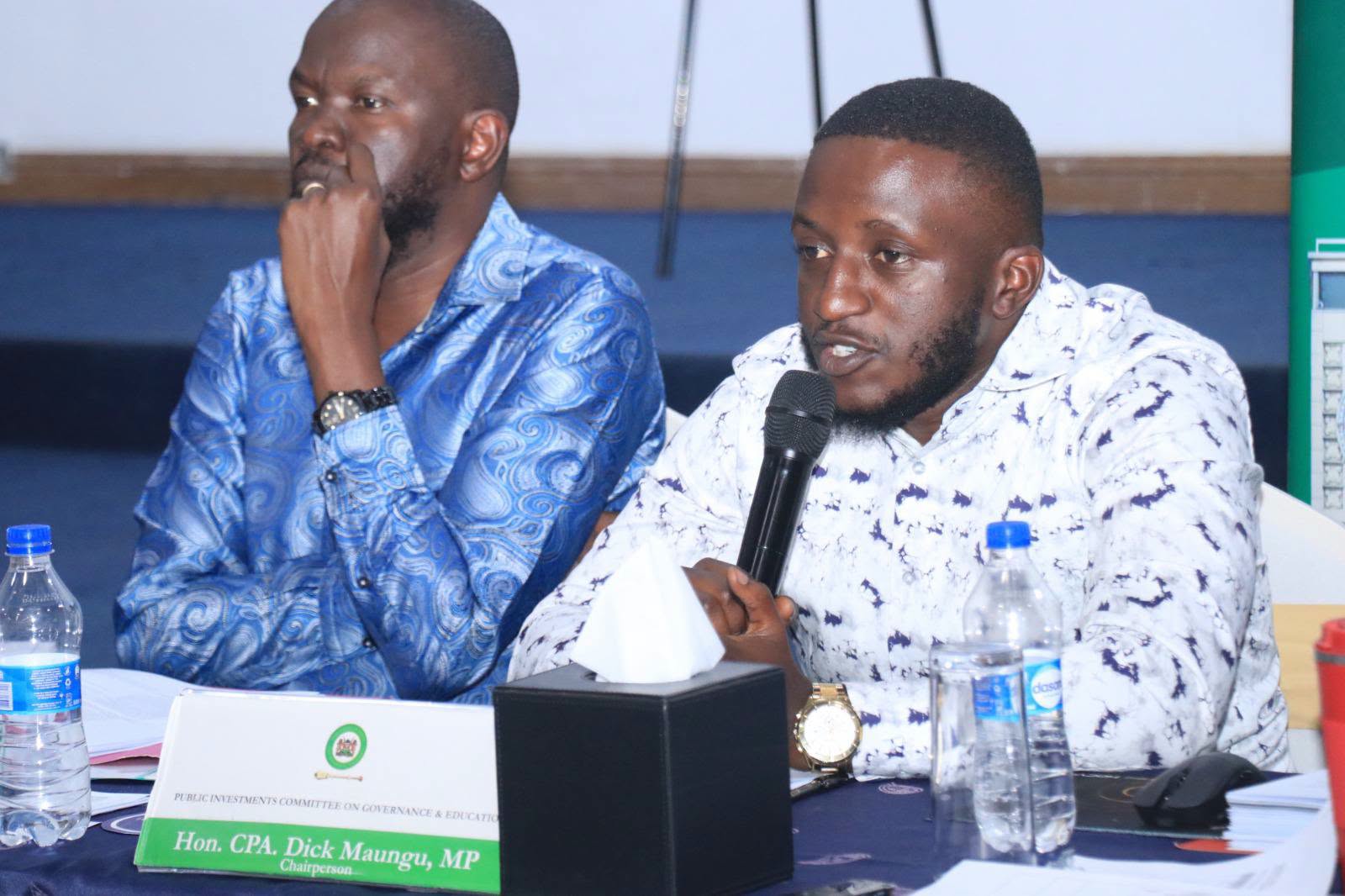
The committee, chaired by Luanda MP Dick Maungu, wants the association to account for funds received from schools after auditors flagged direct payments to KESSHA as irregular.
The inquiry could widen into a nationwide examination of money flowing from public schools to the association, with the committee warning that contributions could run into billions of shillings if aggregated across the country.
The issue emerged during the committee’s retreat at the Royal Swiss Hotel in Kisumu, where it is examining Auditor-General’s reports for selected high schools for the 2020/21 to 2024/25 financial years.
An audit of Asumbi Girls High School provides an example of the payments under scrutiny. According to the Auditor-General’s report for the year ended June 2024, the school transferred Sh1.247 million to KSSHA.
The Auditor-General questioned the payment, noting that KSSHA is a welfare organisation whose membership comprises school principals and which is not defined within the government funding system.
The audit found no assurance that KSSHA had effective, efficient and transparent financial management and internal control systems for managing funds transferred by schools.
The payment was found to contravene Regulation 23(2)(c) of the Public Finance Management (National Government) Regulations, 2015, which requires an accounting officer to obtain written assurance from an entity before transferring funds to it.
“Management was in breach of the law, and the value for money realized from the expenditure of Sh1,247,220 could not be confirmed,” the Auditor-General said.
Asumbi Girls High School Chief Principal Linet Pino Sati told MPs that the money was used to finance co-curricular activities.
“The funds transferred to KESSHA are for conducting co-curricular activities. Each year KESSHA sends requests to schools for funding the budget for co-curricular activities and Asumbi Girls High School is not exempted,” Ms Sati said.
Maseno School Principal Peter Owino Otieno similarly defended the payments, saying they supported student welfare and participation in sports, drama, music and other competitions.
“The payments were purely for student welfare and co-curricular activities,” Mr Owino said, adding that failure to pay could lock students out of regional and national competitions.
Nyabururu Girls High School Principal Joyce Orioki said KSSHA also coordinates activities at grassroots and zonal levels, with contributions generally calculated according to student enrolment.
She acknowledged, however, that the association’s accounts were not audited, an issue she said needed to be addressed.
MPs question legal basis for payments
But Maungu said the explanations raised more questions because KSSHA is a private members’ organisation receiving money from public institutions.
“What is coming out clearly is that most of these schools contribute money to an organisation known as KSSHA,” he said.
One school examined by the committee had paid about Sh6 million to KSSHA over five years, while another had paid approximately Sh5 million.
“These are billions if you convert them into all the schools in the country,” Maungu said.
“We want to find out whether KSSHA is a recipient of public money and whether the activities they are undertaking are audited by the Auditor-General.”
Kiminini MP Maurice Kakai Bisau described KSSHA as a private club and questioned why public schools should transfer funds to an organisation outside the formal government structure.
“KSSHA remains a private club managed by members of the teaching fraternity,” Bisau said.
Lunga Lunga MP Chiforomodo Mangale said the committee must establish the legal basis for the payments.
“We must start from the point of understanding how these funds are transferred. KSSHA is an association for teachers and school heads, but it has no direct relationship with government,” he said.
KSSHA officials to face committee
Maungu said the committee was not questioning the importance of co-curricular activities but the legality and accountability of the funding mechanism.
“The education activities may be good and necessary, but that does not mean public funds can be transferred outside the framework of the law,” he said.
The committee will summon KSSHA officials to explain the association’s legal status, its relationship with the Ministry of Education, the amount of money received from public schools and how the funds are accounted for.
READ ALSO: Study finds English dominating mother-tongue instruction in early grade classrooms
Parliament’s current records confirm Maungu as chairperson of the Public Investments Committee on Governance and Education, with Bisau and Mangale among its members. Parliament also lists Maungu as Luanda MP, Bisau as Kiminini MP and Mangale as Lunga Lunga MP.
By Our Reporter
Get more stories from our website: Education News
To write to us or offer feedback, you can reach us at: editor@educationnews.co.ke
You can also follow our social media pages on Twitter: Education News KE and Facebook: Education News Newspaper for timely updates.
>> Click here to stay up-to-date with trending regional stories