- 330 Kenyan secondary schools have received zero Grade 10 learners, and 2,400 more have admitted fewer than 20, despite the country having more Senior School places than transitioning learners.
- CS Ogamba has confirmed the 330 figure before the Senate, while learners have concentrated heavily on schools with established reputations and facilities.
- The government has not committed to closing the affected schools but has signalled that continued zero or low enrolment could force restructuring, mergers, teacher redeployment or eventual closure.
Kenya’s first transition to Senior School under the Competency-Based Education (CBE) system has produced a startling reality that could reshape the country’s education landscape: 330 secondary schools received no Grade 10 learners, while another 2,400 schools admitted fewer than 20. The numbers have opened a difficult national conversation about the future of schools that have suddenly found themselves without a viable Grade 10 intake. While the government has not announced that the 330 schools will automatically be closed, merged or scrapped, their future could become increasingly uncertain if the low enrolment persists into subsequent cohorts; a school that repeatedly receives no learners cannot remain unaffected indefinitely.
Education Cabinet Secretary Julius Migos Ogamba disclosed in the Senate that 330 secondary schools had received zero Grade 10 learners, while 2,400 others received fewer than 20. The revelation came against the backdrop of approximately 1.13 million Grade 9 learners transitioning to Senior School, compared with about 2.4 million available places across the country. This means Kenya did not have a shortage of Senior School spaces; it had a distribution problem. There were more than enough places nationally, but learners did not distribute themselves evenly among schools. Instead, thousands concentrated on institutions they considered attractive, leaving some heavily oversubscribed while others struggled to form even a single Grade 10 class.
That development has exposed one of the biggest challenges facing the new CBE era: learner choice can empower families, but it can also expose weaknesses between schools. Under the new Senior School arrangement, learners were given greater freedom to select institutions and pathways matching their interests and aspirations, and many naturally gravitated towards schools with established reputations, strong examination histories, better-known facilities, boarding opportunities and perceived academic advantages.
ALSO READ:
Government upgrades TVET equipment to drive economic transformation
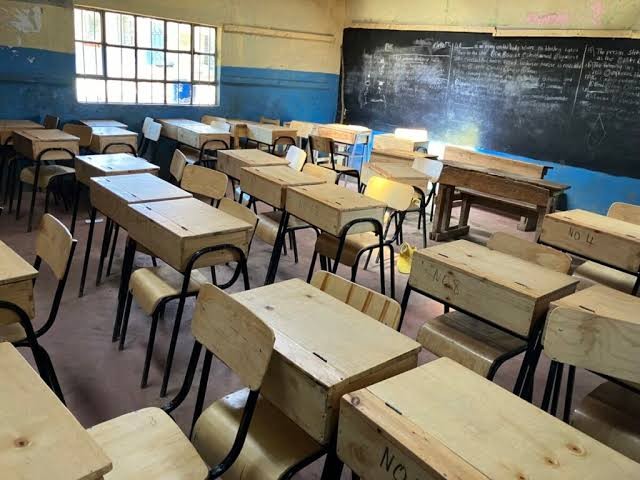
The result was predictable: popular schools became magnets, and less popular ones became increasingly empty. The problem appears particularly acute among Category Four (C4) schools, many of which serve local communities and were expected to absorb learners transitioning from nearby Junior Schools. Some of these schools have classrooms, laboratories, libraries, workshops and teachers in place, but very few learners to use them — raising a difficult question for policymakers: how long can the government continue financing schools that consistently have no learners?
The answer is not straightforward. Closing a school may look financially sensible on paper, but education is not simply a numbers game. Many schools are community institutions that provide access for children who may not have the resources to travel long distances elsewhere, employ teachers and support staff, support local businesses and represent decades of public investment. For that reason, the government is unlikely to simply shut down hundreds of institutions overnight. But if a school receives zero learners in one transition cycle and remains severely under-enrolled in the next, pressure for intervention could become unavoidable. That intervention could take several forms: schools could be encouraged to specialise in particular pathways, some could be merged administratively, others reclassified or repurposed, teachers redeployed to institutions facing shortages, and in extreme cases, persistently non-viable schools could face closure.
It is not accurate to say the 330 schools are already scheduled to disappear after next year, but it is reasonable to ask whether schools that continue receiving no or very few learners will remain sustainable. The warning signs are already visible: the additional 2,400 schools that received fewer than 20 Grade 10 learners show the challenge extends far beyond the 330 that received none, meaning thousands of institutions could be operating significantly below their intended capacity. In some cases the numbers are striking: a school in Cherangany was reported to have received only four Grade 10 learners against a capacity of 45, and a day school in Nakuru County was reported to have received no Grade 10 learners and been left with only a handful in its final Form Four cohort. However, individual school names should not be presented as part of the official 330 unless verified against government records. There have also been conflicting claims over the national number, with some reports citing approximately 1,000 schools without Grade 10 learners; the figure formally presented by CS Ogamba before the Senate was 330, and that figure should anchor credible reporting unless the Ministry publishes revised statistics.
The crisis has also exposed the limitations of relying heavily on school categories. A C1 school may have thousands of applicants while a C4 school a few kilometres away struggles to attract enough learners to operate efficiently. This raises a fundamental question about how Kenyan schools are perceived: are learners choosing schools because of the pathways and opportunities they actually offer, or because of historical reputation and social prestige? If the latter is true, the government may need to do more than simply place learners; it may need to rebrand and reposition less popular schools.
ALSO READ: HELB outlines digital channels for students to track loan applications
A school with modern laboratories, competent teachers, strong co-curricular programmes and relevant CBE pathways should not automatically lose learners because it belongs to a lower category. The Ministry could also consider giving parents and learners clearer information about the programmes, facilities and opportunities available in individual schools before choices are made.
The first Grade 10 transition has therefore become an important test of CBE. The philosophy of CBE is built around identifying learner abilities, interests and aspirations, and giving learners a voice in school and pathway selection is consistent with that philosophy. But choice must operate within a system that remains sustainable; if every learner wants the same schools, the result will inevitably be overcrowding in some institutions and empty classrooms in others. The government must now solve that imbalance without undermining the principle of learner choice that the new system seeks to promote.
The next transition could prove crucial. If the 330 schools that received no Grade 10 learners attract students in the next intake, the crisis could prove temporary. But if the same institutions continue recording zero or extremely low enrolment, their future could become increasingly difficult to defend. That is where the phrase “after next year” matters: the schools are not automatically disappearing then, but another cycle of zero or extremely low enrolment could force the government to make uncomfortable decisions about their viability: restructuring, merging, redeploying teachers, changing mandates, or in some cases, closure.
ALSO READ: PS Ololtuaa urges parents to keep off school compounds as learners prepare for national exams
The government therefore needs to move quickly. It should publish comprehensive data showing which schools received zero learners, their capacities, pathways offered, geographical locations, teacher numbers and the reasons behind low enrolment. Such transparency would help separate genuine learner preference from possible weaknesses in placement, inadequate information or regional disparities, and would allow communities to understand what is happening to their schools. The debate should not become a simplistic argument about “good” and “bad” schools; the real issue is whether Kenya can build an education system in which every public investment serves learners effectively.
Kenya has built the classrooms, recruited the teachers and expanded Senior School capacity. The harder task now is making sure learners actually fill those classrooms. The 330 schools have not been declared dead, but their future is no longer guaranteed; the next Grade 10 transition could determine whether they stage a comeback or become part of Kenya’s growing list of schools that were once vibrant but could not survive changing patterns of learner demand.
By Hillary Muhalya
Get more stories from our website: Education News
To write to us or offer feedback, you can reach us at: editor@educationnews.co.ke
You can also follow our social media pages on Twitter: Education News KE and Facebook: Education News Newspaper for timely updates.
>>> Click here to stay up-to-date with trending regional stories