- Future teacher pay talks could increasingly weigh productivity and performance alongside the cost of living and affordability.
- The emerging approach could affect how TSC and teachers’ unions negotiate future collective bargaining agreements.
- Questions remain over how teacher productivity could be measured fairly across vastly different working environments.
Kenya’s teachers could be heading into a new era of salary negotiations as the Salaries and Remuneration Commission (SRC) moves to strengthen the rules governing Collective Bargaining Agreements (CBAs).
The emerging framework could have far-reaching implications for teachers employed by the Teachers Service Commission (TSC), particularly in future negotiations between the employer and teacher unions.
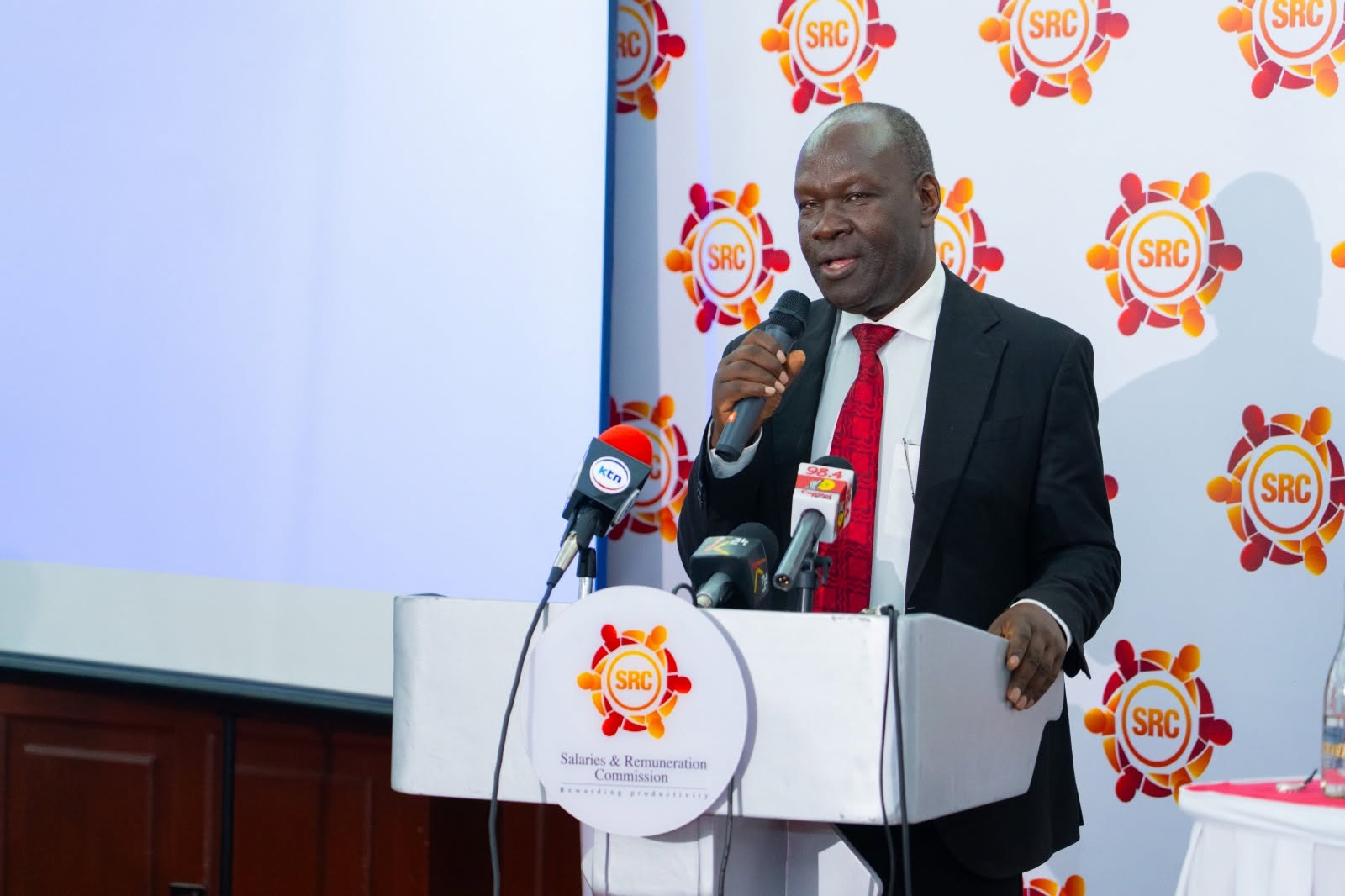
SRC Chairperson Sammy Chepkwony has signalled that the Commission wants to address gaps in the current CBA system, which it considers one of the issues contributing to recurring industrial disputes and strikes in the public sector.
Speaking during the 2026 Katiba Day Symposium in Nairobi on August 27, Chepkwony said SRC was accelerating efforts to address the gaps following resolutions reached during the National Productivity and Performance Conference held in June.
The proposed direction places productivity, performance, affordability, economic performance and the cost of living at the centre of future remuneration discussions.
For teachers, the emerging debate raises a crucial question:
Will future salary increases depend not only on the cost of living but also on productivity and the government’s ability to pay?
SRC’s newly established remuneration framework already provides for consideration of factors including economic performance, cost of living, labour-market trends, productivity, affordability and the financial capacity of public institutions.
That could fundamentally change the negotiating environment for future teacher CBAs.
It does not mean teachers will automatically lose their right to bargain for better salaries and working conditions. Article 41 of the Constitution protects the right to fair labour practices and collective bargaining.
Instead, the emerging SRC approach appears designed to introduce more economic and performance considerations into the process through which public-sector remuneration is reviewed.
Tougher negotiating environment
For years, teacher unions have used CBAs as the main vehicle for negotiating salary increments, allowances, promotions and improvements in working conditions.
Under a stronger productivity-based remuneration model, unions could increasingly be required to make a broader economic case for salary increases.
A demand for higher salaries could face questions around affordability, government revenues, economic growth and measurable improvements in service delivery.
This could make future negotiations involving TSC and teacher unions significantly more complicated.
The negotiating table may increasingly involve not only the employer and unions, but also a broader assessment of the country’s fiscal position and the sustainability of the public wage bill.
Productivity takes centre stage
SRC’s push for productivity-based remuneration is not entirely new.
The Commission has been advancing a public-sector productivity agenda and has identified productivity as a major issue affecting Kenya’s wage bill and public service performance.
The implication is that public-sector pay could increasingly be viewed alongside the value and quality of services delivered.
For teachers, however, measuring productivity is likely to be particularly complicated.
Teaching is not simply a matter of counting the number of learners taught in a classroom.
Teacher effectiveness can involve lesson preparation, assessment, learner support, curriculum implementation, co-curricular activities, mentorship, counselling, administration and participation in school development programmes.
Any attempt to connect teachers’ pay directly to productivity would therefore need carefully designed and transparent measures.
Could TPAD become even more important?
The debate could also reignite attention on teacher performance appraisal systems.
If remuneration becomes more closely connected to productivity and performance, systems used to assess teacher performance could attract greater scrutiny.
For teachers, the critical issue would be ensuring that performance assessment does not become a mechanism for arbitrarily denying salary progression.
A credible system would have to recognise the realities teachers face, including class sizes, staffing shortages, infrastructure gaps, learner backgrounds and the availability of teaching resources.
Otherwise, teachers working in difficult environments could potentially be disadvantaged by performance indicators that fail to account for circumstances beyond their control.
Cost of living remains important
Importantly, productivity is not the only factor SRC says should determine remuneration.
The Commission’s framework also recognises the cost of living, economic performance, labour-market trends and affordability.
This means the traditional argument made by workers—that salaries must remain responsive to rising living costs—remains relevant.
The difference is that salary reviews could increasingly require a balancing of several competing factors.
Teachers may therefore have to demonstrate the economic justification for higher salaries while the government demonstrates that it can sustainably finance the proposed increases.
Affordability is likely to be one of the most powerful considerations under the emerging framework.
Kenya has limited public resources and must finance salaries alongside education infrastructure, healthcare, debt obligations, security, social protection and other government programmes.
SRC’s regulations are intended to strengthen the connection between remuneration decisions and the ability of public institutions to meet their financial obligations sustainably.
For teachers, this could mean that even a strong salary demand may face resistance if the government cannot demonstrate sufficient fiscal space.
The new SRC remuneration framework also introduces a structured four-year review cycle for State and other public officers, aligning remuneration reviews more closely with national planning and budgeting.
That development could have important implications for how future public-sector pay adjustments are planned.
Rather than remuneration reviews being approached as isolated negotiations, the government could increasingly work within a predictable, longer-term framework.
For teachers, the question will be how such a cycle interacts with negotiated CBAs between TSC and unions.
Unions unlikely to surrender negotiating space
The emerging reforms are already generating discussion among public-sector unions.
Public service trade unions have called for greater involvement in CBA negotiations, arguing that workers’ interests must be directly represented in discussions over salaries, working conditions and other terms of service.
This signals that the next phase of Kenya’s remuneration reforms will not simply be about SRC setting new rules.
It will also be about how employers, unions and workers negotiate their respective roles within the new system.
What this means for the next teachers’ CBA
The most important point for teachers is that the SRC announcement should not be interpreted as an immediate cancellation of existing CBAs or an automatic reduction of teachers’ salaries.
Instead, it signals a possible transformation in the environment in which future public-sector wage negotiations take place.
For TSC and teacher unions, future negotiations could increasingly revolve around four major questions:
How much do teachers need?
How much can the government afford?
What has changed in the cost of living and labour market?
And what evidence demonstrates improved productivity and service delivery?
Those questions could define the next generation of teacher wage negotiations.
Battle over defining productivity
Perhaps the biggest challenge will not be whether productivity should matter, but how productivity will be measured.
Teachers could strongly resist any system that reduces their professional contribution to examination scores or narrow performance indicators.
Equally, the government and SRC are likely to insist that remuneration must be connected to improved public service delivery and sustainable expenditure.
The eventual compromise will determine whether the reforms become a tool for improving public services—or another source of confrontation between workers and government.
For teachers, therefore, the SRC reforms deserve close attention.
The next major battle over teachers’ salaries may not simply be about how much money goes into the payslip.
It could increasingly be about how that figure is calculated, what evidence supports it, how affordability is determined and how teacher performance is recognised.
READ ALSO: TSC schedules repeat PSSF training for teachers after capacity challenges disrupt initial session
And that could make the next round of TSC-union negotiations one of the most consequential yet.
By Hillary Muhalya
Get more stories from our website: Education News
To write to us or offer feedback, you can reach us at: editor@educationnews.co.ke
You can also follow our social media pages on Twitter: Education News KE and Facebook: Education News Newspaper for timely updates.
>>> Click here to stay up-to-date with trending regional stories