- Only 10.1 per cent of pre-primary teachers assessed met the benchmark for pedagogical knowledge in numeracy instruction.
- The proportion rises to 22.4 per cent among lower-primary teachers, while teachers perform better in numeracy content mastery.
- CEMASTEA says the findings point to gaps requiring stronger teacher preparation and improved approaches to foundational numeracy.
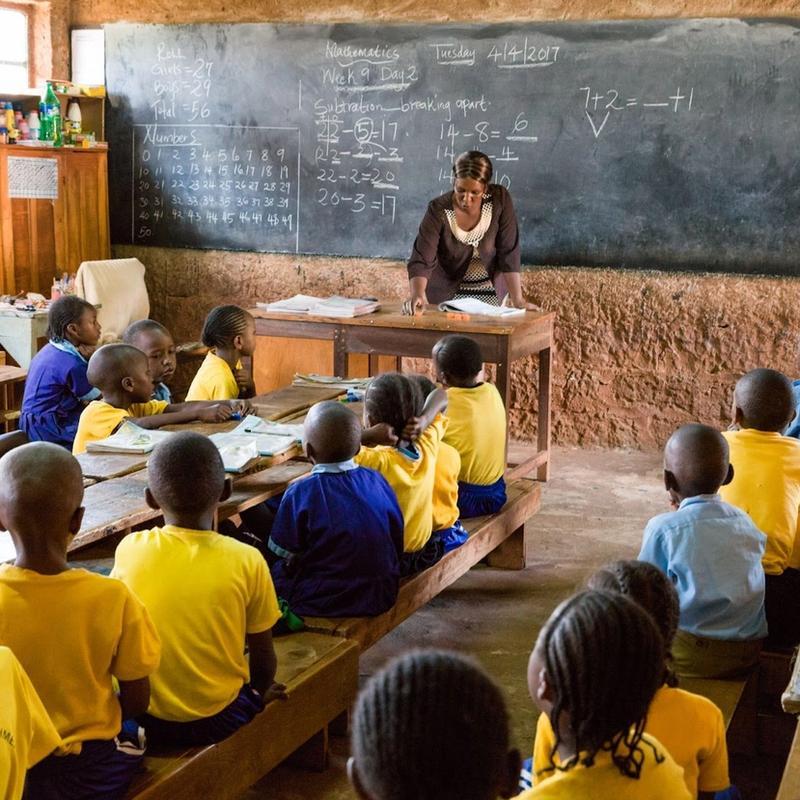
A new assessment has raised concerns over the preparedness of teachers handling numeracy at pre-primary and lower-primary levels, with only a small proportion meeting the required standards in teaching methods.
The report by the Centre for Mathematics, Science and Technology Education in Africa (CEMASTEA), conducted in partnership with Echidna under the Numeracy for Life in Early Years Education project, found that only 10.1 per cent of pre-primary teachers attained the required benchmark for pedagogical knowledge.
Among lower-primary teachers, 22.4 per cent reached the same benchmark.
The assessment covered 15 counties with high gender parity index and involved learners in PP1, PP2 and Grades One to Three, alongside teachers responsible for the classes.
It examined two key areas: teachers’ mastery of numeracy content and their knowledge of effective teaching approaches. Classroom observations were also conducted to establish how the teachers applied their knowledge during lessons.
Teachers stronger in content than pedagogy
The findings showed that teachers generally performed better in understanding numeracy content than in applying appropriate teaching methods.
At pre-primary level, 28.8 per cent of teachers achieved the 75 per cent benchmark for content mastery, compared with 10.1 per cent for pedagogical knowledge.
For lower-primary teachers, 52.5 per cent attained the benchmark in content mastery, while only 22.4 per cent met it in pedagogical knowledge. These figures are consistent with reporting on the assessment.
The report also identified weaknesses in learners’ numeracy abilities, particularly as they progressed through lower primary.
At the pre-primary level, learners generally demonstrated good skills in rote counting, linking numbers with quantities, writing numbers and carrying out simple addition. However, difficulties emerged in recognising shapes and numbers and performing subtraction.
Among lower-primary learners, the assessment recorded factual, conceptual and procedural errors, with the latter two becoming more pronounced as learners moved from Grade One to Grade Three.
CEMASTEA National Trainer Rahab Chiira said some of the errors indicated that learners were struggling with basic mathematical concepts.
“When learners make factual errors, it shows that there is an issue. If a learner is telling you that 2+4 is 10, or they are adding and you are finding out that they can’t add 2+3 to get 5, then there is a problem,” Chiira, who represented CEMASTEA Chief Executive Officer Gladys Masai, told Nation.
Training colleges challenged to bridge gaps
The assessment found no statistically significant difference between boys and girls in the pre-primary numeracy tasks that were administered.
CEMASTEA said the findings have implications for teacher training institutions, which prepare educators who eventually take charge of learners at the foundational stages of education.
The institution has consequently called on principals of teacher training colleges to work with it in strengthening the preparation of student teachers, particularly in numeracy instruction.
Chiira said teacher educators should use the findings to identify weaknesses in training and equip future teachers with better approaches to teaching young learners.
“We felt that you are the pedagogical leaders who prepare these teachers who go to teach these learners, and that is why CEMASTEA felt that we share these findings from our study so that we can ask you to prepare the teachers in college. We should work together to bridge the gap,” she said.
CEMASTEA has also trained tutors on learner-centred and play-based approaches, including the use of technology in teaching.
READ ALSO: Defence PS: Govt targets 33 stadia as Vihiga’s Kidundu Stadium hits 20 percent completion
Principals of teacher training colleges have been asked to ensure tutors share the skills acquired through the training with their colleagues and incorporate them into the preparation of student teachers.
By Jonathan Mwinzi
Get more stories from our website: Education News
To write to us or offer feedback, you can reach us at: editor@educationnews.co.ke
You can also follow our social media pages on Twitter: Education News KE and Facebook: Education News Newspaper for timely updates.
>>> Click here to stay up-to-date with trending regional stories