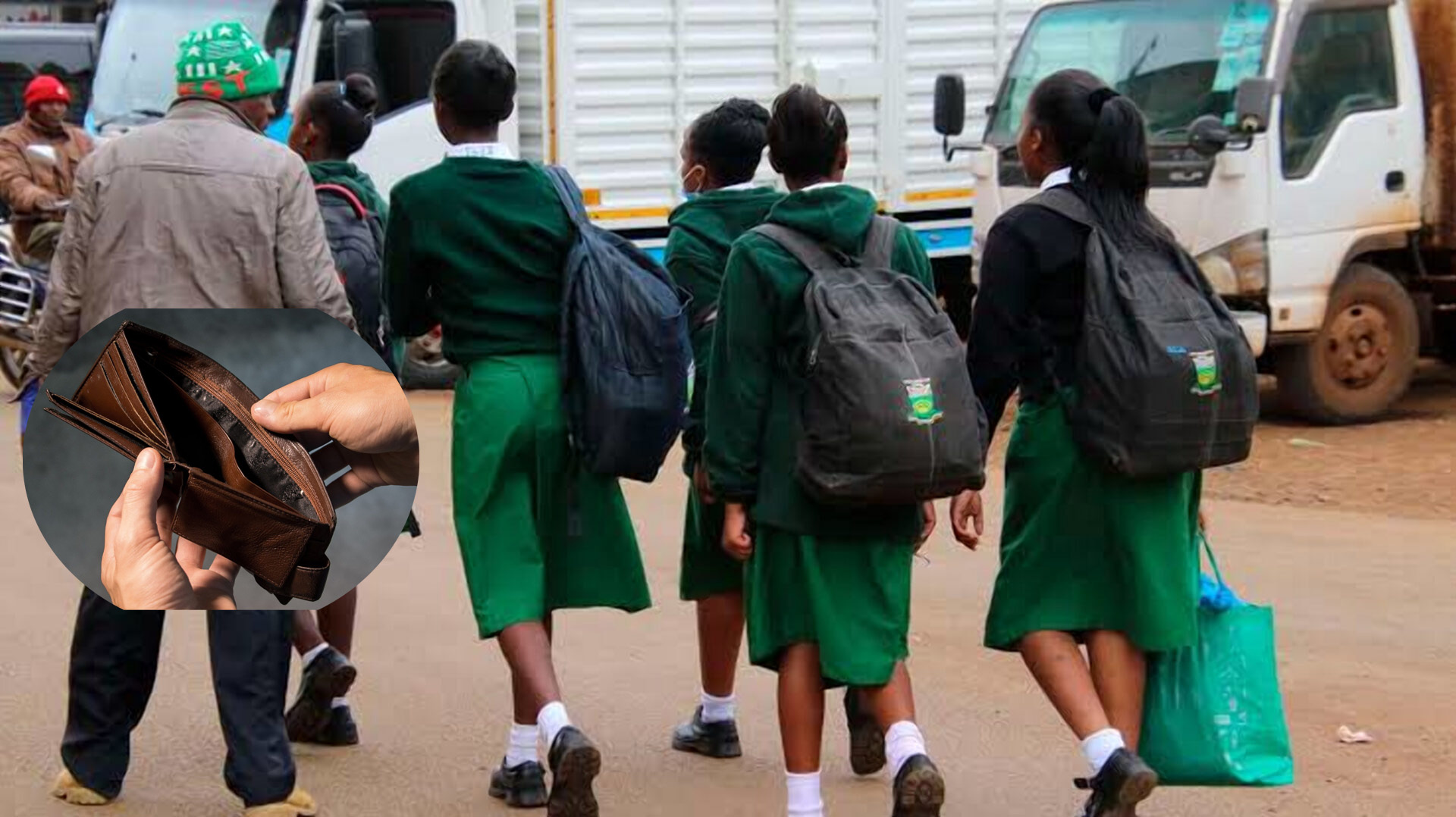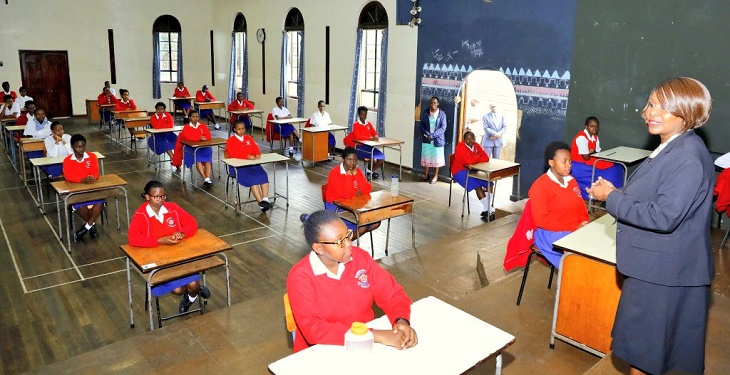
Every year, after the release of KCSE examination results, thousands of young people and their parents ask one familiar question: did I qualify for university? It is an important question, but perhaps a more useful one would be: what am I good at, and where can my skills take me?
For far too long, Kenya’s education system and society at large have treated university as the ultimate destination, reducing Technical and Vocational Education and Training (TVET) to a fallback option for those who did not make the grade. That thinking is not only outdated, it is also dangerous, and it overlooks a simple truth: Kenya does not need graduates with certificates alone; it needs people with the competence to solve problems.
A country cannot run without skills. Take away plumbers, and water systems will eventually fail. Without electricians, homes, schools, hospitals and industries would be plunged into darkness. Without mechanics, vehicles would remain grounded, and without skilled chefs and hospitality professionals, hotels would struggle to offer the quality of service visitors expect. Without welders, masons, carpenters and construction technicians, architectural drawings would remain nothing more than drawings on paper.
Hospitals illustrate the point clearly. Doctors and nurses are indispensable, but hospitals also depend on functioning machines, reliable electrical systems, water supply, refrigeration, oxygen systems, ICT infrastructure and specialised equipment. When machines break down, someone must have the technical knowledge to diagnose the problem, maintain the equipment and restore services. The economy, in other words, runs on both knowledge and skill.
This is why the Competency-Based Curriculum, which encourages learners to think about career pathways earlier, should not be dismissed. Every learner is different. Some excel in theoretical and academic work, while others demonstrate exceptional ability in practical problem-solving, technology, engineering, design, agriculture, hospitality, sports or the creative industries. The mistake made for generations has been measuring every child’s potential using the same academic ruler, when a learner who may not obtain the grades required for a particular university programme may possess remarkable mechanical ability, an entrepreneurial mind, artistic talent or exceptional technical skills.
Career guidance in schools must therefore go beyond promoting prestigious professions. Learners need accurate information about technical careers, emerging industries, self-employment and the opportunities available through National Polytechnics and other TVET institutions.
Rather than asking only which university course a learner can pursue, schools should also be asking what a learner can do well and what problem their skills can solve.
National Polytechnics, technical colleges and other TVET institutions carry an enormous responsibility to become centres where young people acquire skills capable of moving the economy. The Technical and Vocational Education and Training Act provides for a training system that promotes access, quality and relevance, and responds to the skills required across different sectors, while emphasising innovativeness, creativity, lifelong learning and the integration of internships and on-the-job training.
ALSO READ:
MKU second-year student found dead at Eldoret residence as police launch probe
TVET institutions should not simply produce graduates who know how to follow instructions. They should produce innovators who can improve machines, develop products, repair equipment, establish enterprises and create solutions for communities. A student trained in electrical installation should be encouraged to think beyond employment and consider establishing an electrical services company. A trained mechanic should not only repair vehicles but also engage with modern automotive technologies and the future of mobility. A young person trained in hospitality should be equipped to create employment through catering, food production and tourism enterprises, while a welder should be encouraged to think about what products can be designed and manufactured locally.
One of the strongest arguments for technical and vocational training is its potential to promote self-employment. A skilled plumber can begin with small household jobs and gradually build a business. An electrician can start with domestic installations and eventually handle larger commercial projects. A mechanic can begin in a modest garage and later employ other young people, while a trained chef can work in the hospitality industry, establish a catering business or venture into food production. This is the power of a practical skill: it travels with you. A person may lose a job, but they do not lose the knowledge in their hands and mind.
Kenya should therefore invest not only in training young people but also in helping them transition from training into productive work. A graduate may have the skill but lack the tools to practise it, which is where government, county governments, financial institutions and the private sector must come in, by providing access to affordable tools, incubation centres, industrial attachments, mentorship and start-up support. Training without a bridge to employment or enterprise can leave many skilled young people frustrated. The conversation must therefore shift from enrolment numbers to outcomes: how many graduates are employed, how many have started businesses, how many have created jobs for others, and how many innovations have moved from the workshop to the market.
The government’s growing emphasis on TVET is welcome in this regard. The State Department responsible for Technical and Vocational Education and Training and the TVET Authority (TVETA) have continued to emphasise the regulation, accreditation, quality and relevance of skills training, with TVETA’s mandate including the licensing and accreditation of institutions, programmes and trainers to ensure training meets national standards. There is also a growing policy conversation about clearly differentiating the roles of universities and TVET institutions while strengthening progression pathways between them, with recent parliamentary debate reflecting the view that universities should focus strongly on higher learning and research while TVET institutions are strengthened to provide specialised, skill-based training aligned with national development priorities.
This should not be interpreted as competition between universities and TVET institutions, since Kenya needs both. The country needs doctors, engineers, researchers and other university-trained professionals, but it also needs technicians, technologists, artisans and skilled entrepreneurs. The two pathways should complement rather than compete with each other, and the TVET Act itself provides a framework for quality assurance, industry relevance and progression, including the recognition of skills and competencies acquired through work.
Employers check your past — it’s time you checked theirs: Fair hiring works both ways
The Constitution of Kenya recognises education as a fundamental economic and social right and places an obligation on the State to take measures that help young people access relevant education, training and employment opportunities. This constitutional vision should encourage Kenyans to stop defining educational success too narrowly, since education must prepare citizens not only to pass examinations but also to participate meaningfully in the economy. A country that wants to industrialise cannot afford to neglect technical skills, just as a country that wants reliable infrastructure cannot look down upon artisans, one that wants functioning hospitals cannot ignore technical maintenance, and one that wants modern manufacturing cannot survive without skilled technicians and technologists.
Perhaps the greatest change must begin at home, with parents encouraged to stop making young people feel that university is the only respectable destination. There is dignity in skilled work, whether as a plumber, electrician, welder, mechanic, chef, technician, carpenter or fashion designer. The person who restores water to a home has solved a problem. The electrician who restores power has solved a problem. The technician who repairs essential hospital equipment has solved a problem, and the chef who builds a successful catering enterprise has created employment. These are not minor contributions but the everyday building blocks of an economy, and as the saying goes, a nation cannot build a house with theories alone; eventually, someone must pick up the tools.
Term Three: The dos, don’ts, challenges and how to finish the school year strong
It is important, however, that TVET should not be reserved only for learners who fail to attain university entry grades, as that would simply replace one problem with another. A learner who qualifies for university but has a passion and aptitude for a technical career should be free to choose TVET without shame, just as a learner who does not attain university entry grades should not be condemned to hopelessness. There are many routes to success, and what matters is that young people receive quality training, acquire relevant skills and are given opportunities to use those skills productively.
Kenya needs graduates, but more importantly, it needs competent graduates who can create value, innovate, keep machines running, build industries, and employ themselves and others. For without plumbers, water systems will fail. Without electricians, lights will go off. Without mechanics and technicians, machines will grind to a halt, and without skilled hospitality professionals, the tourism industry will suffer. Without technically skilled young people, Kenya’s dream of industrialisation will remain exactly that, a dream. The future of the country will not be built by certificates alone, but by skilled hands, creative minds and young people who can turn knowledge into solutions. TVET, ultimately, is not a second choice; it is one of Kenya’s most important choices.
By Astiba Kebong’o
Get more stories from our website: Education News
To write to us or offer feedback, you can reach us at: editor@educationnews.co.ke
You can also follow our social media pages on Twitter: Education News KE and Facebook: Education News Newspaper for timely updates.
>>> Click here to stay up-to-date with trending regional stories