- Treasury says the two retirement arrangements differ fundamentally in financing, benefits, legal structure and actuarial treatment.
- The proposed merger has raised questions over protecting benefits already earned by workers and existing retirement savings.
- Parliament must now weigh pensioners’ reform demands against Treasury’s concerns over financial and legal implications.
The National Treasury has asked Parliament to reject a proposal seeking to amalgamate Kenya’s two major public-service pension arrangements, opening a potentially consequential debate over the future of retirement benefits for serving public servants and thousands of pensioners.
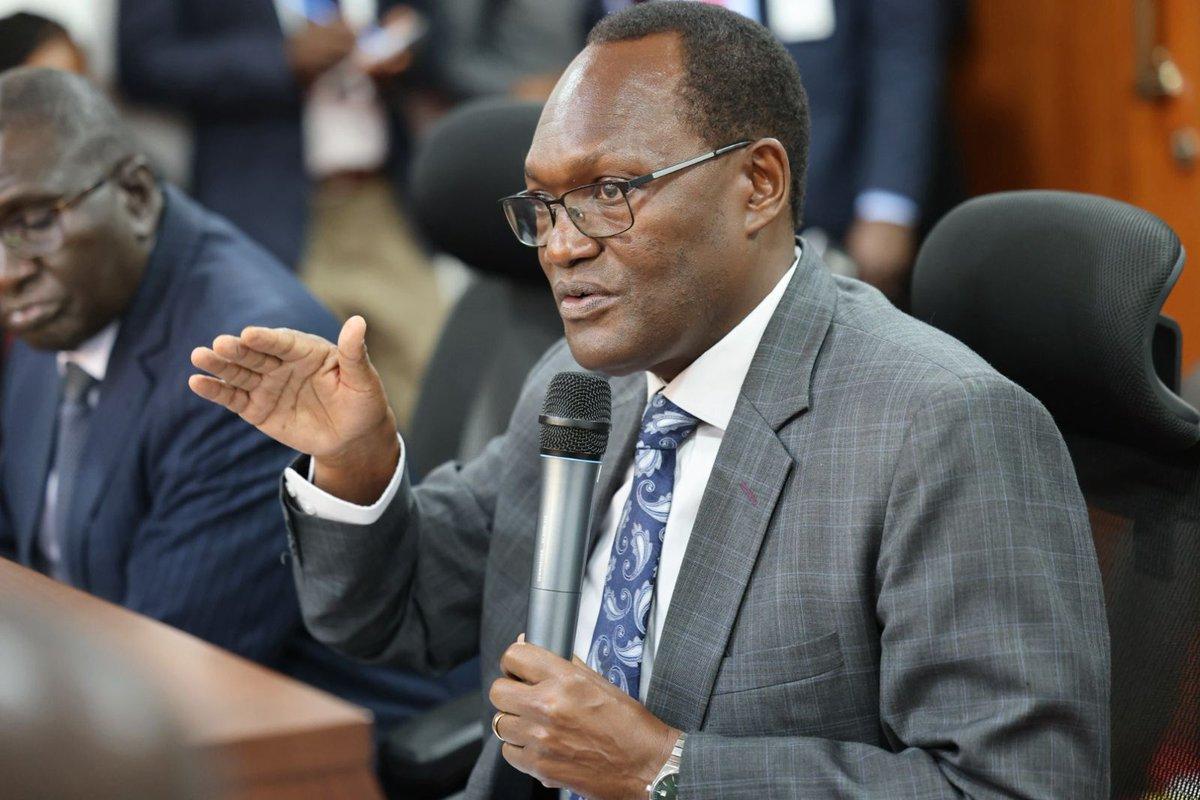
Treasury Principal Secretary Chris Kiptoo told the National Assembly’s Committee on Public Petitions that the Non-Contributory Defined Benefit Pension Scheme and the Public Service Superannuation Scheme are fundamentally different arrangements and should not simply be merged.
The Treasury position has placed pension dues at the centre of the debate, particularly at a time when retirees and serving public servants are demanding greater certainty, efficiency and fairness in the management of retirement benefits.
Kenya’s public-service pension system has historically operated largely through a non-contributory Defined Benefit arrangement, under which retirement benefits are financed by the Government. The Public Service Superannuation Scheme was introduced as part of wider reforms intended to establish a contributory retirement system for public servants.
The PSSS commenced operations on January 1, 2021, requiring members and the Government to make contributions towards retirement benefits.
The difference between the two schemes is critical. A Defined Benefit arrangement is based on an established formula for calculating retirement benefits, with the Government carrying significant responsibility for meeting the resulting obligations. A contributory scheme, on the other hand, accumulates contributions made by the employee and employer, together with investment returns, to finance retirement benefits.
Treasury therefore argues that amalgamating the schemes could create complicated legal, financial and actuarial questions.
Protecting accrued pension rights
The central concern is what would happen to pension rights that public servants have already accumulated.
Pension dues are not simply an administrative entitlement that can be altered whenever institutions are reorganised. They represent benefits earned during years of public service. Any restructuring must therefore establish how accrued benefits will be protected, valued and transferred without disadvantaging either serving workers or retirees.
The question becomes even more important for public servants who have moved from the traditional pension arrangement into the PSSS. Their retirement position involves both benefits accrued under the previous arrangement and contributions made under the newer system.
A merger would consequently have to deal with historical liabilities, existing contributions, investment assets, actuarial valuations and future government obligations.
For Parliament, the debate is therefore bigger than whether two pension schemes should operate under one structure. Legislators must determine whether amalgamation would improve pension administration or merely transfer existing challenges into a larger institution.
Pension delays remain a concern
The urgency of the matter is heightened by persistent concerns over delayed pension payments.
Thousands of retired public servants have at various times waited for their retirement benefits because of administrative, verification, taxation and funding challenges. Such delays can be devastating because retirees often depend almost entirely on their pension to meet medical expenses, household needs and other obligations after leaving employment.
A pension delay that might appear to be an accounting or administrative problem to government institutions can become a serious livelihood crisis for a retiree.
This explains why pension reform must be approached with exceptional caution.
Retired teachers, civil servants and other public officers who spent decades serving the country expect their retirement benefits to be paid promptly and accurately. For serving employees, confidence in the pension system is equally important because retirement benefits form a major part of the long-term value of public employment.
Any proposal to reorganise the schemes should therefore provide clear answers on who will assume responsibility for existing pension liabilities, how accrued benefits will be calculated and whether members will experience any reduction, delay or uncertainty in their retirement entitlements.
There is also the question of accountability.
If the schemes are amalgamated, Parliament would need strong safeguards to ensure that pension assets and contributions are properly managed. The new structure would require transparent governance, regular actuarial assessments, effective oversight and clear mechanisms for resolving disputes.
The Government must also demonstrate that any proposed merger is financially sustainable.
Combining pension schemes does not automatically eliminate liabilities. If anything, it could bring together substantial obligations that require careful financial planning. Treasury’s resistance appears to be driven partly by the need to avoid creating a structure whose long-term costs have not been adequately established.
Parliament faces reform and protection test
At the same time, Treasury’s position should not be interpreted as an argument against pension reform altogether.
Kenya still needs a retirement benefits system that is efficient, transparent and responsive to the needs of workers and pensioners. Delays in processing benefits, administrative bottlenecks and uncertainty over pension obligations cannot be allowed to become permanent features of public service.
The challenge before Parliament is therefore to strike the right balance between reform and protection.
If lawmakers ultimately reject the amalgamation proposal, they will still need to address the concerns that prompted calls for restructuring. If they support a merger, they must ensure that no retiree or serving worker loses benefits already earned.
The overriding principle should be straightforward: a worker who has served the Government for decades should never have to fight for pension dues that were earned through years of service.
As Parliament weighs Treasury’s position, the fate of the proposed amalgamation will be watched closely by teachers, civil servants, pensioners and millions of families whose financial security ultimately depends on a reliable retirement system.
The debate is therefore not merely about pension schemes. It is about the Government’s promise to its workers — and whether that promise will remain secure long after the final day of service.
READ ALSO: Promotion or deployment? TSC should clarify status of headteachers moving to CSO roles
National Treasury Principal Secretary Chris Kiptoo. Treasury has asked Parliament to reject the proposed amalgamation of the legacy Defined Benefit pension arrangement and the Public Service Superannuation Scheme.
By Hillary Muhalya
You can also follow our social media pages on Twitter: Education News KE and Facebook: Education News Newspaper for timely updates.
>>> Click here to stay up-to-date with trending regional stories
>>> Click here to read more informed opinions on the country’s education landscape
>>> Click here to stay ahead with the latest national news.