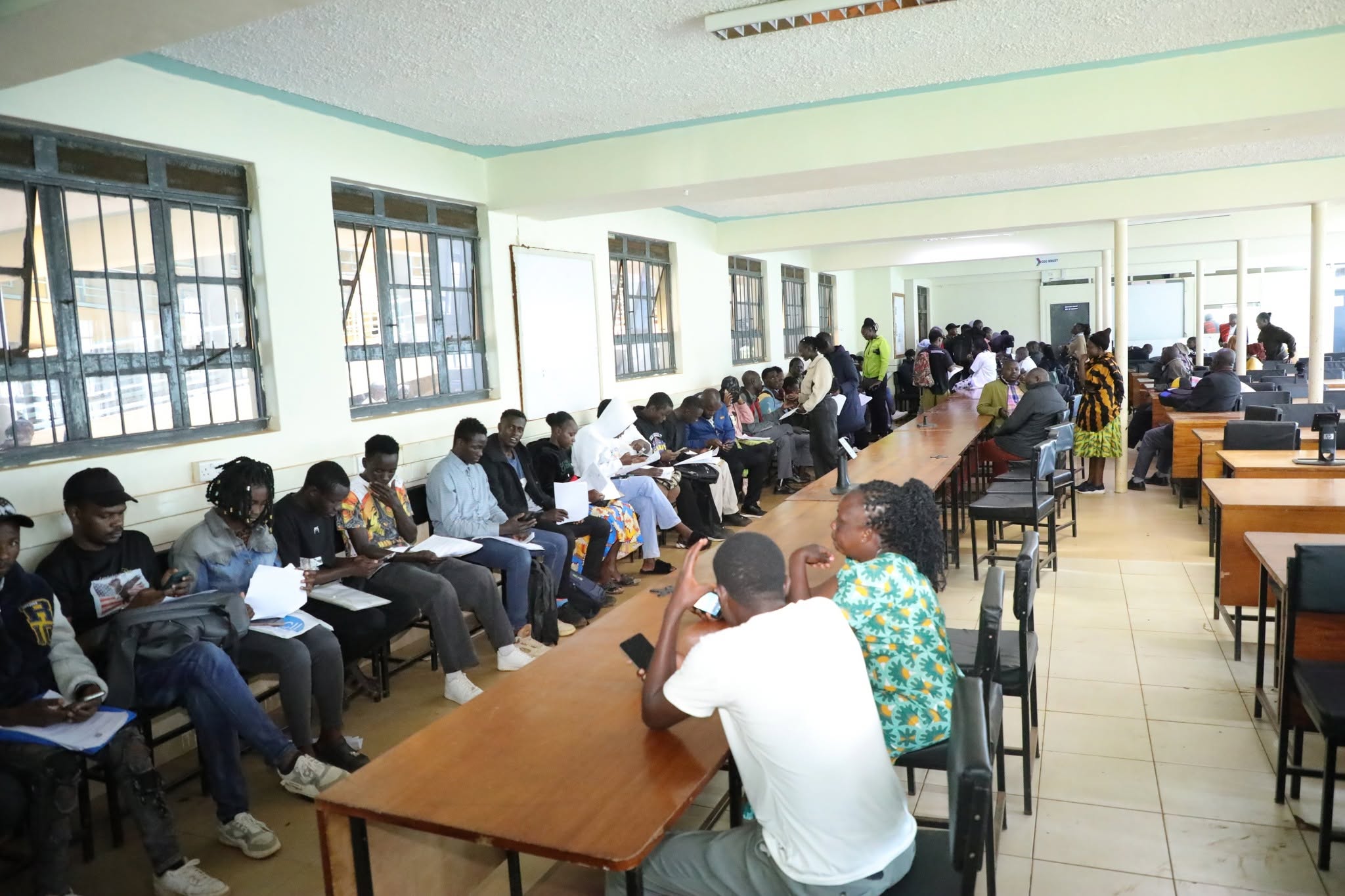
- Universities Fund data shows strong demand for scholarships and loans among students joining universities this academic year.
- Thousands of applicants are still completing submissions as institutions begin receiving their new first-year cohorts.
- The figures underline families’ reliance on public financing to meet the growing cost of higher education.
The Universities Fund has received more than 159,000 funding applications from first-year university students for the 2026/27 academic year, offering a clearer picture of the number of learners seeking government financial support as universities receive new students.
The disclosure provides important insight into the uptake of scholarships under Kenya’s Student-Centred Funding Model, which links government financial assistance to the assessed financial needs of individual students.
The announcement comes as thousands of first-year students begin reporting to their respective institutions for the new academic year, with many families relying on government scholarships and Higher Education Loans Board (HELB) loans to meet the rising cost of university education.
The Universities Fund had opened applications for first-time students joining public universities in the 2026/27 academic year, allowing eligible learners to seek financial support through the higher education financing system. The application process is designed to combine scholarship support from the Universities Fund with loans administered by HELB.
Thousands seek government support
The latest development is expected to be closely watched by students, parents and university administrators because the number of applications demonstrates the level of demand for government-supported university education.
The data could also provide an indication of how many students are depending on public funding to begin their university journeys at a time when households continue to grapple with the cost of tuition, accommodation, food, transport and other expenses associated with higher education.
The Universities Fund has increasingly placed emphasis on ensuring that financial assistance reaches students according to their levels of need. Under the Student-Centred Funding Model, applicants are assessed according to their financial circumstances to determine the degree of financial support they qualify for.
Scholarship awards are differentiated according to students’ assessed financial circumstances, with the Universities Fund indicating that scholarships can cover between 30 and 70 per cent of tuition fees. The remaining cost can be met through household contributions and eligible HELB financing.
The release of the new application figures also sheds light on the transition of the latest cohort into the reformed higher education financing system.
For first-time applicants, eligibility for Universities Fund scholarships is tied to several requirements, including Kenyan citizenship and placement by the Kenya Universities and Colleges Central Placement Service (KUCCPS) into a public university. Students placed in private universities do not qualify for Universities Fund scholarships under the stated framework, although they may qualify for HELB loans.
Universities Fund secures ISO recertification
The scholarship disclosure coincides with another milestone for the Universities Fund — ISO 9001:2015 recertification, confirming that the institution’s quality management system has met the applicable standard.
The certification is significant because the Fund has been undertaking reforms aimed at strengthening its institutional systems, digitising operations and improving the management and delivery of higher education financing.
The Kenya Bureau of Standards records show that Universities Fund received ISO 9001:2015 recertification, dated August 10, 2026, with validity running to August 6, 2029.
HELB Chief Executive Officer Geoffrey Monari was speaking during a media sensitisation workshop in Naivasha on August 20, where developments surrounding higher education financing and the role of the institutions supporting students were highlighted.
The closer coordination between HELB and the Universities Fund is particularly important under the current financing architecture, where scholarships and loans form complementary components of government support for university students.
Funding demand comes into focus
For thousands of first-year learners, however, the significance of the latest development goes beyond statistics and institutional milestones. The application data helps reveal how many students have taken the opportunity to seek government assistance and could provide an early indication of the financial pressure facing families supporting university education.
The disclosure therefore comes at a critical moment as universities settle new students and the government continues to refine the Student-Centred Funding Model.
READ ALSO: TSC starts virtual sensitisation of teachers on PSSF registration
With the first-year cohort now beginning its university journey, attention will turn to the final application figures — and what they reveal about the growing demand for scholarships, the reach of the financing model and the government’s capacity to support students through higher education.
By Hillary Muhalya
You can also follow our social media pages on Twitter: Education News KE and Facebook: Education News Newspaper for timely updates.
>>> Click here to stay up-to-date with trending regional stories
>>> Click here to read more informed opinions on the country’s education landscape
>>> Click here to stay ahead with the latest national news.