- Hillary Muhalya examines why academic qualifications alone are increasingly insufficient for graduates entering competitive labour markets.
- He argues that students should build practical experience, demonstrable skills and professional networks long before completing university.
- Muhalya says universities must also strengthen links with industry to better prepare graduates for changing workplace demands.
For generations, graduation has been celebrated as the gateway to a better future. Families invest heavily in education, students endure years of lectures and examinations, and graduation ceremonies are often seen as the moment when academic achievement finally translates into professional opportunity.
But for a growing number of young people, the reality after graduation is proving far more complicated.
Instead of immediately stepping into employment, many graduates enter a difficult cycle of applications, interviews, rejection and uncertainty. At the centre of their frustration is one question that has become increasingly familiar across Africa: How can a young person gain professional experience when employers demand experience before offering the first job?
This experience paradox is becoming one of the biggest barriers confronting young people entering the labour market.
Across Africa, millions of young people join the workforce every year, yet the number of formal employment opportunities created remains significantly lower. The World Bank has previously estimated that about 10 to 12 million young Africans enter the workforce annually, while only around three million formal jobs are created.
The numbers reveal the scale of the challenge.
A university graduate may therefore be competing with hundreds, or even thousands, of other qualified applicants for a limited number of positions. In such an environment, possessing a degree can demonstrate academic achievement, but it may not be enough to distinguish one candidate from another.
The modern employer is increasingly asking a different question: What can this applicant actually do?
From certificates to demonstrable skills
Academic qualifications remain important. A degree provides foundational knowledge, develops intellectual discipline and may be a prerequisite for entering many professions.
However, employers increasingly want graduates who can convert academic knowledge into practical results.
Depending on the profession, this may involve digital literacy, data analysis, communication, research, problem-solving, technical expertise, project management, creativity, teamwork or the ability to work with modern technologies.
This is creating a significant shift in the meaning of employability.
A graduate’s CV can no longer afford to be merely a catalogue of certificates. It needs to tell a convincing story about competence, initiative and readiness to work.
That means students should begin building their professional profiles long before they walk across the graduation stage.
Experience does not always begin with a salary
One of the misconceptions among students is that professional experience only counts when it comes from a permanent job.
That is no longer necessarily the case.
Internships, industrial attachments, volunteering, freelance assignments, research projects, entrepreneurship, community initiatives, student leadership and professional competitions can all provide opportunities to develop and demonstrate valuable skills.
A student studying information technology, for instance, could develop a website, application or digital solution. A journalism student could build a portfolio of published stories, interviews or multimedia productions. A business student could undertake market research for a small enterprise. An education student could participate in community learning programmes or develop innovative teaching resources.
These activities may not initially come with impressive salaries, but they can produce something equally important for a young graduate: evidence of ability.
The critical step is learning how to present that experience professionally.
Instead of simply writing that they participated in a project, graduates should be able to explain the problem they addressed, the role they played, the skills they used and the outcome they achieved.
That turns an ordinary activity into evidence of professional competence.
Breaking the experience paradox
The experience problem can become a vicious cycle.
A graduate applies for a position but is rejected because they lack experience. They then seek an opportunity to gain experience but discover that even entry-level positions require previous exposure.
The result is frustration, prolonged job searches and, in some cases, a growing sense that years spent acquiring an education have not delivered the expected return.
Breaking this cycle requires a broader definition of career preparation.
Students should not wait for their final year to begin thinking about employment. Career development should start much earlier, with deliberate efforts to acquire practical skills, build professional networks and understand what employers in their chosen fields actually need.
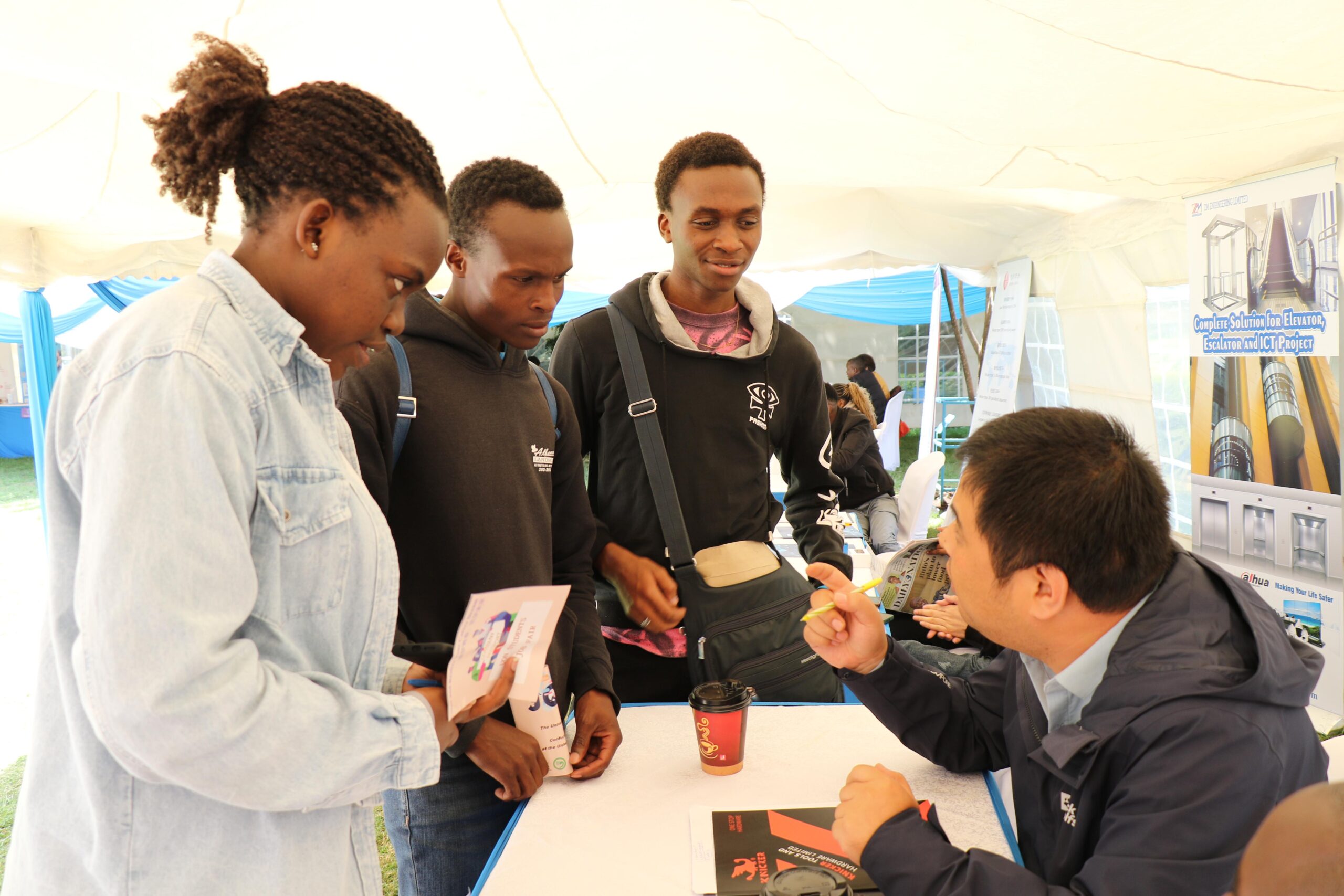
Professional networking is particularly important. Students can connect with industry professionals, attend conferences and seminars, join professional associations, seek mentorship and use legitimate digital platforms to showcase their work.
A strong professional network can expose young people to opportunities that may never appear in conventional job advertisements.
Universities must also carry part of the responsibility
The employment challenge cannot be placed entirely on graduates.
Universities and other institutions of higher learning must also examine how effectively they prepare students for the realities of the labour market.
If employers increasingly expect graduates to possess practical competence alongside academic qualifications, institutions must strengthen the connection between classrooms and workplaces.
This means expanding meaningful internships, industrial attachments, industry partnerships, mentorship programmes, entrepreneurship initiatives, practical assignments and work-based learning.
Students should have opportunities to solve real problems rather than merely answer examination questions.
Universities can also work more closely with employers to understand emerging skills requirements and continuously review programmes so that graduates are not entering a rapidly changing economy with outdated competencies.
The ultimate measure of higher education should therefore extend beyond graduation numbers.
It should also consider whether graduates can confidently apply what they have learned to real-world challenges.
The digital economy is changing the rules
Technology has made the situation both more challenging and more promising.
On one hand, automation and digital transformation are changing traditional occupations and creating new expectations for workers. On the other hand, students can now access learning resources, professional communities and opportunities that were previously unavailable.
A young person can learn coding, graphic design, digital marketing, data analysis, video production, artificial intelligence tools or other marketable skills from a laptop or smartphone.
The challenge is separating learning from demonstrating competence.
Knowing something is different from being able to prove that you can do it.
That is why portfolios, projects and practical demonstrations are becoming increasingly valuable.
The responsibility begins before graduation
For today’s students, the message is clear: do not wait for graduation to begin preparing for employment.
Use university years strategically.
Develop at least one practical skill that complements your academic qualification. Seek internships and attachments. Volunteer where meaningful opportunities exist. Work on projects. Build a portfolio. Improve communication skills. Learn how to write a professional CV and prepare for interviews. Find mentors. Understand the expectations of employers in your chosen field.
For graduates who already possess degrees but are struggling to find employment, the answer may not automatically be another qualification.
Sometimes, a carefully chosen professional skill, supported by practical evidence, may be more valuable than accumulating another certificate.
Africa’s youth employment challenge cannot be solved by producing more graduates alone. It requires stronger links between education, skills development, industry and job creation.
The real challenge is to ensure that education does not end with a certificate, but produces young people capable of applying knowledge, solving problems and creating value.
For students still on campus, the most important question may therefore not be when they will graduate, but what they will be able to demonstrate when they do.
READ ALSO: Turkana directs vocational institutions to align training with local economic opportunities
Because when the job market asks, “What experience do you have?”, the strongest answer may already be waiting in the portfolio, project, internship or skill you began developing while you were still a student.
By Hillary Muhalya
Get more stories from our website: Education News
To write to us or offer feedback, you can reach us at: editor@educationnews.co.ke
You can also follow our social media pages on Twitter: Education News KE and Facebook: Education News Newspaper for timely updates.
>>> Click here to stay up-to-date with trending regional stories