- Hillary Muhalya argues that a clear vision connects today’s decisions with a country’s long-term ambitions.
- He says involving learners could give Kenya’s next generation a voice in shaping its future.
- The author argues that vision must translate into strategy, investment and measurable action to deliver transformation.
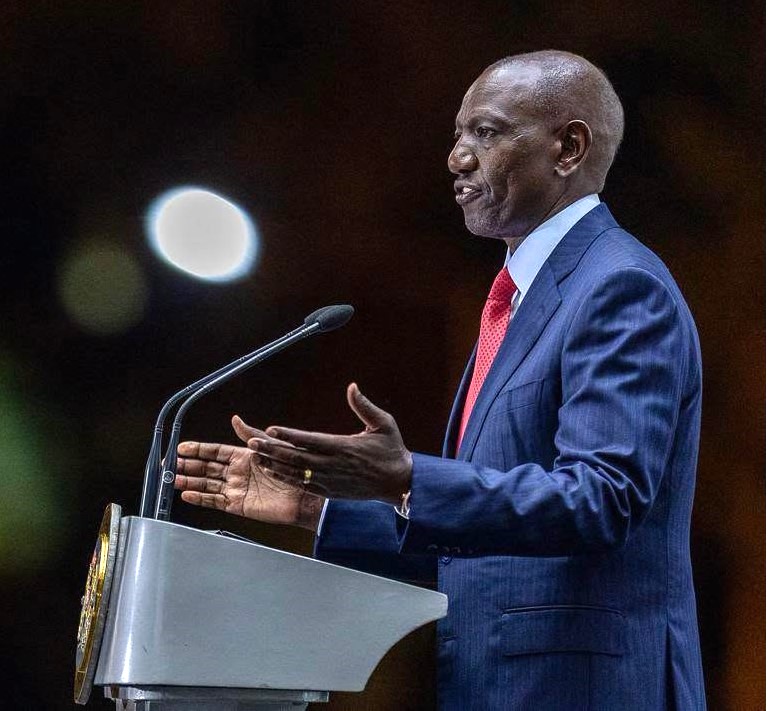
President William Ruto’s directive for schools to embrace “Beyond Vision 2030” in creative activities from next year presents an opportunity to look beyond school competitions and examine one of the most important principles of leadership and development: no organisation or country can achieve lasting transformation without a clear vision of where it wants to go.
A vision is the destination.
It tells an organisation, institution or country what it wants to become, gives people a common purpose and provides a framework for deciding what must be done today to achieve tomorrow’s ambitions.
For an organisation, vision can determine its culture, priorities, investments and long-term sustainability.
For a country, it can provide a shared national direction around which government, businesses, institutions, communities and citizens can align their efforts.
That is why the conversation about “Beyond Vision 2030” deserves to be taken seriously.
It is not simply about a new theme for music, drama, poetry, dance and art.
It is about asking Kenya what destination comes next.
Every successful organisation needs clarity on what it seeks to become.
A company may aspire to become a global leader in its industry.
A school may aim to produce innovative and responsible citizens.
A university may strive to become a centre of excellence in research.
A church or community institution may seek to transform society through service.
Whatever the institution, the principle remains the same.
People cannot effectively pursue a destination they cannot clearly define.
Without a clear vision, employees and leaders may work diligently but pursue competing priorities.
Resources can be misallocated.
Decision-making can become reactive.
Innovation can slow down.
Short-term pressures can overshadow long-term objectives.
A compelling vision therefore acts as a compass, ensuring that daily activities contribute to a larger and coherent purpose.
A country is also an organisation of people
The same principle applies to Kenya.
A country is more than geographical territory or government institutions. It is an organised society whose people, institutions and economic sectors must work towards shared national objectives.
A national vision helps answer fundamental questions:
What kind of country do we want to become?
What kind of economy do we want to build?
What opportunities should our young people have?
What quality of life should citizens enjoy?
What role should Kenya play in Africa and the world?
Without clear answers to such questions, national development risks becoming a collection of disconnected projects rather than a coordinated journey.
Vision 2030 provided Kenya with a destination
Kenya’s Vision 2030 provided the country with a long-term development framework and established broad ambitions for transforming the nation.
Launched in 2008, Vision 2030 seeks to transform Kenya into a newly industrialising, middle-income country providing a high quality of life to its citizens. It is anchored on economic, social and political pillars.
As the country looks beyond that horizon, the critical question is no longer simply what Vision 2030 achieved.
It is:
What should Kenya become next?
That question requires a new generation of ideas.
And that is where bringing the discussion into schools becomes significant.
President Ruto has already initiated a wider national conversation on Kenya’s future beyond Vision 2030. In July, he received proposals from a team of scholars led by Prof Hiroyuki Hino and Kisumu Governor Prof Anyang’ Nyong’o and said the Government would consult widely in developing the country’s next long-term national vision.
The next vision should hear from the next generation
The learners currently in Kenyan schools will live much of their adult lives in post-2030 Kenya.
They will become teachers, doctors, engineers, entrepreneurs, scientists, artists, farmers, technologists, public servants and leaders.
They will inherit the consequences of decisions being made today.
It therefore makes sense to give them an opportunity to imagine the country they want.
Through creative activities, a learner can ask questions that policymakers may overlook.
A drama can explore the future of employment.
A poem can imagine a transformed education system.
A song can address climate change.
A painting can portray a future smart city.
A dance can tell the story of technological transformation.
The school stage can consequently become a laboratory for national ideas.
Vision connects today’s action to tomorrow’s results
A good vision does not exist merely to inspire.
It must translate into action.
If an organisation aspires to become innovative, it must invest in research, technology and people.
If a school aims to produce creative learners, it must provide structured opportunities for creativity.
If a country seeks to become a technological economy, it must invest in digital infrastructure, skills and innovation.
This is where vision connects with strategy.
Vision defines direction. Strategy outlines the pathway. Implementation drives progress. Evaluation determines success.
The future of work demands a new mindset
The post-2030 Kenya will operate in a rapidly evolving global economy.
Artificial intelligence, automation, robotics, biotechnology and digital platforms are already reshaping employment.
Young people therefore need to be prepared not only to compete for existing jobs but also to create new opportunities.
The question should gradually shift from:
“What job will I get?”
to:
“What problem can I solve?”
That shift is essential if Kenya is to nurture a generation capable of innovation, entrepreneurship and wealth creation.
Creative education can help build that mindset
Music, drama, poetry, dance and art are not merely extracurricular activities.
They are powerful tools for developing communication, confidence, creativity, teamwork, discipline and critical thinking.
When learners use these disciplines to explore national challenges, creative education becomes part of national development.
A performance about unemployment can stimulate economic reflection.
A play about artificial intelligence can encourage technological awareness.
A poem about environmental degradation can promote responsibility.
A song about national unity can strengthen social cohesion.
The theme therefore has the potential to give creative activities a much broader developmental purpose.
UNESCO’s post-2030 education conversation
The Kenyan discussion also comes at a time when the future of education beyond 2030 is being debated internationally.
UNESCO has been engaging young people and students on their experiences, expectations and ideas for the future of education.
Their participation is critical because education systems are ultimately designed to prepare them for the societies they will inhabit.
Kenya can therefore use the “Beyond Vision 2030” conversation to align national aspirations with the broader global discourse on the future of learning.
The President’s directive must not end with a slogan
The greatest risk is allowing the theme to remain at the level of a competition requirement.
A meaningful vision must be translated into programmes, investments, policies and measurable outcomes.
If Kenya seeks innovative young people, schools must be enabled to innovate.
If the country aims for digital transformation, learners must have access to relevant technologies.
If entrepreneurship is a priority, students must receive practical exposure.
If environmental sustainability is part of the national agenda, learners should actively participate in environmental solutions.
A vision without implementation remains an aspiration.
From organisations to the nation
The lesson is therefore universal.
A school needs a vision.
A university needs a vision.
A business needs a vision.
A church needs a vision.
A county needs a vision.
And a country needs a vision.
The size of the organisation may differ, but the principle remains constant.
People require a clear destination around which to organise their efforts.
Kenya’s challenge now is to define that destination beyond 2030 and ensure that the people who will live in that future are actively involved in shaping it.
The future may begin in a classroom
The significance of “Beyond Vision 2030” may ultimately be measured not by how many schools adopt the theme, but by how many young people begin to think differently about their country.
A poem may inspire an idea.
A drama may expose a problem.
A song may create hope.
An artwork may reveal a possibility.
A learner’s question may eventually influence policy.
That is the power of vision.
It transforms imagination into direction and direction into destiny.
President Ruto’s directive therefore presents Kenya with an opportunity to make the post-2030 conversation more inclusive by allowing young people to participate in defining the country they will eventually lead.
The question is no longer simply whether Kenya needs another vision.
The real question is: What kind of Kenya do we want to build—and are today’s leaders prepared to give tomorrow’s generation a meaningful voice in shaping it?
By Hillary Muhalya
You can also follow our social media pages on Twitter: Education News KE and Facebook: Education News Newspaper for timely updates.
>>> Click here to stay up-to-date with trending regional stories
>>> Click here to read more informed opinions on the country’s education landscape
>> Click here to stay ahead with the latest national news.