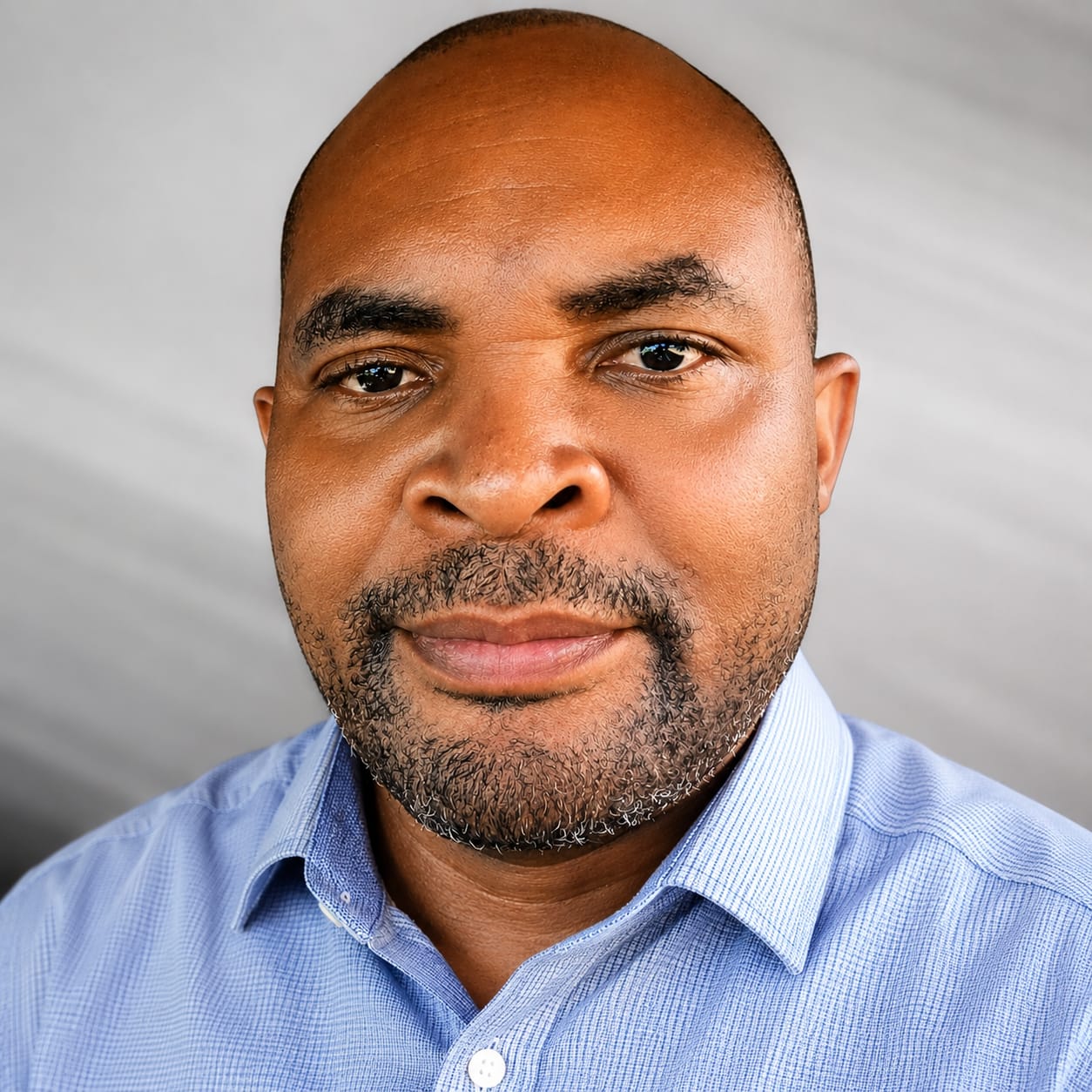
- Ashford Kimani reflects on Kamarie Holland’s murder and what happens when systems meant to protect children fail.
- He argues that Kamarie’s tragedy carries urgent lessons for Kenya on child abuse, exploitation and protection.
- Kimani says communities must protect vulnerable children before abuse escalates into irreversible tragedy.
Kamarie Holland was a five-year-old girl from Columbus, Georgia, whose life ended in December 2021 in one of the most disturbing child-murder cases to reach Alabama courts. She was reported missing on December 13, 2021, and her body was later discovered in the basement of an abandoned house in Phenix City, Alabama. Investigators identified Jeremy Tremaine Williams, who had previously lived at the property, as the principal suspect.
There are some crimes that are so cruel that words seem inadequate. The murder of five-year-old Kamarie Holland is one of them. Her story is not merely about a horrific crime committed in Alabama. It is about the vulnerability of children, the responsibilities of adults and the devastating consequences that occur when those entrusted with protecting children become part of the danger.
Kamarie was only five years old. At that age, a child should be thinking about toys, cartoons, school, friends, family and the simple pleasures of childhood. She should have been learning new things, discovering the world and slowly developing dreams about what she might become. She should have had decades ahead of her. Instead, her life ended in unimaginable violence.
The circumstances surrounding her death are particularly disturbing. She was sexually assaulted and murdered after being taken to an abandoned house. Her death exposed a horrifying chain of exploitation and betrayal involving adults who should have protected her. Her mother, Kristy Siple, later pleaded guilty to sex trafficking her daughter and received a 20-year prison sentence. Jeremy Tremaine Williams was convicted of capital murder and sentenced to death.
But while attention naturally focuses on the perpetrator and the punishment imposed by the justice system, the person who should remain at the centre of this story is Kamarie herself. She was not a case number. She was not merely a victim in a criminal proceeding. She was a little girl with a life, a personality, hopes and a future that was brutally taken away.
Her story should force us to ask uncomfortable questions about the world we have created for children. How many children are being abused today without anyone knowing? How many are being sexually exploited inside homes, institutions and communities? How many are afraid to speak because the person hurting them is also the person they depend upon for food, shelter, affection or protection? How many warning signs are ignored until something irreversible happens?
A tragedy with lessons for Kenya
Child abuse is not an American problem. It is a human problem. It happens in Africa, Europe, Asia, North America and South America. It happens in wealthy neighbourhoods and poor communities. It happens in cities, towns and villages. It happens behind the walls of respectable homes and in places where nobody is watching. Sometimes the perpetrator is a stranger, but sometimes the danger comes from someone the child already knows and trusts.
That reality should make Kamarie’s story deeply relevant to Kenya. We cannot read about the suffering of a child thousands of kilometres away and convince ourselves that such things only happen elsewhere. Kenyan children are vulnerable too. Some experience sexual abuse within families. Others are exploited by adults they know. Some are trafficked for money. Others live with physical violence, neglect, manipulation and intimidation. Many children suffer silently because they do not know whom to tell or because they fear that nobody will believe them.
A child is particularly vulnerable because childhood is built on trust. Children depend on adults for almost everything. They depend on parents and guardians for protection, teachers for guidance, communities for safety and institutions for justice. When those systems fail, the child can be left almost completely defenceless.
That is why child protection cannot be left to parents alone. It must become a responsibility shared by the entire community. Teachers must be alert to sudden changes in children’s behaviour. Parents must listen carefully when children express fear or discomfort. Religious institutions must create environments where children are safe. Neighbours must not ignore suspicious behaviour. Social workers and child-protection officers must have the resources necessary to intervene. Police must treat allegations involving children with seriousness and urgency. Courts must ensure that perpetrators are held accountable while victims and their families receive appropriate support.
Prevention must come before tragedy
Most importantly, prevention must come before tragedy. Once a child has been sexually abused, tortured or murdered, no punishment can restore the childhood that was stolen. A prison sentence cannot give a family back its daughter. An execution cannot turn back time. Justice matters enormously, but prevention matters even more.
Children must be taught that their bodies belong to them. They must have age-appropriate knowledge about boundaries, inappropriate behaviour and how to seek help. Adults must create safe channels through which children can report abuse without fear of punishment, embarrassment or disbelief. And when a child speaks, adults must listen.
We must also confront the conditions that make vulnerable children easier targets for exploitation. Poverty, neglect, homelessness, family instability and lack of social support can expose children to predators. None of these circumstances justifies abuse, but societies that fail to protect vulnerable families create opportunities for exploitation to flourish.
A child must never become a commodity. A child’s innocence must never have a price. A child’s body must never be exchanged for money, favours or anything else. And a child’s silence must never be mistaken for consent.
As Jeremy Tremaine Williams faces the ultimate consequence of his conviction, the world should remember that the central tragedy is not that a convicted killer is dying. The central tragedy is that a five-year-old girl died at all.
Kamarie deserved to grow up. She deserved to attend school, make friends, discover her talents, experience adolescence, graduate, fall in love, build a career and perhaps one day become a mother herself. She deserved ordinary problems and ordinary joys. She deserved the opportunity to make mistakes, learn, dream and grow old.
She deserved a future.
Everywhere in the world, children are hurting. Some are hungry. Some are neglected. Some are abused. Some are trafficked. Some are living with violence. Some are carrying secrets that no child should ever have to carry.
We owe these children more than outrage after tragedy. We owe them protection before tragedy. We owe them adults who will listen, institutions that will act and communities that will refuse to look away.
Because behind every case file is a child. Behind every statistic is a child. Behind every headline is a human life.
READ ALSO: When the teacher goes online, professionalism must follow
And every child deserves the chance to grow up and become a story of hope—not a story of unimaginable loss.
By Ashford Kimani
Ashford Kimani is a teacher of English and Literature and comments on education and social affairs.
You can also follow our social media pages on Twitter: Education News KE and Facebook: Education News Newspaper for timely updates.
>>> Click here to stay up-to-date with trending regional stories
>>> Click here to read more informed opinions on the country’s education landscape
>> Click here to stay ahead with the latest national news.