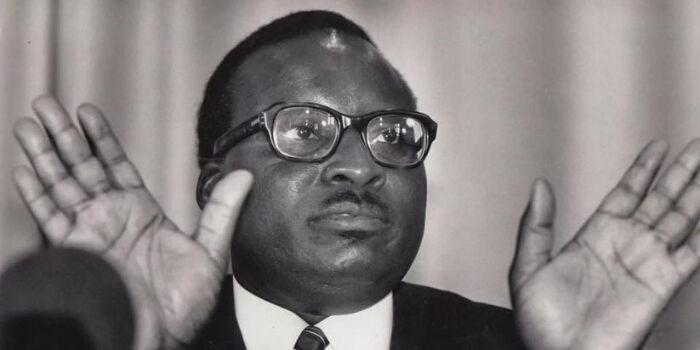
- John Andrew Omanga and Dr Zachary Onyonka achieved historic milestones in Gusii’s higher education journey.
- Omanga became the first Kisii widely recorded to attain a university degree at Makerere.
- Onyonka later became the community’s first PhD holder before building a distinguished political career.
The story of education among the Abagusii includes pioneers who broke barriers and demonstrated that children from the Gusii highlands could compete at the highest levels of education.
Two names stand out in that history: John Andrew Omanga, remembered as the first Kisii to attain a university degree, and Dr Zachary Theodore Onyonka, widely recognised as the first Kisii man to earn a PhD.
Dr Zachary Theodore Onyonka was born on June 28, 1939, in Meru District, where his father, Godrico Oeri Mairura, was serving as a police officer. His mother was Kerobina Kebati. The family later moved to Kisii after his father left the police service.
Onyonka studied at St Mary’s Nyabururu before proceeding to St Mary’s Yala. He later secured an opportunity to study at the University of Puerto Rico in San Juan, graduating in 1965.
In 1966, he joined Syracuse University in New York for a Master’s degree in Economics, specialising in money and banking. He subsequently pursued doctoral studies while working as a tutorial fellow at the University of Nairobi.
He completed his PhD in 1969, becoming the first Kisii man widely recorded to have attained a doctorate. He subsequently joined the University of Nairobi’s Department of Economics as a lecturer.
Politics, however, soon drew him away from academia.
Onyonka entered Parliament in 1969 after winning the Kitutu Chache seat against Lawrence Sagini. His political career would span more than two decades and include several Cabinet appointments under Presidents Jomo Kenyatta and Daniel arap Moi.
He became one of the most influential political figures from Gusii and served in portfolios that included Economic Planning and Development and Foreign Affairs.
In family life, Onyonka had seven children. His son Richard Onyonka later followed him into politics and is the Senator for Kisii County.
Dr Zachary Onyonka died in October 1996 while receiving treatment in Britain, leaving behind a legacy as a scholar, economist and long-serving national political leader.
Omanga opened the university door
Before Onyonka attained his doctorate, John Andrew Omanga had helped establish another significant milestone in Gusii’s educational history.
Born around 1932, Omanga’s educational journey took him through some of the most prestigious institutions available to African students during the colonial period.
He was admitted to Yala Secondary School in 1947 and later joined Mangu High School in 1950. In 1954, he enrolled at Makerere University College in Kampala, Uganda, where he studied English, Geography and Economics for a Bachelor of Arts degree.
Omanga is remembered as the first Kisii to be conferred a university degree, a distinction that placed him among an exceptionally small group of university-educated Africans of his generation.
His achievement carried significance beyond the certificate itself. At a time when university education remained inaccessible to most Africans, his progression to Makerere provided a powerful example of what formal education could make possible.
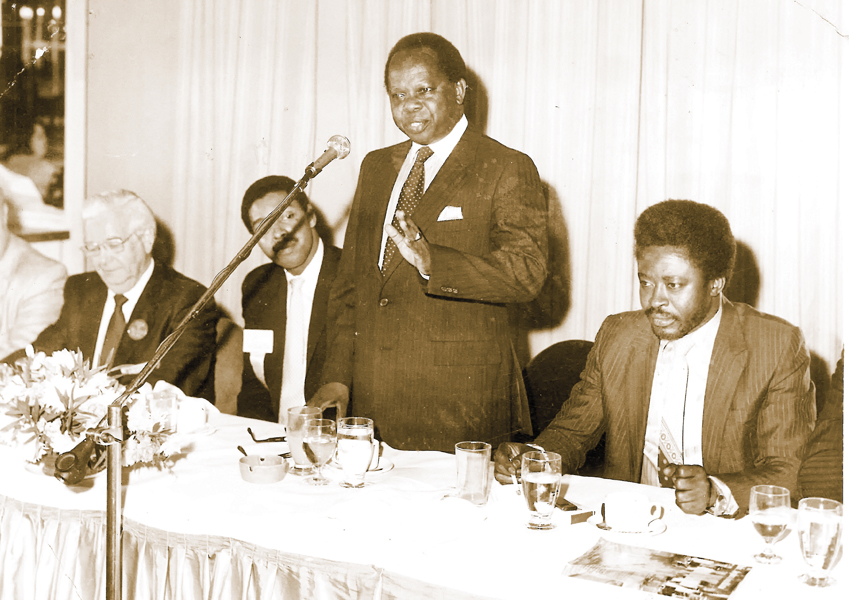
He later entered public service and rose through the ranks of government.
In May 1966, President Jomo Kenyatta appointed Omanga Permanent Secretary in the Office of the Vice-President and Ministry of Home Affairs, placing him among the senior African administrators helping to shape the young country’s government.
From public service to Parliament
Omanga’s elective political career came later.
In 1979, he contested the larger Nyaribari Constituency and defeated veteran politician Lawrence Sagini. Parliament’s historical register lists Andrew John Omanga among MPs representing Nyaribari during the period.
His victory opened another chapter in his public career, with President Daniel arap Moi appointing him to the Cabinet.
Among the portfolios he held was Environment and Natural Resources.
He subsequently became closely associated with grassroots development in Nyaribari, where his legacy remains tied to education, infrastructure and public administration.
His parliamentary career later included representation of Nyaribari Chache, a fact acknowledged in the National Assembly by succeeding MPs.
Omanga died in 2004 at the age of 72. Contemporary reports said he left behind two widows, Clare and Grace, and 10 children.
Clare Omanga’s own public-service legacy
His widow Clare Omanga also carved out a place in Gusii’s public history.
She became the first woman mayor of Kisii, in addition to serving in women’s leadership and community development initiatives.
Her own public role means the Omanga family story extends beyond John Andrew’s university milestone and Cabinet career into local government and community leadership.
Two milestones in one education story
Together, Omanga and Onyonka represent two important milestones in the history of higher education among the Abagusii.
Omanga helped open the university door by becoming the first Kisii widely recorded to attain a degree.
Onyonka followed a generation later and went further academically, earning the first PhD associated with the community before moving from university teaching into national politics.
Their paths were different, but education stood at the centre of both.
Omanga moved from Makerere into senior public administration, Parliament and Cabinet.
Onyonka moved from Puerto Rico and Syracuse University into economics, university teaching, Parliament and Cabinet.
Their lives helped reinforce a culture in which education came to be regarded not merely as personal advancement, but as a route into professional achievement, leadership and public service.
For generations that followed, their stories offered evidence that children from Gusii could move from rural schools to universities, government offices and national leadership.
READ ALSO: Sh11.7 billion game-changer: MMUST plots new era in medicine, mental health and innovation
That is perhaps their most enduring educational legacy.
By Enock Okongó
You can also follow our social media pages on Twitter: Education News KE and Facebook: Education News Newspaper for timely updates.
>>> Click here to stay up-to-date with trending regional stories
>>> Click here to read more informed opinions on the country’s education landscape