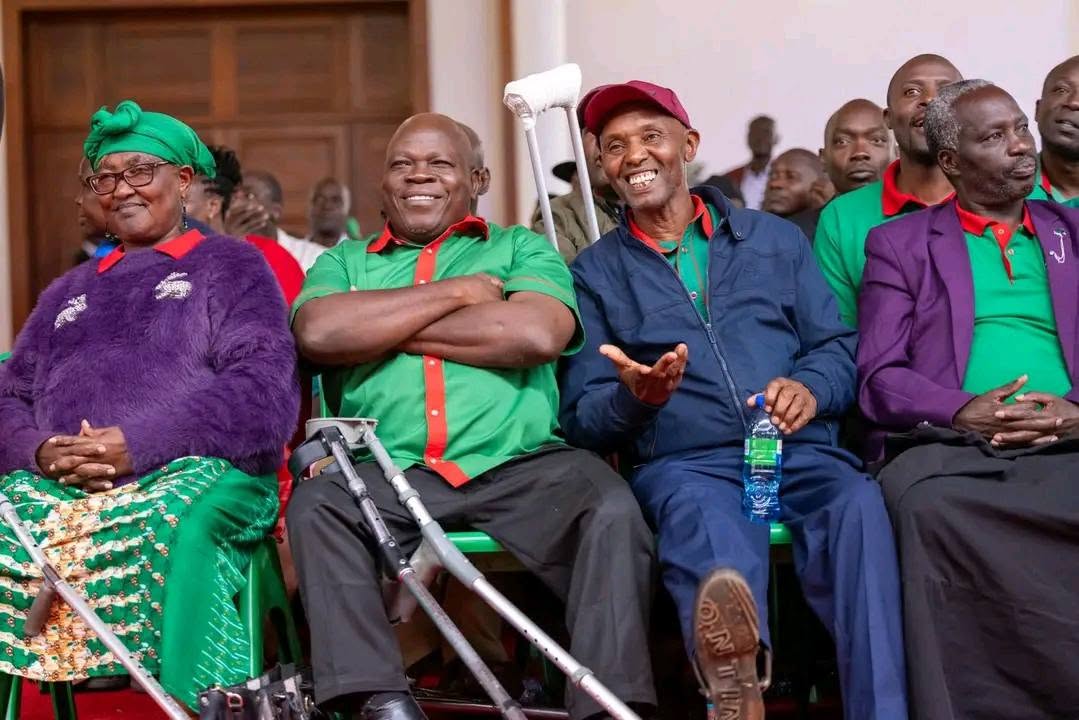
- Teachers with disabilities account for only 1.7 per cent of TSC’s workforce, below the five per cent public employment benchmark.
- Hillary Muhalya examines the representation gap, including disparities across primary, secondary, junior schools and teacher training colleges.
- The findings point to the need for deliberate recruitment, accessible workplaces, mentorship and fair career progression.
Kenya’s public teaching workforce has a significant inclusion gap, with teachers with disabilities accounting for only 1.7 per cent of all teachers employed by the Teachers Service Commission (TSC). The figure is less than half of the five per cent benchmark required for persons with disabilities in public employment.
The finding, contained in a report by the National Gender and Equality Commission (NGEC), raises important questions about whether Kenya’s commitment to equal employment opportunities is being fully translated into practice within the teaching profession.
The Teachers of Kenya: Status of Equality and Inclusion in the Teaching Workforce in Kenya, 2025 report was released in July 2026 following an audit conducted in June 2025. It examined the representation and distribution of teachers across different levels of the education system, with particular attention to gender, age, disability, marginalisation and other inclusion indicators.
According to the audit, TSC employed 425,613 teachers at the time of the assessment. Only 7,219 were persons with disabilities. Of these, 4,537 were men while 2,682 were women.
The numbers reveal not only an overall representation gap but also a gender imbalance among teachers with disabilities. Men accounted for roughly 63 per cent of teachers with disabilities, while women represented about 37 per cent.
The disparity becomes more visible when the figures are broken down across different levels of the education system.
Primary schools had the largest number, with 4,523 teachers with disabilities. They included 2,729 men and 1,794 women.
Secondary schools had 2,409 teachers with disabilities, comprising 1,637 men and 772 women. Junior schools had 231, including 131 men and 100 women.
The country’s 37 teachers’ training colleges had 56 tutors with disabilities, consisting of 40 men and 16 women.
While primary and secondary schools have relatively larger numbers because they employ the bulk of teachers, the overall picture remains one of under-representation across the teaching profession.
Representation must go beyond recruitment
The audit therefore presents more than a numerical problem. It raises a broader question about access, opportunity, career progression and participation of persons with disabilities in one of the country’s most important professions.
Kenya has a legal obligation to promote inclusion in employment. The five per cent benchmark for persons with disabilities provides a clear measure against which institutions can assess their performance.
For TSC, closing the gap will require more than waiting for applicants with disabilities to compete within the existing recruitment system. It will require deliberate and sustained measures to identify, attract, recruit, retain and promote qualified teachers with disabilities.
The NGEC report recommends that TSC gradually increase the representation of teachers with disabilities until the five per cent benchmark is achieved across all levels and cadres.
This is particularly important because representation should not end at recruitment. A truly inclusive teaching service must also create opportunities for career advancement.
Teachers with disabilities should be able to compete fairly for leadership positions, promotions, training opportunities and other professional responsibilities. Disability should not become an invisible ceiling that limits a teacher’s career after entry into the profession.
The NGEC has therefore called for stronger leadership pathways and mentorship programmes to enable teachers with disabilities to progress into decision-making positions.
Such interventions could help change the perception of disability from being a limitation to being one aspect of diversity within the teaching workforce.
Accessibility remains critical
The audit also examined institutional mechanisms for addressing gender-based violence involving teachers and learners. It was part of a broader effort by NGEC to generate evidence that can guide policies on equality and inclusion in the teaching profession.
Importantly, the exercise covered teachers employed by TSC as at June 2025. It did not include teachers working in private schools, teachers employed by county governments or those engaged by boards of management.
The data was collected through a tool developed by NGEC and refined in collaboration with TSC. Information was gathered on teachers according to sex, age, disability status and marginalisation.
The findings provide a useful baseline for measuring progress in the years ahead.
But the real test will be what happens after the audit.
A policy document can identify the gap, but only implementation can close it. TSC will need to translate the recommendations into measurable recruitment and human-resource strategies, with clear targets for increasing the number of teachers with disabilities.
The issue should also be viewed within the wider transformation of Kenya’s education system. As schools move towards more inclusive approaches to learning, the teaching workforce itself should reflect the diversity of the learners it serves.
A learner with a disability should be able to see teachers with disabilities occupying classrooms, leadership positions and professional decision-making spaces. Such representation can provide powerful examples of possibility, resilience and achievement.
At the same time, inclusion should not be reduced to meeting a five per cent quota. The quality of recruitment must remain important. Persons with disabilities who possess the required qualifications and professional competencies should have genuine and fair opportunities to enter and progress within the teaching service.
The challenge therefore lies in combining merit with affirmative action and reasonable accommodation.
TSC and other education stakeholders also need to examine whether recruitment processes, interview venues, communication systems, deployment practices and workplace infrastructure are sufficiently accessible.
An applicant can be qualified and willing to serve but still be disadvantaged by an inaccessible recruitment process. Similarly, a teacher may secure employment but face unnecessary barriers because of inadequate workplace accommodation.
Inclusion must include educators themselves
The audit should therefore become a starting point for a wider conversation about inclusive employment in education.
The 7,219 teachers with disabilities currently in the TSC workforce represent an important contribution to Kenya’s education system. But the gap between 1.7 per cent and the five per cent benchmark shows that much more needs to be done.
Closing that gap will require deliberate recruitment, accessible workplaces, mentorship, fair promotion, leadership opportunities and consistent monitoring.
Kenya cannot claim to have built an inclusive education system while significant sections of the teaching workforce remain under-represented.
READ ALSO: Who is paying the bill? Auditor-General puts KESSHA payments by public schools under scrutiny
The classroom should be a place where diversity is visible, valued and respected. That principle must begin with the people standing at the front of the classroom.
The message from the audit is therefore clear: inclusion in education must include the educators themselves.
By Hillary Muhalya
You can also follow our social media pages on Twitter: Education News KE and Facebook: Education News Newspaper for timely updates.
>>> Click here to stay up-to-date with trending regional stories
>>> Click here to read more informed opinions on the country’s education landscape