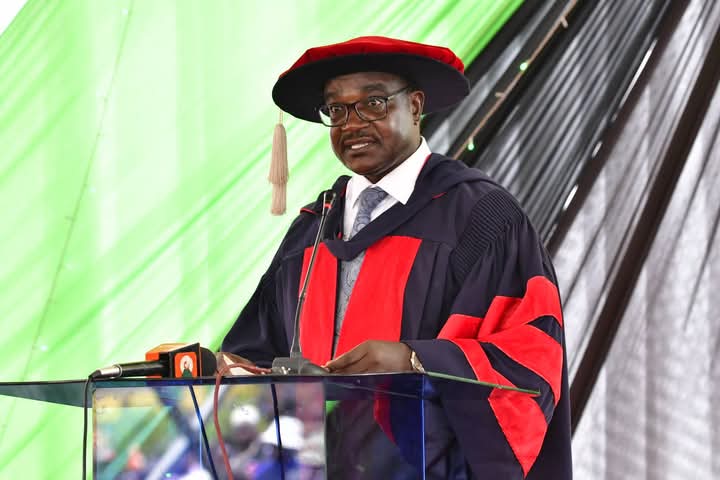
- Appointments and reappointments taking effect from August 7, 2026 signal fresh leadership changes across key public institutions.
- Education CS Julius Migos Ogamba has appointed and reappointed members to several university councils across the country.
- The changes come as universities confront financial pressures, governance challenges, infrastructure demands and growing student enrolment.
President William Ruto’s administration has embarked on another round of changes to the leadership of key state agencies, with a series of appointments and reappointments affecting institutions responsible for wildlife conservation, agricultural research, transport, roads, water, trade and higher education.
The changes, published through Gazette Notices dated August 7, 2026, represent a significant reshaping of governance structures across several public institutions. While some appointments retain experienced office holders, others introduce new faces into strategic boards expected to oversee institutions at the heart of Kenya’s economic and social transformation.
Among the most consequential changes for the education sector are those announced by Education Cabinet Secretary Julius Migos Ogamba, who has made a series of appointments and reappointments to university councils.
The changes come at a critical moment for Kenya’s university sector, which is grappling with financial pressures, governance questions, rising student enrolment, infrastructure demands, staffing challenges and the continuing transition towards a more sustainable higher-education financing framework.
Ogamba reappointed Prof. Ezra Maritim as Chairperson of the Council of the Open University of Kenya for another three-year term.
The reappointment provides continuity at an institution whose mandate is closely linked to expanding access to higher education through flexible and technology-enabled learning.
The Education CS also appointed or reappointed Lawrence Muchilwa, Dr Susan Kiragu and Dr McOkwiri Kevin Juma as members of the university council.
Their appointment places the council at the centre of strategic decisions concerning institutional growth, academic governance, financial stewardship and the long-term positioning of the Open University of Kenya.
At Nyandarua University College, Ogamba appointed Mumbi Kahindu, Christine Jepyegon Ronoh, Job Wafula Chelongo, Peter Maru Kariuki and Julius G. Obare Mokogi as members of the council, each serving for three years.
The appointments are particularly important as university colleges continue to develop their institutional identities, programmes, infrastructure and governance systems.
At Laikipia University, Fatuma Abdi was appointed as a member of the university council for a three-year period. The appointment also revoked an earlier appointment contained in Gazette Notice No. 11252 of 2026.
Ogamba further appointed Dr David Gikungu to the Council of Meru University of Science and Technology, also for a three-year term.
Taken together, the appointments point to a broader effort to ensure that university councils have constituted leadership capable of providing strategic oversight at a time when higher education is undergoing substantial transformation.
University councils are not merely ceremonial bodies.
They provide institutional oversight and play an important role in strategic planning, financial governance, policy direction, accountability and the protection of institutional interests.
This makes the latest appointments more than routine administrative changes.
Kenya’s universities are operating in an increasingly demanding environment. Institutions are expected to expand access while simultaneously improving academic quality, strengthening research, modernising infrastructure, embracing technology and managing limited resources.
The composition and effectiveness of university councils therefore have a direct bearing on whether institutions can respond successfully to these pressures.
The new appointments will consequently be watched closely for their ability to strengthen accountability, professional management and strategic decision-making within universities and university colleges.
State agency boards reshaped
Beyond education, President Ruto reappointed Lucy W. Waruingi as Chairperson of the Governing Board of the Wildlife Conservation Trust Fund for another three-year term beginning August 7, 2026.
The reappointment was made under the Wildlife Conservation and Management Act.
The Wildlife Conservation Trust Fund plays an important role in supporting conservation-related initiatives, making board-level leadership significant to Kenya’s wider environmental and tourism agenda.
President Ruto also appointed Benson Gichohi Ngure as the Non-Executive Chairperson of the Kenya Agricultural and Livestock Research Organization (KALRO) for three years.
KALRO sits at the centre of agricultural research and innovation, making its leadership important to food security, climate resilience, livestock development and the modernisation of Kenya’s agricultural sector.
Roads and Transport Cabinet Secretary Davis Chirchir reappointed Anna Robai Makawa, Dominic Kipkoech Koskei and Annastacia Mumbua Musyimi to the Board of Directors of the Nairobi Metropolitan Area Transport Authority (NaMATA).
Their new three-year terms also began on August 7.
Chirchir additionally appointed Mohamed Rashid Abdille to the Board of the Kenya Rural Roads Authority (KeRRA) for three years.
The appointments come as Kenya continues to confront major questions around urban mobility, road infrastructure, public transport efficiency and connectivity between rural communities and economic centres.
Tourism and Wildlife Cabinet Secretary Rebecca Miano reappointed George Fredrick Mosiori, Mark Rotich and Jane Naini Meriwas as members of the Governing Board of the Wildlife Conservation Trust Fund.
She also appointed Robert Nyanjui Wainaina to the board.
The appointments, like the presidential reappointment of the chairperson, run for three years from August 7, 2026.
The changes are expected to contribute to the governance of conservation financing at a time when Kenya is seeking to balance environmental protection with tourism, community interests and economic development.
Investment, Trade and Industry Cabinet Secretary Lee Kinyanjui appointed Aaron Nanok as Chairperson of the Board of the Kenya Trade Remedies Agency.
Nanok will serve for three years from August 7.
The agency has an important role in addressing unfair trade practices and protecting domestic industries within the framework of Kenya’s trade policy.
Water, Sanitation and Irrigation Cabinet Secretary Eric Murithi Mugaa reappointed Patrick Musili Mbangula as Non-Executive Chairperson of the Board of the Kenya Water Institute for three years.
He also reappointed Mwololo Benjamin Kyalo as a member of the National Water Harvesting and Storage Authority.
The appointments come against the backdrop of Kenya’s continuing need to expand water storage, improve access to safe water and strengthen institutional capacity in the water sector.
Gender, Culture and Children Services Cabinet Secretary Hanna Wendot Cheptumo appointed Caroline Jerobon Rotich as a member of the National Lottery Board for three years.
Her appointment revoked that of Teresia Jerusah Michael, which had been made through Gazette Notice No. 14799 of 2024.
Meanwhile, East African Community, ASALs and Regional Development Cabinet Secretary Beatrice Askul Moe reappointed Joseph Lorunyei Kuwam to the Board of Directors of the Ewaso Ng’iro North River Basin Development Authority for one year from August 7, 2026.
Focus turns to institutional performance
Although the appointments span different sectors, they share a common feature: the strengthening or renewal of leadership at institutions responsible for delivering critical public services and supporting national development.
For the education sector, however, the university council changes carry particular significance.
Kenya’s higher-education system is at an important crossroads. Universities need boards and councils that can combine financial discipline with academic ambition, institutional autonomy with accountability, and expansion with quality.
The effectiveness of the newly constituted councils will therefore be measured not simply by the names appearing in the Gazette, but by what happens inside the institutions they oversee.
Can universities improve financial management?
Can they expand infrastructure without compromising quality?
Can they strengthen research and innovation?
Can they protect academic standards while widening access?
And can they become more responsive to the changing needs of Kenya’s economy and its young population?
Those questions will ultimately define the significance of Ogamba’s latest appointments.
The August 7 changes should therefore be viewed not merely as routine board appointments, but as part of a wider governance conversation within Kenya’s public institutions.
For universities in particular, the next phase must move beyond appointments to measurable institutional performance, stronger accountability and better outcomes for students.
By Hillary Muhalya
You can also follow our social media pages on Twitter: Education News KE and Facebook: Education News Newspaper for timely updates.
>>> Click here to stay up-to-date with trending regional stories
>>> Click here to read more informed opinions on the country’s education landscape