- Yabesh Onwonga argues that recurring funding shortfalls for national examinations reflect poor planning, misplaced priorities and a failure to protect one of Kenya’s most important public responsibilities.
- He says learners, teachers and examination officials should never bear the burden of avoidable budget crises.
How does a government get caught off guard by national examinations?
They are held every year. The number of candidates is known well in advance. The examination calendar is fixed. Procurement, printing, transport, security deployment and personnel planning begin months before the first paper is opened. There is nothing sudden or unforeseen about the exercise.
Yet Kenya once again finds itself confronting a reported Sh7 billion funding shortfall for the Kenya National Examinations Council (KNEC). This is not merely a budget deficit. It is an indictment of how the State manages one of its most fundamental constitutional obligations.
National examinations are not optional government programmes that can be postponed until money becomes available. They are the backbone of Kenya’s education system. They determine progression to secondary schools, universities and technical institutions. They influence careers, scholarships and the future of millions of young people.
When such a critical national exercise is thrown into uncertainty by inadequate funding, the problem is no longer financial. It is political. It is administrative. Above all, it is a failure of leadership.
Examinations deserve predictable funding
The consequences extend far beyond examination papers.
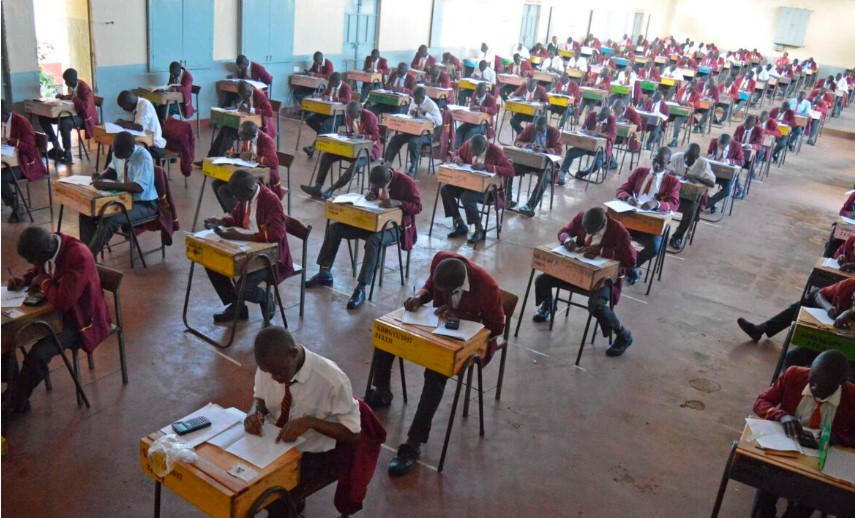
Every year, thousands of professionals sacrifice their time to ensure the credibility of Kenya’s examinations. Examiners spend weeks marking scripts. Centre managers coordinate complex logistics. Supervisors and invigilators work long hours under intense pressure to safeguard the integrity of the process. Security officers escort confidential examination materials across the country, often to remote regions under challenging conditions. Drivers, distribution teams and administrative staff all form part of a carefully coordinated national operation.
Many of these officers have repeatedly expressed frustration over delayed reimbursement of allowances and payments after completing their assignments. Such delays do more than inconvenience workers. They undermine morale, erode confidence in public institutions and send the wrong message to people entrusted with protecting one of the country’s most important public functions.
No government should expect professionalism while treating those delivering essential public services as creditors waiting indefinitely to be paid.
Ironically, the State rarely appears to struggle when financing political priorities. Funds somehow materialise for endless official travel, bloated administrative expenditure and projects whose public value is often questioned. Yet, when it comes to financing examinations that directly shape the future of Kenya’s children, the Treasury suddenly discovers fiscal constraints.
That contradiction exposes a troubling distortion of national priorities.
Parents have already paid their price through school fees, transport costs and countless personal sacrifices. Teachers have fulfilled their responsibility by preparing learners throughout the academic year. Candidates have endured months of revision, anxiety and expectation. KNEC has undertaken months of planning.
The one institution that appears unprepared is the one that controls the national purse.
Education cannot continue operating under a culture of financial emergency. Every examination season should not become a frantic search for supplementary funding or last-minute Treasury interventions. A country that plans for elections, national celebrations and major infrastructure projects should certainly be capable of planning for examinations whose dates are known years in advance.
Budgeting is ultimately an expression of values. Governments fund what they genuinely consider important.
If examinations are consistently forced to compete for resources at the eleventh hour, then the message being communicated is unmistakable: education is celebrated in speeches but neglected in practice.
Education must never become a budget afterthought
The damage extends beyond this year’s candidates. Public confidence in the examination system depends not only on credible results but also on confidence that every aspect of the process—from printing and distribution to supervision, marking and payment of personnel—is adequately supported. Chronic funding uncertainty creates unnecessary operational risks and places avoidable pressure on institutions that should be focused solely on maintaining examination integrity.
Kenya’s education system deserves better than annual budget brinkmanship.
The Treasury, the Ministry of Education and Parliament must move beyond crisis management and establish predictable, ring-fenced financing for national examinations. KNEC should not have to plead for resources every examination cycle. Those who supervise, invigilate, mark and secure examinations should not be left wondering when they will receive their lawful dues after fulfilling demanding national assignments.
A nation that cannot guarantee the smooth financing of its examination system is gambling with the aspirations of an entire generation. The cost of that gamble cannot be measured merely in billions of shillings. It is measured in diminished public trust, demoralised education professionals and anxious learners whose futures should never depend on last-minute budget negotiations.
READ ALSO: Why Australia is turning off screens to help children read, think and learn better
Perhaps the first examination that should be administered this year is not to Kenya’s candidates, but to the government itself. The subjects are planning, accountability and national priorities.
On the evidence before the country, it would struggle to earn a passing grade.
By Yabesh Onwonga
You can also follow our social media pages on Twitter: Education News KE and Facebook: Education News Newspaper for timely updates.
>>> Click here to stay up-to-date with trending regional stories
>>> Click here to read more informed opinions on the country’s education landscape
>>> Click here to stay ahead with the latest national news.