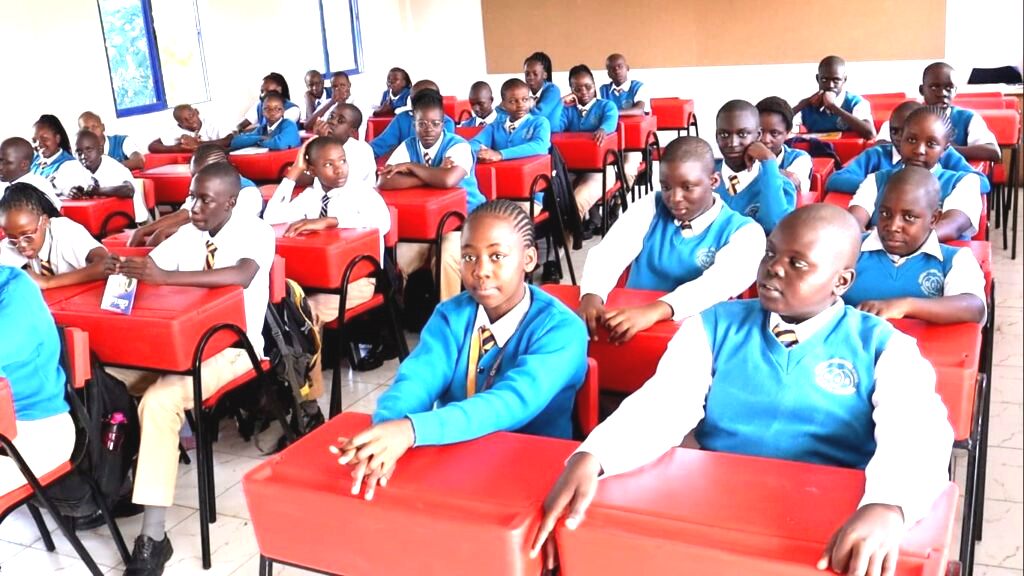
- Private schools have become a key pillar of Kenya’s education system, but many teachers continue to work under difficult conditions.
- Low pay, delayed salaries, excessive workloads and job insecurity undermine teacher welfare and ultimately affect the quality of education.
- Ashford Kimani argues that protecting teachers’ rights is essential to sustaining excellence in private education.
Private schools occupy an important place in Kenya’s education sector. They have expanded access to education, created employment opportunities and, in many cases, built strong reputations through impressive academic performance, discipline and innovation. Their modern facilities, attractive learning environments and excellent examination results are often persuade parents that their children are receiving quality education.
Yet behind the polished school gates, colourful brochures and carefully marketed success stories lies a difficult reality that is rarely discussed openly: the working conditions of many private school teachers.
For years, private school teachers have endured meagre salaries, unreasonable workloads, delayed pay, job insecurity, harsh treatment and, in some cases, humiliation and harassment. Many continue working silently because they fear losing their jobs. Their silence should not be mistaken for satisfaction; often, it is a survival strategy.
A teacher may be expected to report to school before sunrise and leave long after the final lesson. Beyond classroom teaching, they may supervise morning and evening preps, mark books and examinations, prepare schemes of work and lesson plans, attend staff meetings, manage co-curricular activities, conduct remedial classes, communicate with parents and perform administrative duties. Some are also assigned boarding, transport, marketing or admissions responsibilities without additional compensation.
The workload is enormous, yet salaries are frequently disproportionate to the demands of the job. Some teachers earn wages that barely meet their basic needs despite possessing professional qualifications and years of experience. Others are paid irregularly, forcing them to borrow money, delay rent payments or struggle to support their families.
Delayed salaries are particularly damaging. A school may continue collecting fees from parents while teachers wait for payment. Teachers are still expected to report on time, teach enthusiastically, maintain discipline and demonstrate commitment, even as financial uncertainty follows them into the classroom. It is difficult to demand professional excellence while denying teachers the economic stability needed to live with dignity.
Job insecurity compounds the problem. Some teachers work without clear written contracts or under arrangements that provide little protection. Their employment may depend entirely on the personal preferences of school owners or administrators. A disagreement, a complaint about salary or an attempt to question an unfair decision can easily be interpreted as insubordination.
In such environments, teachers learn to remain silent. They tolerate unreasonable demands because employment opportunities are limited and replacement is often easy. Some may be dismissed suddenly, asked to leave without adequate explanation or replaced during the school term. The fear of unemployment becomes a powerful tool for controlling workers.
There are also disturbing reports of harsh management practices. Some teachers are reprimanded publicly, insulted before colleagues, humiliated during meetings or constantly threatened with dismissal. Constructive supervision is replaced by intimidation, while professional dialogue gives way to commands. A teacher who makes a genuine mistake may be treated as though they have committed a serious offence.
Discipline is necessary in every institution, but it must be fair, transparent and proportionate. Unfortunately, some private schools turn minor matters into major disciplinary cases. Teachers may receive warnings for small errors, be targeted repeatedly or become victims of workplace witch-hunts. Rules may be applied selectively, with some employees protected while others are punished harshly.
Such practices create fear and mistrust. Teachers begin to work defensively rather than creatively. They avoid expressing professional opinions, proposing new ideas or questioning decisions. Innovation suffers because employees become more concerned with protecting their jobs than improving the institution.
Teacher welfare determines educational quality
The pressure to produce excellent examination results can also become unreasonable. Private schools often market themselves through academic performance, making teachers central to their commercial success. However, when results decline, teachers may be blamed without considering learner ability, inadequate resources, large classes, frequent programme changes or unrealistic targets.
Education is not a factory where identical inputs automatically produce identical outcomes. Academic performance is influenced by many factors, including learners’ backgrounds, motivation, attendance, parental support and access to learning resources. Holding teachers solely responsible for poor results is both unfair and professionally unsound.
The consequences of poor working conditions extend beyond teachers. Learners are also affected. An underpaid, overworked and insecure teacher may experience low morale, stress and professional exhaustion. Frequent staff turnover disrupts learning, weakens mentorship and deprives learners of experienced educators.
Parents should therefore recognise that teacher welfare is directly connected to educational quality. A school cannot sustainably achieve excellence while neglecting the professionals responsible for teaching, guiding and mentoring learners.
Private school owners and managers must recognise that teachers are not merely workers who can be replaced at will. They are trained professionals whose knowledge, commitment and sacrifice build the reputation of schools. Many institutions celebrate excellent examination results without adequately acknowledging the teachers who make those achievements possible.
Teachers deserve clear employment contracts, fair salaries, timely payment, reasonable workloads and respectful treatment. They should also have access to professional development and transparent disciplinary procedures. Where performance concerns arise, teachers should be supported, mentored and evaluated objectively rather than threatened or humiliated.
There is also a need for stronger labour awareness and collective advocacy. Many private school teachers are unaware of their employment rights, while others know those rights but fear exercising them. Relevant labour institutions, professional associations and education stakeholders should create safe channels through which teachers can seek advice and report exploitation without risking immediate victimisation.
Private education has made significant contributions to Kenya’s development. However, its success should not be built on the insecurity and suffering of teachers. Financial sustainability is important, but it cannot justify exploitation. Discipline is necessary, but it must never become oppression. High standards are desirable, but they should not be enforced through fear.
A school that respects teachers is more likely to retain experienced staff, build a positive professional culture and achieve sustainable academic success. Teacher welfare is not an unnecessary expense; it is an investment in educational quality.
The time has come to move the conversation beyond school fees, infrastructure and examination results. The welfare of private school teachers must become a central measure of institutional excellence.
A school may have impressive buildings and outstanding grades, but if its teachers are underpaid, insecure, mistreated and afraid, its success rests on an unstable foundation.
READ ALSO: A message to students joining universities and colleges this year
Teachers deserve more than praise during celebrations. They deserve fairness in employment, security in their work, timely salaries and dignity in the workplace. The future of private education depends not only on how well schools teach learners, but also on how humanely they treat the teachers entrusted with that responsibility.
By Ashford Kimani
Ashford Kimani is a teacher of English and Literature who writes on education and social affairs.
You can also follow our social media pages on Twitter: Education News KE and Facebook: Education News Newspaper for timely updates.
>>> Click here to stay up-to-date with trending regional stories
>>> Click here to read more informed opinions on the country’s education landscape
>>> Click here to stay ahead with the latest national news.