- The writer warns that hasty syllabus delivery in Kenyan schools undermines deep learning, leaving students with shallow understanding and long‑term academic scars.
- Drawing on Jerome Bruner’s Spiral Curriculum and Salman Khan’s observations, Buhere emphasises that concepts build progressively and require thorough engagement at a prescribed pace to ensure mastery.
- Experts and educators argue for a relaxed, structured approach to curriculum delivery, urging schools to “uncover” knowledge with students rather than mechanically rushing to “cover” the syllabus.
A spectre is haunting primary and secondary schools in this country—the spectre of hasty delivery of the prescribed curriculum. The ghost has unhinged the teaching and learning environment that defined the educational experience that Kenyans aged over 50 years had.
The spectre has irremediably weakened the God-given potential of young people who had their education when hasty coverage became the norm in public and private schools. It takes discernment to notice these scars in those who get into universities and join work.
The nation has not acknowledged its presence in schools and the spillover it has even in households. So, it continues undermining the implementation of the curriculum.
Curriculum—what is taught—is the reason why schools exist. How it’s taught, how it is implemented matters. It’s a serious and sustained effort shared within and between grades to implement curriculum rigorously and with fidelity.
The government has prescribed a curriculum: a combination of what is taught (subjects, topics, and skills that your child will learn in a specific grade or throughout their education. It has also prescribed what it calls Sequence. Sequence is the order in which the subjects, topics, and skills are taught within the curriculum. It determines the progression of learning, ensuring that students build upon their knowledge and skills logically and systematically.
Appropriate curriculum delivery enables the teachers to impart knowledge, skills, values and attitudes to students at a pace the government has prescribed.
ALSO READ:
Prof John Okumu confirmed as Kenyatta University Vice Chancellor after PSC-led recruitment
Curriculum Completion Under the 8-4-4 Framework
Under the waning 8.4.4 system, secondary school has four grades. Each grade has a combination of subjects, topics, and skills which students ought to learn and complete in the third term. The knowledge and skills gained assist them to understand corresponding subjects, topics, and skills in the next grade until they reach the third term in fourth form. It is ideally in the third term in form four that the entire secondary education curriculum or syllabus ought to be completed.
This is so in policy and other documents. There is a general stampede, a headlong rush to cover the syllabus. They rush through the syllabus the way wild beast wildebeest cross the Mara River. The coverage is hurried and predictably incoherent or glossed over.
Curriculum is mental abstraction. Concepts. Call them ideas or thoughts about the environment and ourselves as human beings. Rushing through the conceptual modules and pronouncing them finished means a very shallow level of functional understanding has been reached.
“Concepts build on one another. Algebra requires arithmetic. Trigonometry flows from geometry. Calculus and physics call for all of the above. A shaky understanding early on will lead to complete bewilderment later,” an American educator and the founder of Khan Academy, Salman Khan, observed in his book The One World Schoolhouse, Education Reimagined.
What does hurried completion of the prescribed syllabus mean? It means that the topics are not covered thoroughly. Students never grasp the concept properly.
The curriculum is designed in such a way that topics or concepts in a subject are sequenced step-by-step and in a logical order. Curriculum planners start from the simple, concrete to the complex topics or from the shallow to the deeper.
In other words, the curriculum involves revisiting and building upon previously learned topics, subjects, or themes throughout a student’s academic journey. The next topic or ideas assume an increasingly complex dimension. Those who make the syllabus in this way are guided by the ideas of an American cognitive psychologist called Jerome Bruner in his Spiral Curriculum theory.
So, to understand the next idea or combination of ideas, students must thoroughly interact with it through different methods, at a leisurely pace. If they didn’t understand the idea, it means they will not understand the next but more complex, abstract or deeper topic or concept. If a struggling reader cannot understand a simple sentence, which is made of fewer than five or fewer words and possibly one idea, he cannot understand a complex or compound complex sentence, which is made of more than 15 words and possibly four or more ideas.
Experts in curriculum planning say that a good scope and sequence ensures that children learn all the important things they need to know without missing any key concepts. It means appropriate curriculum instruction—curriculum content and the methods and strategies to teach that material—leads to optimal attainment of the goals and objectives of the educational policy, standards and curriculum.
It means the school system shall nurture to the fullest possible extent the innate intelligences, abilities and talents of an amazing proportion of learners.
Students have different abilities. They have varying cognitive abilities. A learning environment that complies with the prescribed pace of syllabus coverage will see the potential of every learner getting the necessary ignition. We shall see far fewer students getting less than the equivalent of 250 marks in the new CBE system of assessments and far fewer students getting D- in KCSE in the remaining 8.4.4 classes.
It means the school system shall have a much more relaxed learning environment than we see today. Rushed syllabus coverage has meant that students have little time to take charge of their own education.
A graduation ceremony is akin to being commissioned to go out and do something. That is what the Chancellor’s statement: “I give you the power to read and do all that appears to that degree’ means.
ALSO READ:
All 47 counties represented in public TVET workforce, Ministry Says
Secondary School Learning Experience Beyond Class Hours
It doesn’t mean much for many students whose learning experience in secondary school was overly dominated by the teacher—before 8.00 am and after 3.30 pm. The stipulated class hours, that is, the actual amount of time a student spends learning directly from a teacher, are between 8.00 am and 3.30 pm. However, it has become the norm in many schools—public and private—to have class hours before 8.00 am and after 3.30 pm. Teachers actually conduct teaching from 7.00 pm to 9.00 pm on weekdays, and also hold classes before 8.00 am. The schools also routinely hold normal classes on Saturdays. Churches like Seventh Day Adventists (SDA) have sued schools for this, and surprisingly, the schools have hired lawyers to defend them.
When I raised the issue of rushed syllabus coverage on social media, a teacher who goes by the name Patteo U Gricean wrote: “Pressure-cooker approach leads to severe burnout, poor critical thinking, and a sharp decline in a student’s ability to apply what they learn in the real world.
A rushed academic pace creates several long-term problems, e.g. cram & forget cycles, shallow knowledge among others……… administrators’ teachers need to stop this madness!!!!”
In a speech on Appointment and Appreciation Ceremony for Principals in December 2017, then Minister of Education (Schools), Mr Ng Chee Meng noted: “I believe that many of you have committed yourselves to education because of your innate passion and motivation for a lifetime of learning. Amidst your busyness, keep this passion alive. Remain open and curious; expand your horizons and explore the world of knowledge and skills with your students; and seek not to ‘cover the syllabus’, but to ‘uncover’ the world together with your students.”
This is a call that headteachers of Primary schools as well as principals of secondary schools can heed: “Remain open and curious; expand your horizons and explore the world of knowledge and skills with your students; and seek not to ‘cover the syllabus’, but to ‘uncover’ the world together with your students.”
Let them uncover the world for their students and not mechanically cover the syllabus.
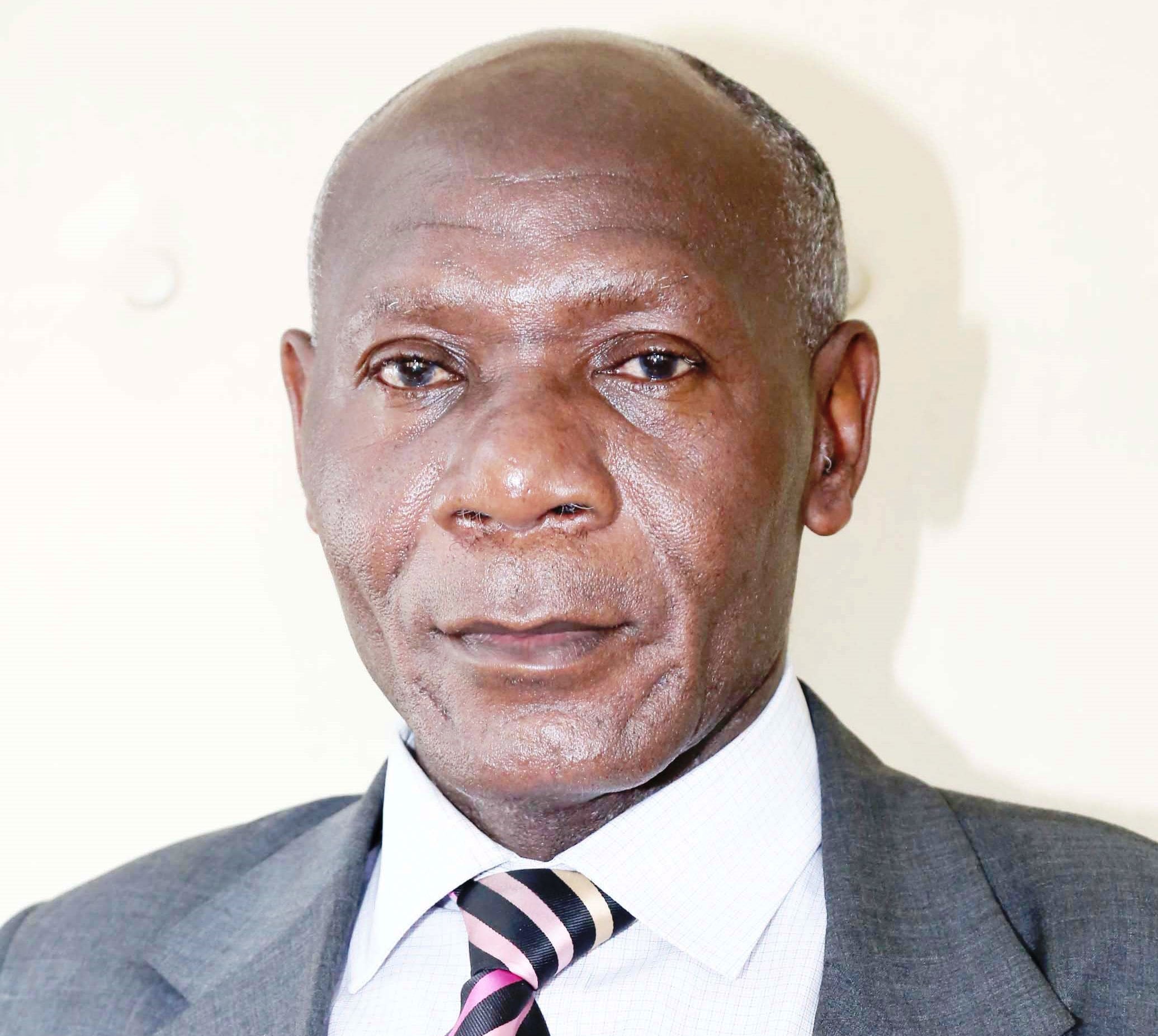
By Kennedy Buhere
Communication Specialist
You can also follow our social media pages on Twitter: Education News KE and Facebook: Education News Newspaper for timely updates.
>>> Click here to stay up-to-date with trending regional stories
>>> Click here to read more informed opinions on the country’s education landscape