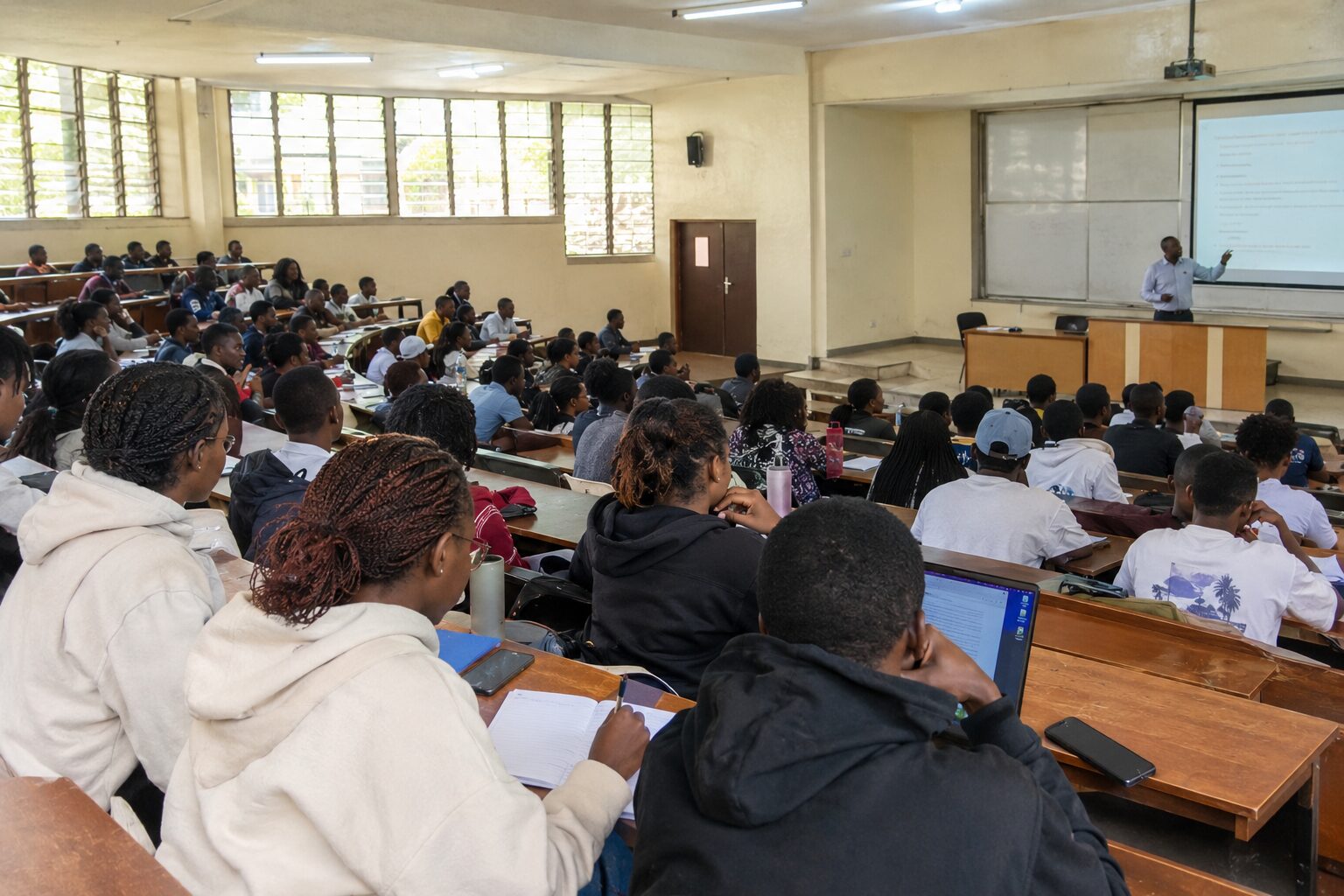
- Astiba Kebong’o argues that strong schools depend on stakeholders respecting clearly defined roles.
- Parents, teachers, administrators and boards should collaborate without undermining established governance structures.
- Professionalism, lawful processes and respectful dialogue are essential to protecting learners and institutions.
“When governance gives way to mob justice, education becomes the first casualty.”
A school is far more than a collection of classrooms. It is a public institution entrusted with nurturing future generations, transmitting national values and preparing young people for productive citizenship. Every lesson taught, every rule enforced and every decision made should ultimately serve the best interests of the learner.
This enormous responsibility cannot rest on one individual. It requires collaboration among school administrators, teachers, parents, Boards of Management (BOMs), support staff, the Ministry of Education, the Teachers Service Commission (TSC), sponsors and the wider community. Yet collaboration should never be mistaken for interference. Successful schools are built on partnership, but sustained by clearly defined roles, mutual respect and accountability.
The Constitution of Kenya (2010) guarantees every child the right to education. The Basic Education Act, 2013 establishes the governance framework for schools, while the Teachers Service Commission Act and the Code of Regulations for Teachers define the professional responsibilities of teachers and school administrators. These laws are not mere administrative documents; they are safeguards designed to ensure that schools remain orderly, accountable and learner-centred.
Unfortunately, recent events in some institutions reveal an emerging culture that threatens this foundation.
Participation must respect established procedures
Parents have demonstrated over examination results, locked school gates, demanded the removal of principals, confronted teachers in the presence of learners and, in some instances, resorted to intimidation and violence. Equally worrying is the growing tendency to try cases affecting schools on social media before facts are established. Emotional posts, edited videos and unverified allegations can damage the reputation of institutions that have taken decades to build.
Parents have every right to be concerned about the welfare and education of their children. Indeed, they are the first and most influential educators. Their participation in school programmes, academic monitoring, discipline, guidance and resource mobilization is indispensable.
However, participation must be exercised within lawful and professional channels. Schools cannot become arenas where pressure, threats or public demonstrations replace dialogue and due process. When disagreements arise, they should be addressed through class teachers, heads of department, deputy principals, principals, Boards of Management, County Directors of Education and other legally established mechanisms.
Respect for procedure is not a barrier to justice; it is the pathway to justice.
Children are excellent observers. They often imitate adult behaviour long before they understand adult reasoning. When they witness parents insulting teachers, threatening school leaders or refusing to accept responsibility when rules are broken, they receive a silent but powerful lesson: authority deserves resistance rather than respect.
In this way, some of the indiscipline witnessed in schools today is unintentionally reinforced by the adults entrusted with shaping children’s values.
Leadership demands accountability
School administrators equally carry immense responsibility. Principals are expected to provide visionary leadership while ensuring fairness, transparency, accountability and compliance with government policy. They must protect learners, support teachers, engage stakeholders, manage resources prudently and create an environment conducive to learning.
Leadership is not measured by authority alone but by the confidence it inspires.
Management scholar Peter Drucker observed that “Management is doing things right; leadership is doing the right things.” Schools require both efficient management and principled leadership.
Teachers also occupy a central position within every institution. The TSC Code of Regulations and the Code of Conduct and Ethics require teachers to uphold professionalism, maintain confidentiality, support institutional leadership, protect learners and execute their duties with integrity.
Professional disagreements are inevitable in any workplace. However, teachers should never become channels through which rumours, internal conflicts or confidential matters find their way into the public domain. Such actions weaken public confidence, lower staff morale and interfere with effective curriculum implementation.
Leadership expert John C. Maxwell reminds us that “Everything rises and falls on leadership.” Equally, leadership flourishes when those being led embrace teamwork and professionalism.
Support staff are another indispensable pillar of school success. Security personnel, office assistants, matrons, laboratory technicians, cooks, drivers, clerks and grounds staff ensure that schools function efficiently every day. Their contribution deserves recognition and respect.
Yet support staff must equally understand the limits of their mandate. Becoming involved in administrative disputes, spreading confidential information, taking sides in leadership conflicts or mobilizing hostility against school management creates instability that ultimately affects learners.
Boards of Management should therefore invest in continuous induction and training for support staff on workplace etiquette, institutional ethics, confidentiality, communication, conflict resolution and professional conduct. Every employee should appreciate that respecting boundaries does not reduce their importance; it strengthens institutional harmony.
Strong institutions require clear roles
The Board of Management itself has a clearly defined governance role. It provides strategic oversight, safeguards institutional resources, supports policy implementation and holds school leadership accountable. Good governance empowers school leaders to perform their duties effectively while ensuring transparency and accountability. It should never degenerate into micromanagement or parallel administration.
The Ministry of Education has a continuing responsibility to strengthen school governance through policy direction, quality assurance, leadership training and effective conflict-resolution mechanisms. As schools become increasingly complex, leadership development should become an ongoing investment rather than an occasional intervention.
Similarly, the Teachers Service Commission should continue strengthening Continuous Teacher Professional Development by placing greater emphasis on ethical leadership, emotional intelligence, stakeholder engagement, communication, crisis management and conflict resolution. Today’s school leader requires not only academic competence but also exceptional people-management skills.
International leadership scholar Stephen R. Covey observed that “Strength lies in differences, not in similarities.” Schools succeed because different stakeholders perform different but complementary responsibilities. Confusion begins when these responsibilities overlap without respect for institutional structures.
Perhaps the greatest threat facing schools today is not inadequate infrastructure or limited resources. It is the gradual erosion of institutional culture.
Peter Drucker famously said, “Culture eats strategy for breakfast.” Even the best policies, strategic plans and development projects cannot succeed where mistrust, intimidation, gossip, factionalism and hostility become the accepted way of life.
Healthy workplace relationships are therefore not optional; they are essential for quality teaching, learner discipline, staff well-being and successful curriculum implementation.
The African proverb wisely teaches that “If there is no enemy within, the enemy outside can do little harm.” Many schools do not collapse because of external pressures. They slowly weaken when parents, teachers, support staff, administrators or even Boards of Management abandon professionalism and place personal interests above institutional welfare.
Strong institutions are built through disciplined collaboration.
Parents should parent and partner.
Teachers should teach, mentor and uphold professional ethics.
School leaders should lead with integrity and courage.
Boards should govern strategically.
Support staff should execute their duties professionally.
The Ministry of Education should provide policy direction.
The Teachers Service Commission should safeguard professional standards.
Communities should support schools while respecting institutional autonomy.
These responsibilities are complementary, not competitive.
Schools do not fail because stakeholders participate. They fail when participation loses direction and boundaries disappear.
As Kenya continues implementing educational reforms and strengthening learning outcomes, one principle should remain non-negotiable: clear roles create strong institutions, while confused roles create lasting conflict.
The future of education will not be secured by the loudest voices on social media, the most aggressive demonstrations or the harshest criticism. It will be secured by a shared commitment to professionalism, lawful governance, respectful dialogue and unwavering focus on the learner.
READ ALSO: How differently would Jesus have handled Obado in the Sharon Otieno case?
For in the end, the true measure of a successful school is not merely its examination results, but its ability to cultivate a culture where every stakeholder understands that respect for boundaries is not a limitation—it is the foundation upon which excellence is built.
By Astiba Kebong’o
Astiba Kebong’o writes on education and social affairs.
Email: jackiekebongo@gmail.com
You can also follow our social media pages on Twitter: Education News KE and Facebook: Education News Newspaper for timely updates.
>>> Click here to stay up-to-date with trending regional stories
>>> Click here to read more informed opinions on the country’s education landscape