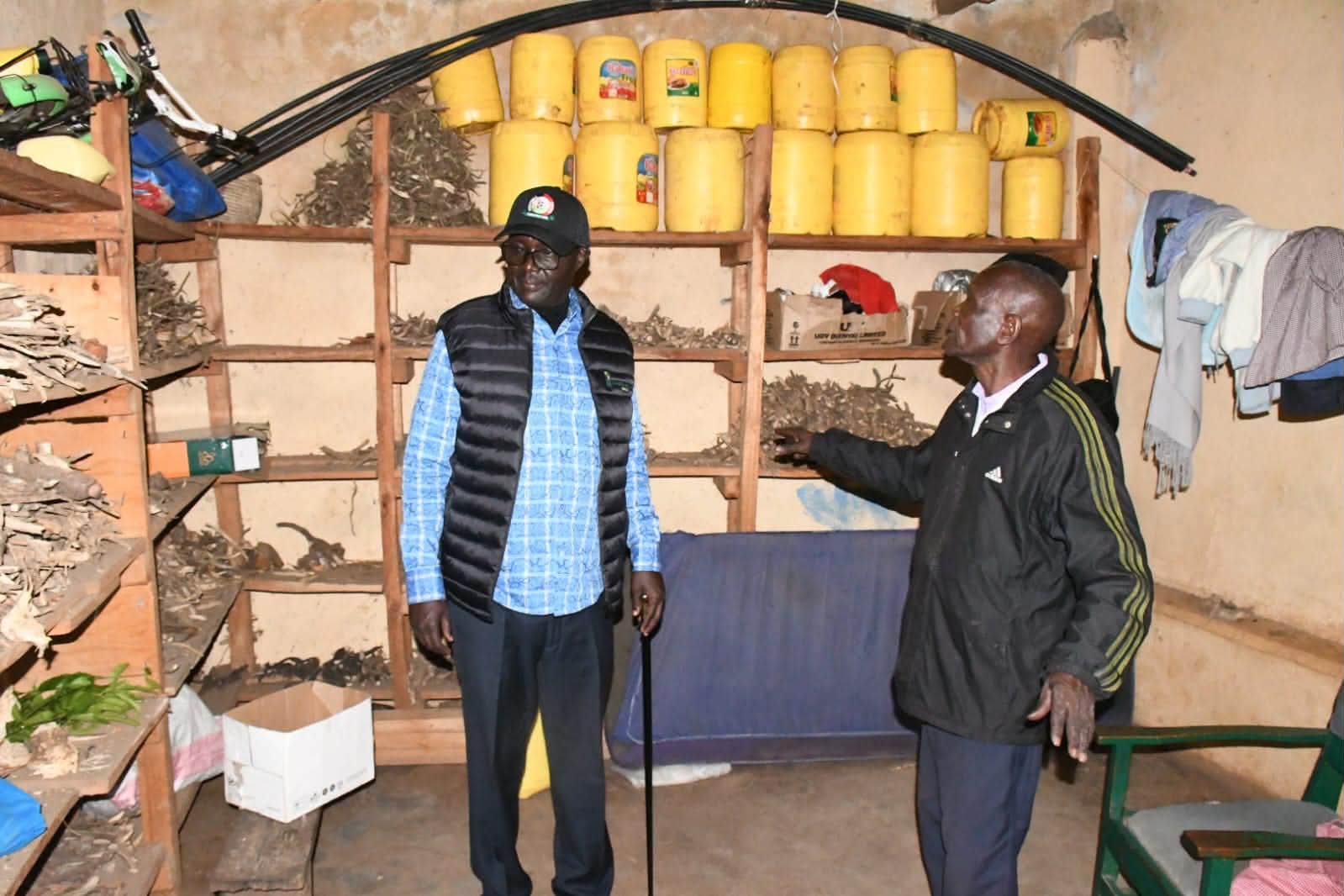
- West Pokot Governor Simon Kachapin has called for the preservation and documentation of indigenous herbal medicine knowledge.
- During a visit to the renowned Loliondo herbal centre, the Governor praised veteran herbalist Mzee Julius Psirwo for preserving Pokot cultural heritage.
- He urged researchers, communities and cultural institutions to work together to safeguard indigenous knowledge for future generations.
Long before hospitals and modern pharmaceuticals became widely available, African communities relied on nature for healing.
Across generations, medicinal plants, roots, bark and herbs formed part of a rich body of indigenous knowledge carefully preserved by elders and traditional healers.
In West Pokot County, that heritage continues to thrive in Kishaunet, home to the renowned Loliondo herbal centre and one of the region’s most respected custodians of traditional medicine, Mzee Julius Psirwo.
For more than 50 years, Mzee Psirwo has dedicated his life to studying, preparing and preserving traditional herbal remedies.
His work has attracted visitors from across Kenya and the wider East African region who seek to learn about Pokot indigenous knowledge and cultural heritage.
It was this legacy that drew West Pokot Governor Simon Kachapin to the herbal centre, where he toured the facility and engaged the veteran herbal practitioner on the history of traditional medicine among the Pokot community.
The Governor also sampled a traditional herbal preparation as Mzee Psirwo shared experiences gathered over five decades of practice.
Preserving culture and the environment
Governor Kachapin observed that traditional medicine extends beyond healing.
He described it as a living archive of history, culture, language and environmental knowledge passed from one generation to the next.
The Governor noted that preserving indigenous knowledge also encourages the conservation of forests and ecosystems where many medicinal plants naturally occur.
He called for greater documentation of traditional knowledge through collaboration between communities, researchers and cultural institutions.
According to the Governor, recording the wisdom of respected elders such as Mzee Psirwo will help future generations appreciate their cultural heritage while supporting responsible research.
A lifetime of service
Mzee Psirwo reflected on a lifetime devoted to preserving knowledge entrusted to him by previous generations.
Over the years, Loliondo has grown into one of the best-known centres of traditional herbal practice in the region.
Governor Kachapin commended the veteran herbalist for safeguarding Pokot heritage and described him as an important custodian of indigenous knowledge whose contribution extends beyond traditional medicine to preserving history itself.
He encouraged young people to value indigenous knowledge, respect cultural traditions and embrace continuous learning while supporting scientific research and responsible practice.
As the visit concluded, the Governor wished Mzee Julius Psirwo good health and many more years of sharing his knowledge.
READ ALSO: Delayed child sexual abuse cases deny Kisii survivors timely justice
He said preserving indigenous wisdom remains essential in protecting Kenya’s cultural heritage for future generations.
By Hillary Muhalya
You can also follow our social media pages on Twitter: Education News KE and Facebook: Education News Newspaper for timely updates.
>>> Click here to stay up-to-date with trending regional stories
>>> Click here to read more informed opinions on the country’s education landscape